
A Heriz is the Persian carpet you can put in a room that actually gets used. It is hand-knotted in northwest Iran on a cotton foundation, with wool spun thick and a weave kept deliberately coarse, and the result is a rug heavy enough to lie flat under a loaded seating plan and tough enough that decades of traffic read as patina rather than damage. That is the reason Heriz Rugs have been the default room-size Persian carpet in American houses for more than a century.
Heriz is a district, not a single village. It sits east of Tabriz on the slopes of Mount Sabalan, and the weaving villages around it, Ahar, Mehraban, Bakshaish, Sarab, all send their work to market under the Heriz name. What they share is a look you can identify from the doorway.
How to recognize a Heriz
Start with the medallion. A Heriz field is built around one large stepped medallion, usually seated on a brick or terracotta ground, with heavy ivory corner brackets pressing in from all four corners and a navy border closing the composition. Nothing about it is small. The drawing is made to be read from across a room rather than studied at close range, which is exactly the job a rug under a dining table or a sofa has to do, and our Medallion Heriz Rugs are the clearest examples of the format.

The straight lines have a reason behind them. City workshops in nearby Tabriz wove from full-scale cartoons and could follow a curved floral medallion knot by knot. The village weavers of the Heriz district worked from small pattern samplers and from memory, and they translated those curves into steps and angles. The geometric result was never a shortcut; it became the signature of the district, and it is why a Heriz sits so comfortably in a modern room, where a fully curving Persian design can feel formal.
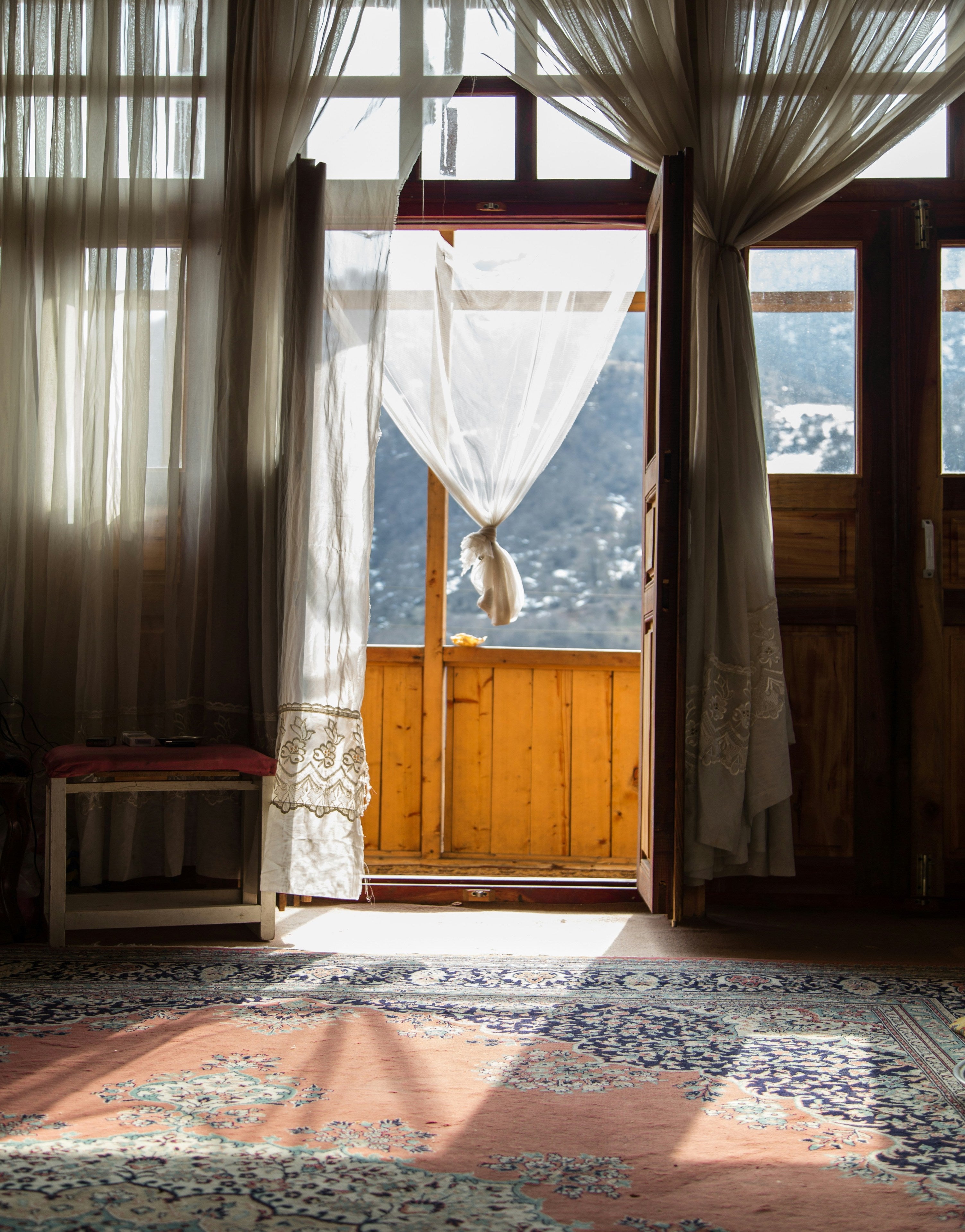
Palette is the other half of recognition, and it is where the type splits into two quite different rugs. The classic reads hot: madder red and terracotta against indigo, with ivory corners for contrast. The other reads quiet, because decades of daylight pull those same dyes back toward camel, rose, and pale blue, leaving a faded surface with every line of the drawing still intact. Most of what has arrived in the shop this summer sits at the quiet end, ivory fields and washed blues where you might have expected brick.
 Terracotta Heriz Rugs
The hot classic: madder and brick against indigo.
Shop
Terracotta Heriz Rugs
The hot classic: madder and brick against indigo.
Shop
 Faded Heriz Rugs
Daylight pulled the dyes back; the drawing stayed.
Shop
Faded Heriz Rugs
Daylight pulled the dyes back; the drawing stayed.
Shop
 Ivory Heriz Rugs
Ivory fields and washed blues, the quiet end.
Shop
Ivory Heriz Rugs
Ivory fields and washed blues, the quiet end.
Shop
Heriz or Serapi, and what the name means
This is the question that comes up most, and the answer is simpler than the vocabulary suggests. Serapi is a trade name, not a separate weaving tradition. Dealers in Europe and America used it for the finest and generally oldest carpets coming out of this same district, and the word itself traces back to Sarab, a town a short distance away. Every Serapi is a Heriz district rug. Only a small share of Heriz district rugs are ever called Serapi.
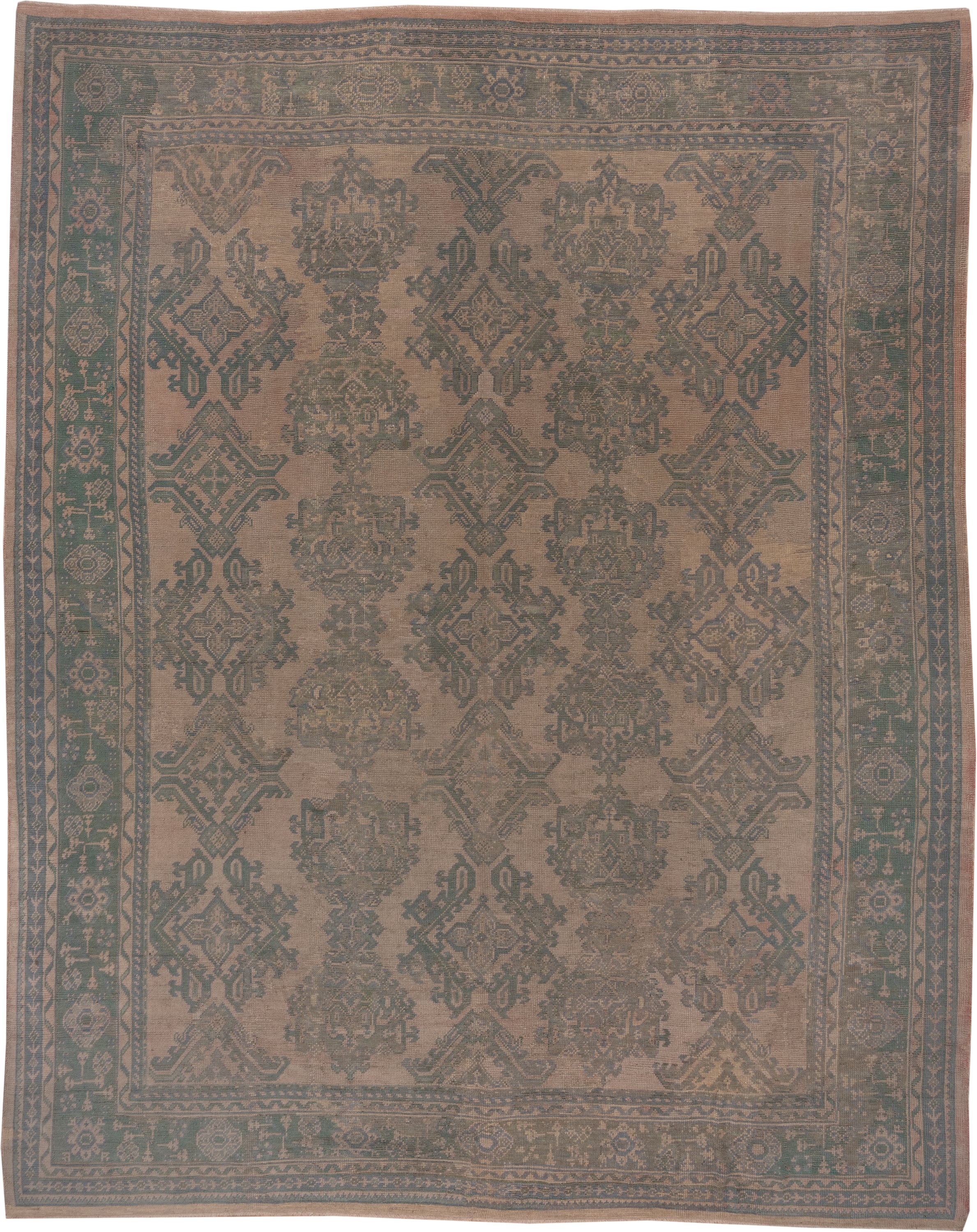
What earns the name is visible once you know to look. A Serapi tends to be more finely woven, with a smaller medallion floating in a more open field, wide stretches of plain ground left undecorated, and a lighter palette that leans on camel, ivory, and sky blue instead of deep brick. The effect is airier, and to most eyes more valuable. This Antique Serapi Area Rug (11' x 16') is a good reference point to hold against everything above, and our Medallion Serapi Rugs gather the format in one place. Two more district names travel alongside it: Bakshaish, used for the most abstract drawing of the group, and Gorevan, used for its heavier, coarser grade.
Antique or vintage
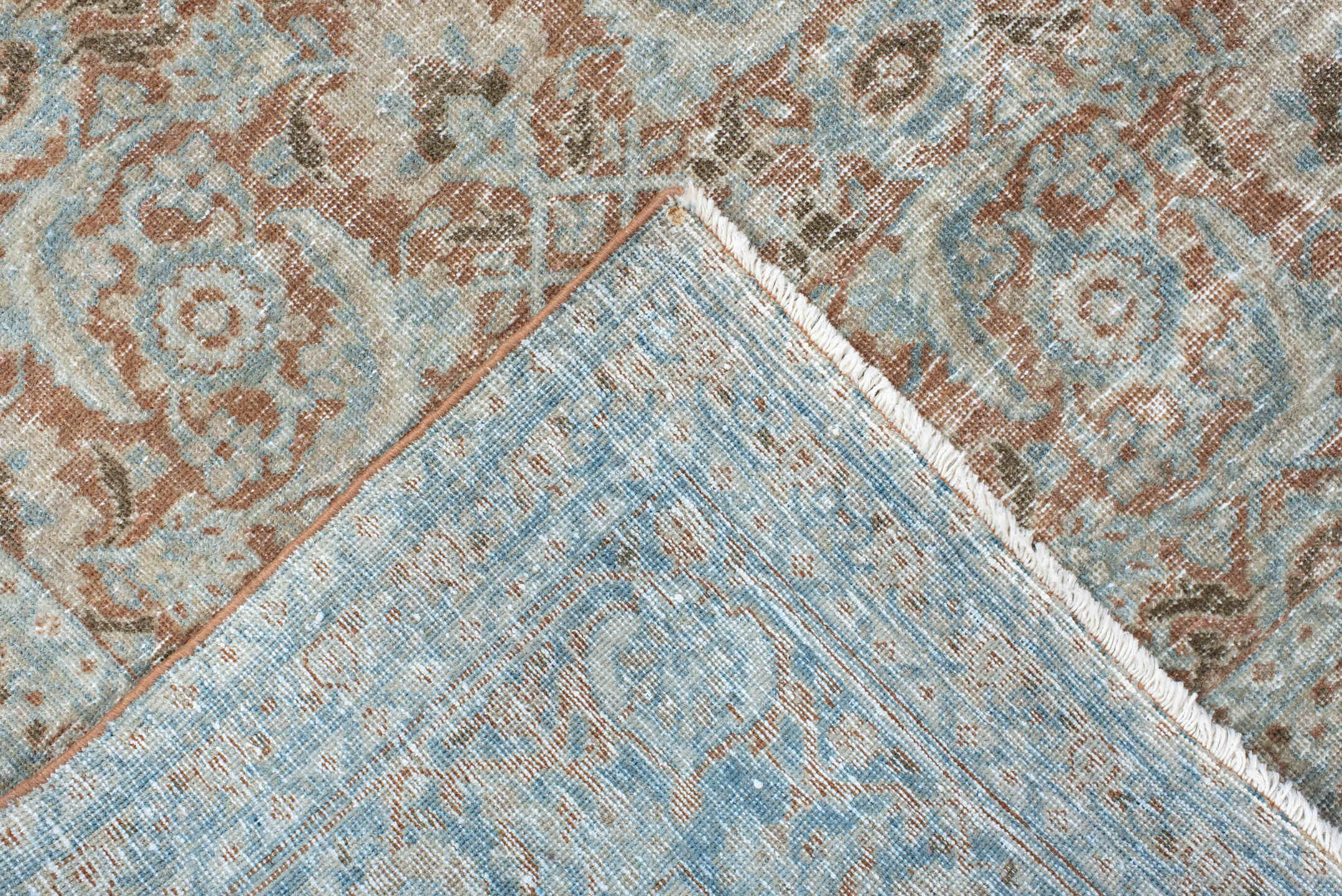
Both come out of the same district in the same format, so this is a choice about surface rather than about quality. An antique Heriz, meaning a rug eighty years and older, carries the earlier wool and the drawing from a period when the format was still being worked out; the pile has usually worn low, the color shifts across the field where one dye lot met the next, and the whole rug reads unmistakably as a survivor. A vintage Heriz gives you the same layout with more pile still standing, which is the practical answer for a room that has children, dogs, and a dining table in it.
 Antique Heriz Rugs
Eighty years and older, worn low, unmistakably a survivor.
Shop
Antique Heriz Rugs
Eighty years and older, worn low, unmistakably a survivor.
Shop
 Vintage Heriz Rugs
The same layout with more pile still standing.
Shop
Vintage Heriz Rugs
The same layout with more pile still standing.
Shop
Sizes, placement, and care
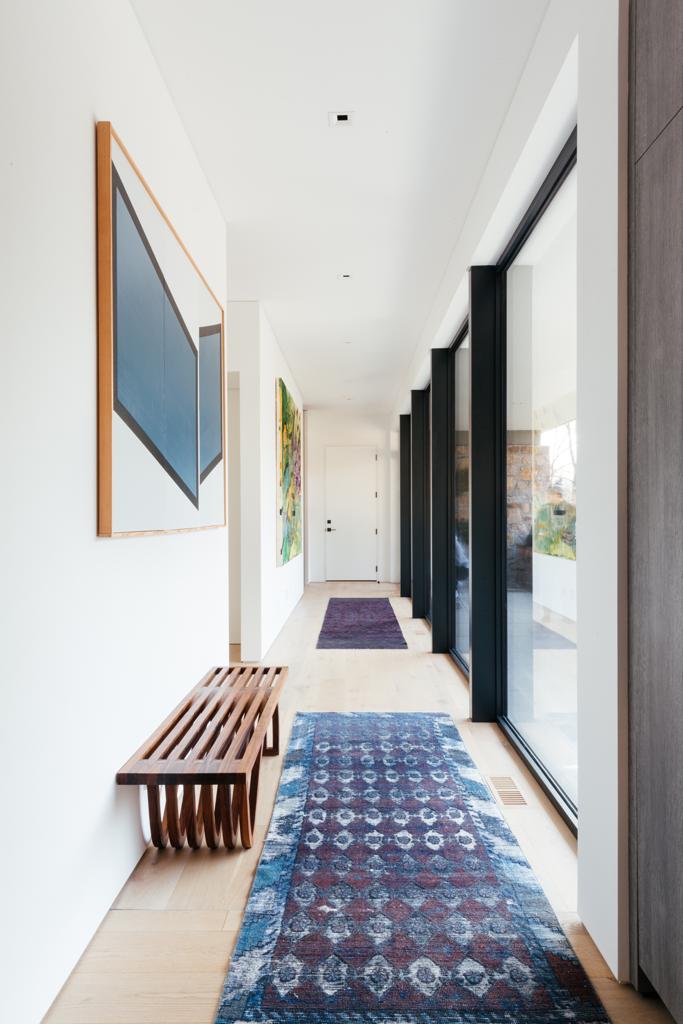
Heriz weaving grew up around the American room, and the looms of the district turned out carpets that run a little long for their width. That is the most useful thing to know before you measure. Where a standard 8' x 10' leaves a sofa and two chairs just short of the edge, the 8' x 11' that these looms produced routinely closes the gap. The 9' x 12' is the other workhorse, the size that lets a full living room seating plan sit entirely on the rug instead of half on it. The same wool went into long, narrow runner formats for the halls and stair landings of the same houses.
 8' x 11' Heriz Rugs
The extra foot a standard 8' x 10' leaves you short.
Shop
8' x 11' Heriz Rugs
The extra foot a standard 8' x 10' leaves you short.
Shop
 9' x 12' Heriz Rugs
A whole seating plan on the rug, not half on it.
Shop
9' x 12' Heriz Rugs
A whole seating plan on the rug, not half on it.
Shop
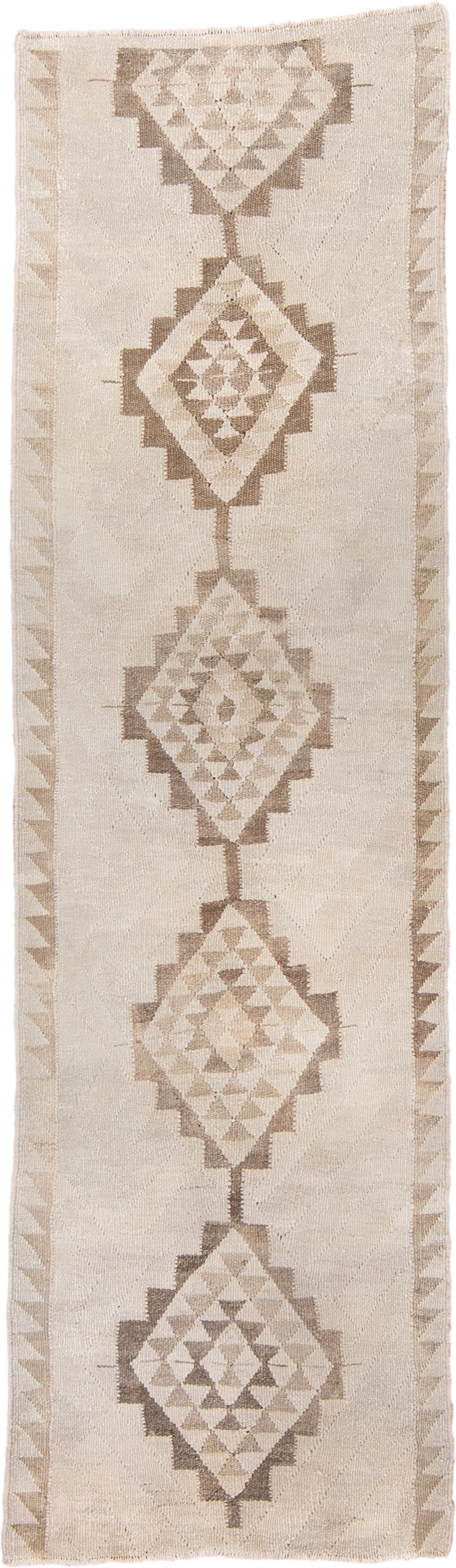
 Heriz Runner Rugs
The same wool, drawn long for halls and landings.
Shop
Heriz Runner Rugs
The same wool, drawn long for halls and landings.
Shop
Placement is the thing people most often get wrong. The medallion is the center of the composition, so it wants to land in the center of the seating group, not vanish three quarters of the way under a sofa. Pull the front legs of the furniture onto the rug and leave the medallion in open view. Care is undemanding by design: vacuum without the beater bar, rotate the rug once or twice a year so light and traffic wear it evenly, and send real spills to a professional cleaner rather than reaching for a bottle from under the sink.
If you are shopping the type rather than one specific rug, it helps to see the whole district at once. This Vintage Heriz Area Rug (7' x 9') and this Vintage Heriz Area Rug (8' x 12') sit at opposite ends of the palette, and everything we have, antique and vintage, falls somewhere between them.
One of a kind, photographed flat Every Heriz in the shop, on one page Explore All Heriz Rugs