What size rug do I need?
Pick the room and give us the two measurements it turns on. We will draw the rug in place and show you the ones we have that size.
Rug sizes, room by room
Living room
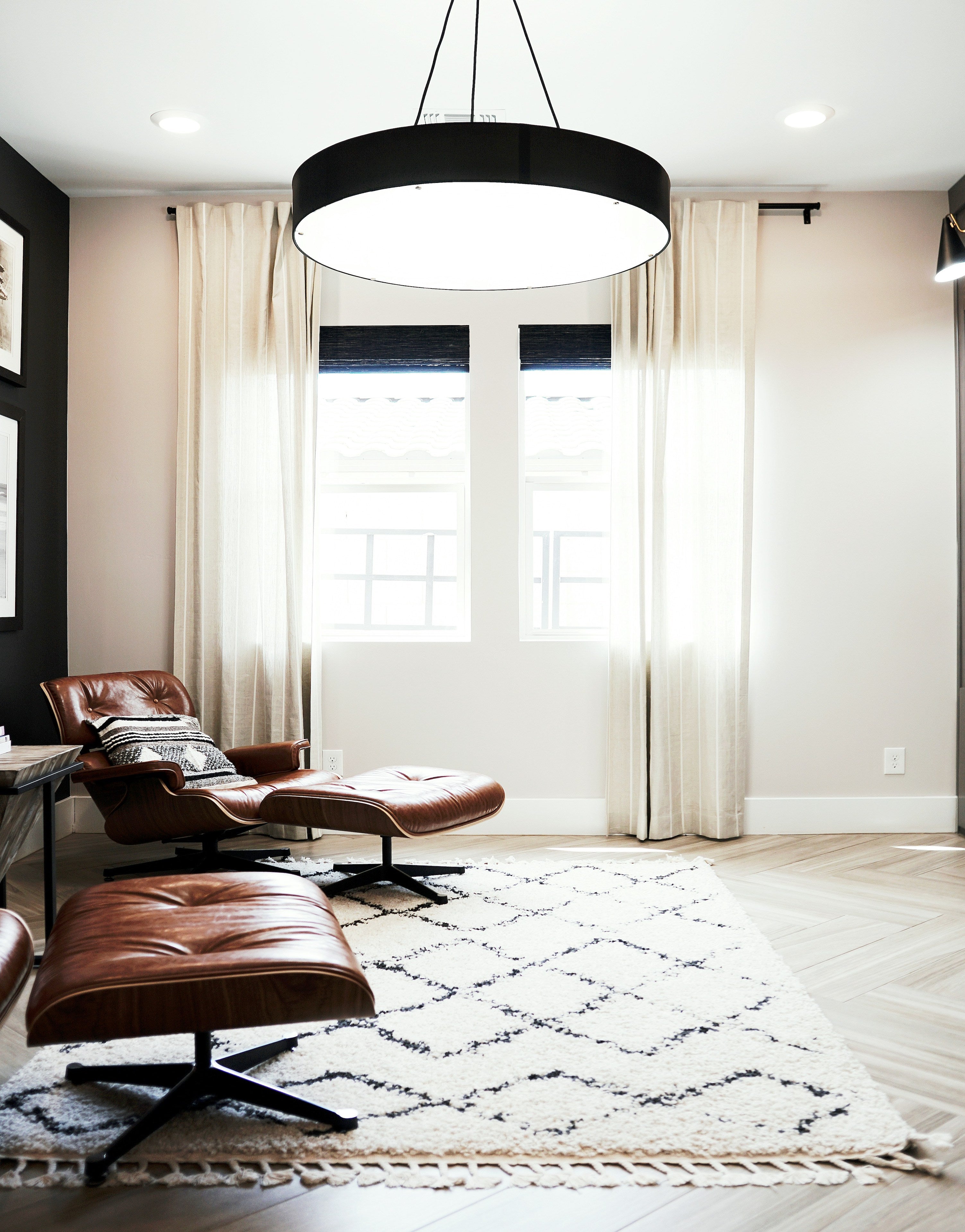
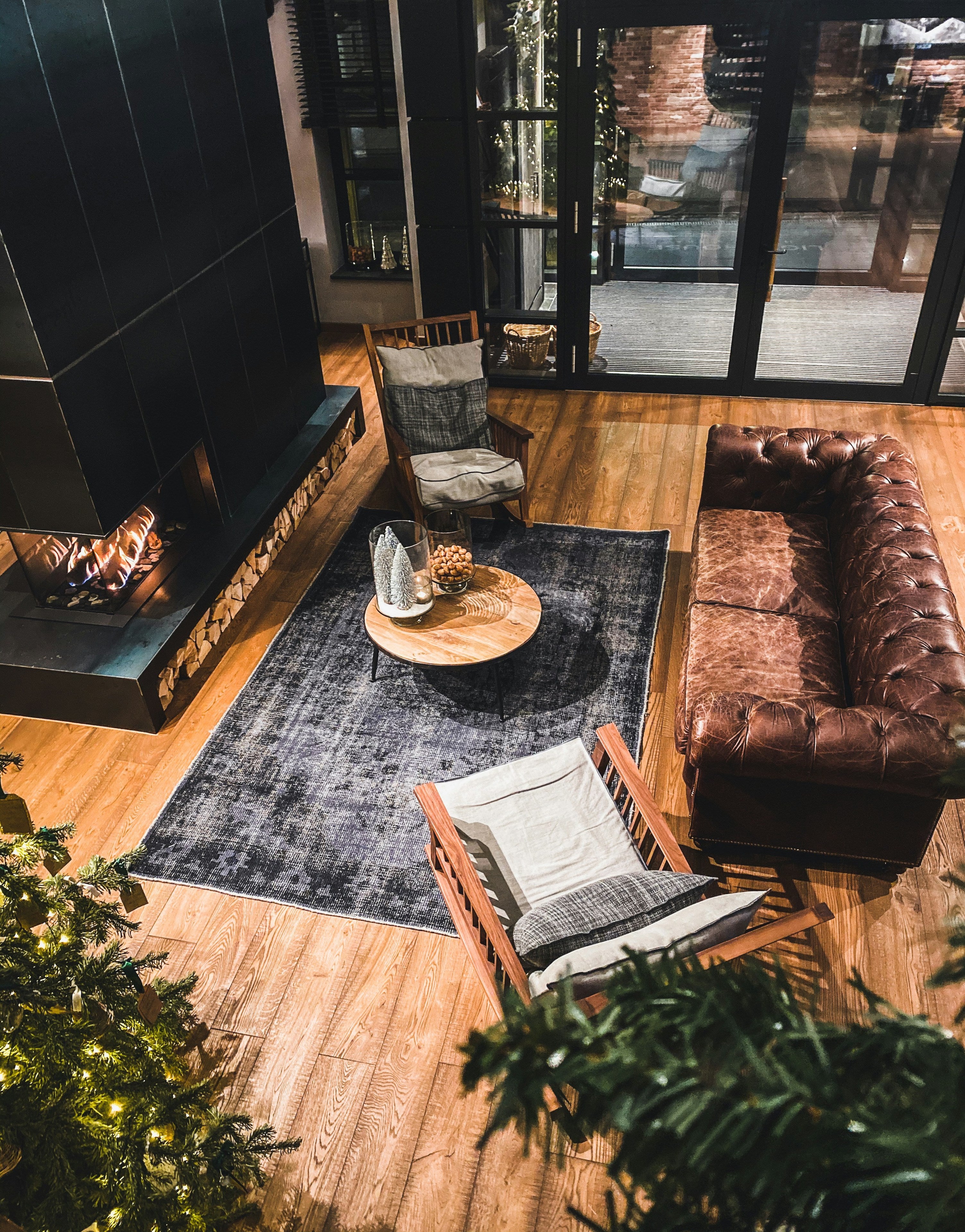
Size a living room rug from the seating, not from the walls. Three layouts cover almost every room. All legs on: every leg of every piece sits on the rug, with about a foot of floor showing all round. A 16 by 12 foot room takes roughly 14 by 10. Front legs on: the sofa and both chairs catch the rug under their front legs and keep their back legs on bare floor. It pulls the group together and forgives a room that is not quite square, and the same room takes about 10 by 8. Floating: the rug carries the coffee table alone, with the sofa just behind it and the chairs beside it on bare floor. That one lands near 7 by 5.
Dining room
Measure the table, not the room. A chair pushed back from dinner has to keep all four legs on the rug, so leave two feet of rug past the table on every side. A 4 by 7 foot table then takes about 8 by 11. Go to two and a half feet, or 9 by 12 for that table, and you can walk behind a chair that is already out. Eighteen inches is the least that still works, about 7 by 10, and only where the walls are close.
Bedroom
Size a bedroom rug off the bed. What matters is the floor beside it, not the floor under it. A full surround runs about two feet past both sides and further past the foot, so the nightstands stand on it and you step onto wool whichever side you get out of. A queen takes 9 by 12 or 10 by 14, a king 10 by 14 or 12 by 15, a twin 8 by 10 or 9 by 12. Or start the rug under the bottom two thirds of the bed. That leaves the nightstands on bare floor and still puts wool where your feet land: 6 by 9 or 8 by 10 under a queen.
Hallway
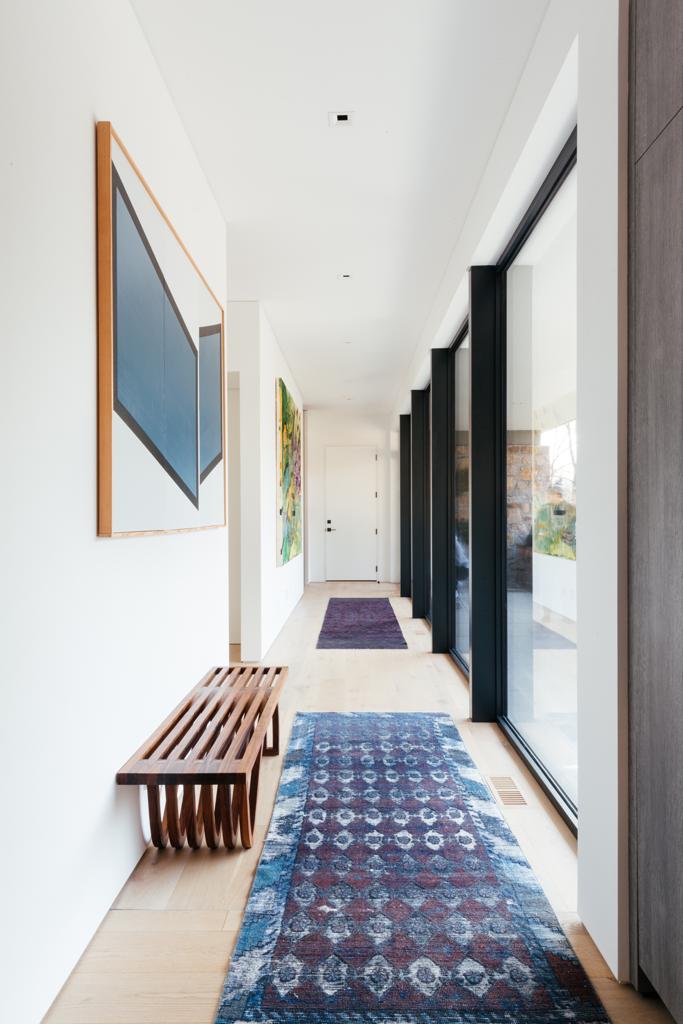
A hall runner wants floor showing on both sides and a clear gap at each end. Six inches either side is enough, so a 4 foot hall takes a 3 foot runner. Length works the same way: in a 14 foot hall, an 11 foot runner leaves the ends to breathe. Run it almost the full length and it reads closer to fitted carpet than to a rug, which is occasionally the point. Keep a runner at least twice as long as it is wide, or it is an area rug in a corridor.
Kitchen
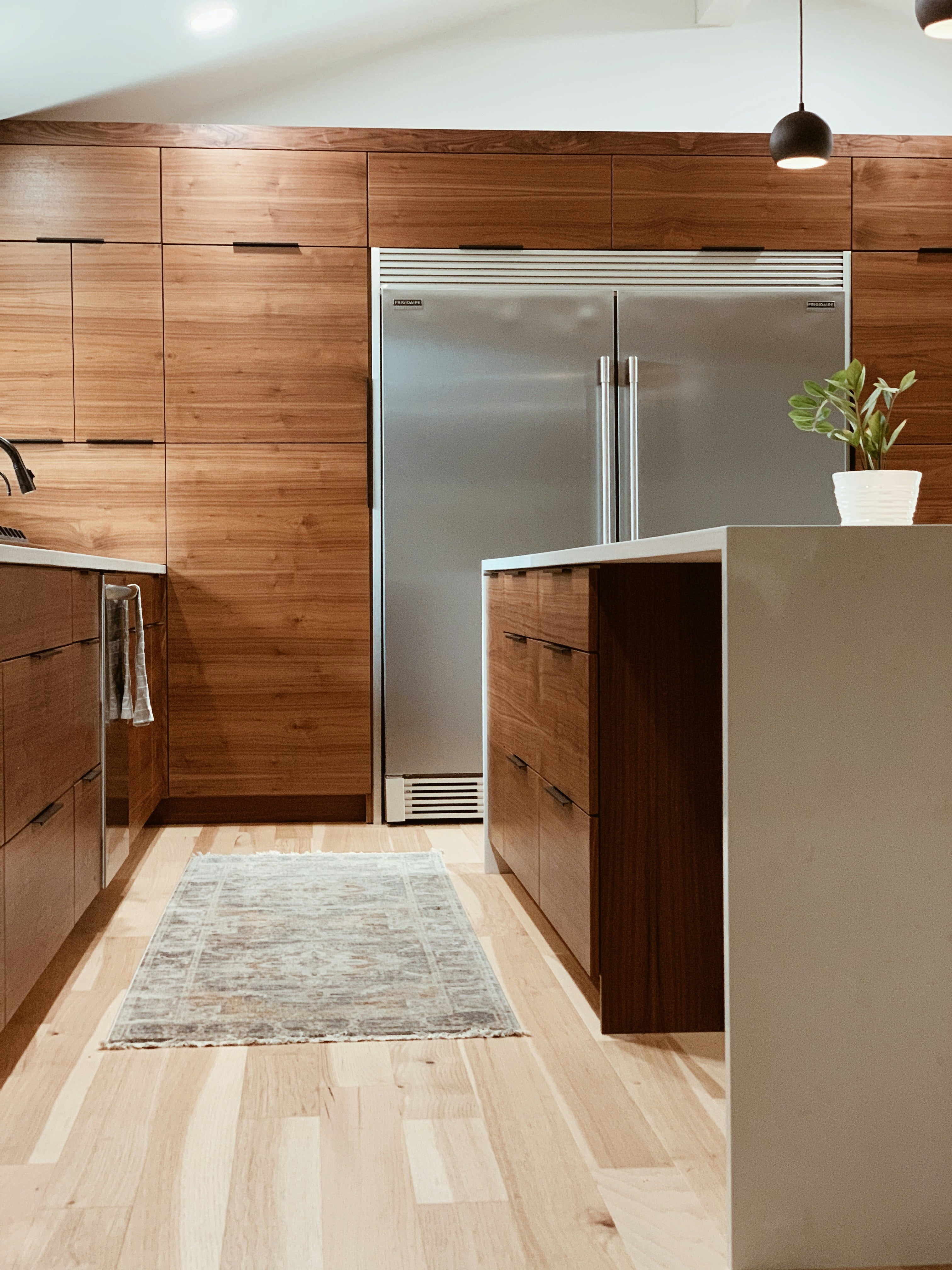
Start at the sink. A short runner, about 2 feet 6 by 5, covers the stretch you actually stand on, and it is light enough to lift and air out. That is what a working kitchen asks of a rug. Down a galley, use one runner rather than two: about 3 by 8 in a 4 by 10 working strip, with no seam underfoot. Either way, keep six inches of floor either side so the rug does not creep under the toe kick.
Entryway
The door decides this one. A rug in the arc of an inward opening door catches and rucks up every time somebody comes in. Measure from the wall to the far edge of the swing, and size the rug to what is left: a 5 by 7 foot entry usually leaves room for about 4 by 3. If that leaves under two feet, no rug will stay clear of the door, so use a low flat weave. If the door opens outward or slides, fill the floor and leave six inches showing on every side.
Office
If the chair rolls, the rug has to catch every caster, or one drops off an edge halfway through a push. Cover the whole rolling zone: an 8 by 10 foot room takes about 7 by 9. If the chair mostly stays put, cover the desk and the chair and stop there, which is roughly 6 feet 6 by 6 in that same room. Either way, a low pile or a flat weave rolls better than anything deep.
How do I measure for a rug?
Measure the thing the room turns on, which is not always the room. A living room turns on the floor, a dining room on the table, a bedroom on the bed. Put those two numbers into the tool above and it will draw the rug and name the size.
Is it better to size up or size down?
Size up, almost always. A rug the furniture cannot reach makes a room look smaller. It is the most common sizing mistake we see. Leave about a foot of bare floor at the walls and fill the rest.
What if the size I need is not a standard size?
Most of ours are not. Most of what we sell is one of a kind, woven long before anyone standardised a rug size. So the tool searches by the width and length you need, with a foot of give either way, rather than by a label.