
Most of the confusion around oriental rugs comes down to one fact: oriental is the family name, and Persian, Turkish, Caucasian, and Indian are families inside it. Every piece in our Oriental Rugs collection is hand-knotted in wool, antique or vintage, and belongs to one of those traditions. Once you can tell the families apart, the label question settles itself and the choosing gets much easier.
Oriental versus Persian: the short answer
An oriental rug is any rug hand-knotted in the historic weaving belt that runs from Turkey through the Caucasus and Iran into Central Asia, India, and China. A Persian rug is an oriental rug woven in Iran, the country long known as Persia. So every Persian rug is oriental, but a Turkish Oushak or a Caucasian Shirvan is oriental without being Persian.
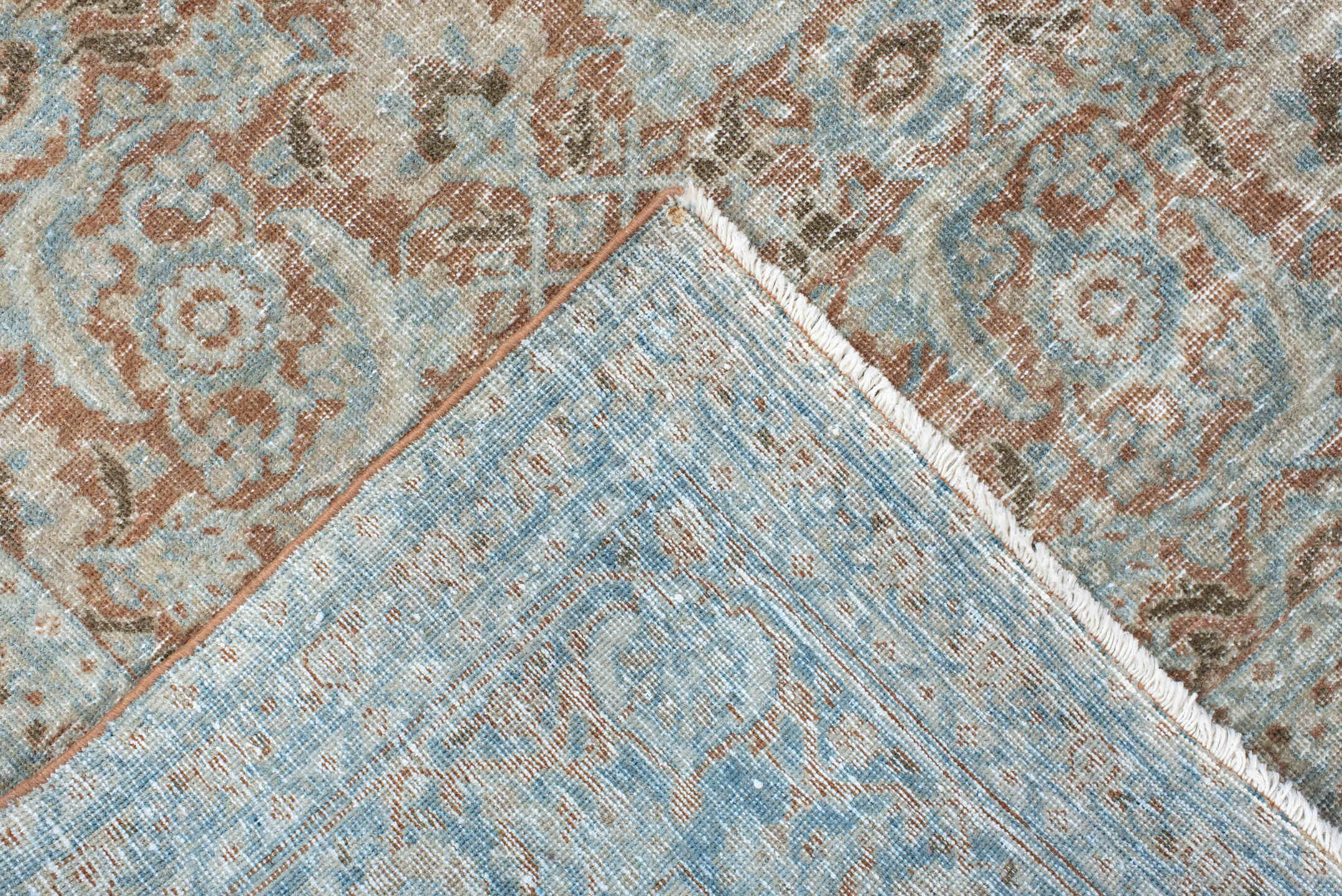
One more line worth drawing: machine-made rugs in oriental patterns exist, but they fall outside the term as dealers use it. Hand-knotting is the price of entry, and it is why two rugs of the same size and design are never quite identical.
The origin families, and how they read in a room
Persian Rugs set the standard most people picture first: a central medallion, a field of vines and garden flowers, and fine detail that rewards a close look. City workshops such as Tabriz drew formal, precise patterns; village weavers in Heriz worked the same ideas into bolder, more angular shapes that hold up under furniture and daily life.
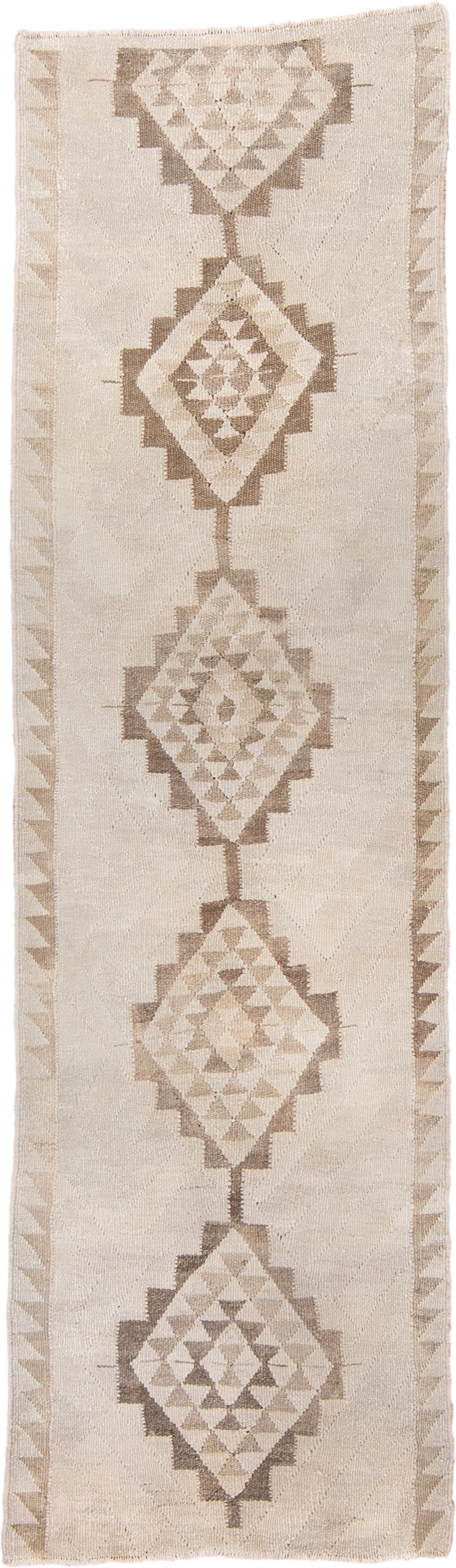
Turkish Rugs read softer. Anatolian weavers, above all in Oushak, favored large-scale patterns and gentle palettes of apricot, ivory, and gray that let a big carpet sit quietly under a full room of furniture. Where a Persian city rug fills every inch with detail, an Oushak leaves open space, which is why designers reach for them in modern interiors.
Caucasian Rugs come from the mountain villages between the Black and Caspian seas and are the boldest of the three: strong geometry, saturated reds and blues, and small formats, since village looms rarely ran more than a few feet wide. A Shirvan or a Kazak delivers more pattern per square foot than anything else in the shop.
Side by side, the differences are easy to see: Persian detail, Turkish softness, Caucasian geometry. Start with the family whose look matches the room you are furnishing, then let size and palette narrow the field.
 Persian Rugs
Medallions and fine detail from city and village looms.
Shop
Persian Rugs
Medallions and fine detail from city and village looms.
Shop
 Turkish Rugs
Softness on a large scale, easy under a full room.
Shop
Turkish Rugs
Softness on a large scale, easy under a full room.
Shop
 Caucasian Rugs
Bold geometry from mountain villages.
Shop
Caucasian Rugs
Bold geometry from mountain villages.
Shop
India deserves its own sentence: Indian Rugs from the Agra and Amritsar workshops rewove Persian designs in room-filling sizes and gentler palettes, which makes them one of the best hunting grounds for a very large carpet with a quiet presence.
How to pick one by room
In a living room, take the largest size your seating area allows and look for a pattern with a clear center. A Persian medallion such as this Vintage Heriz Area Rug (7' x 9') pulls a sofa and chairs into one arrangement, and its angular pattern hides the evidence of everyday use.
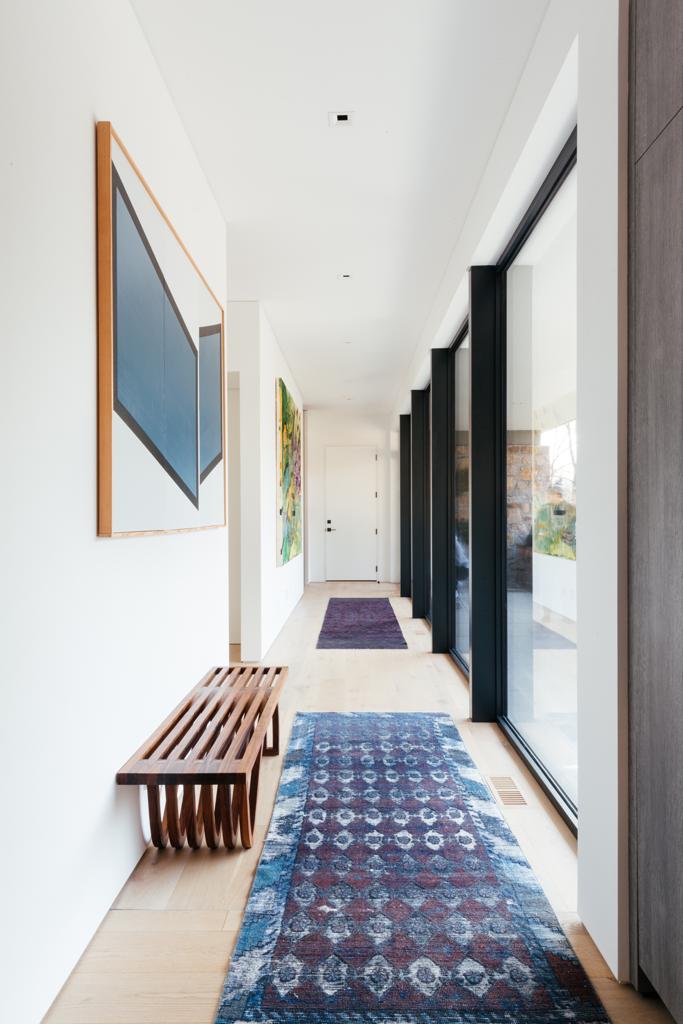
A dining room asks for more rug than most people expect; the piece should run well past the chairs even when they are pulled out. Room-size weaves like this Antique Mahal Area Rug (9' x 13') were made for that job, with allover pattern that forgives traffic. In a bedroom, go the other way: a softened palette keeps the room calm. Entries and hallways are where small Caucasian pieces earn their keep, tough wool and bold color in formats sized for tight spaces.
Antique or vintage?
The collection splits by era into antique and vintage. Antique means eighty years and older; those carpets carry the deepest natural dye and the patterns collectors study. Vintage covers the rest, with palettes softened by decades of use and a relaxed look that sits easily in modern rooms. Neither is better: an antique rewards a room designed around the rug, while a vintage piece forgives a room that already has its furniture.
 Antique Oriental Rugs
Eighty years and older, with the deepest dye.
Shop
Antique Oriental Rugs
Eighty years and older, with the deepest dye.
Shop
 Vintage Oriental Rugs
Softened palettes at ease in modern rooms.
Shop
Vintage Oriental Rugs
Softened palettes at ease in modern rooms.
Shop
If you are still deciding between families, comparison is the fastest teacher. Every rug in the shop is photographed flat and listed one of a kind, so setting a Heriz next to an Oushak takes a minute on one page rather than an afternoon in a showroom.
One of a kind, photographed flat Every oriental rug in the shop, on one page Explore All Oriental Rugs