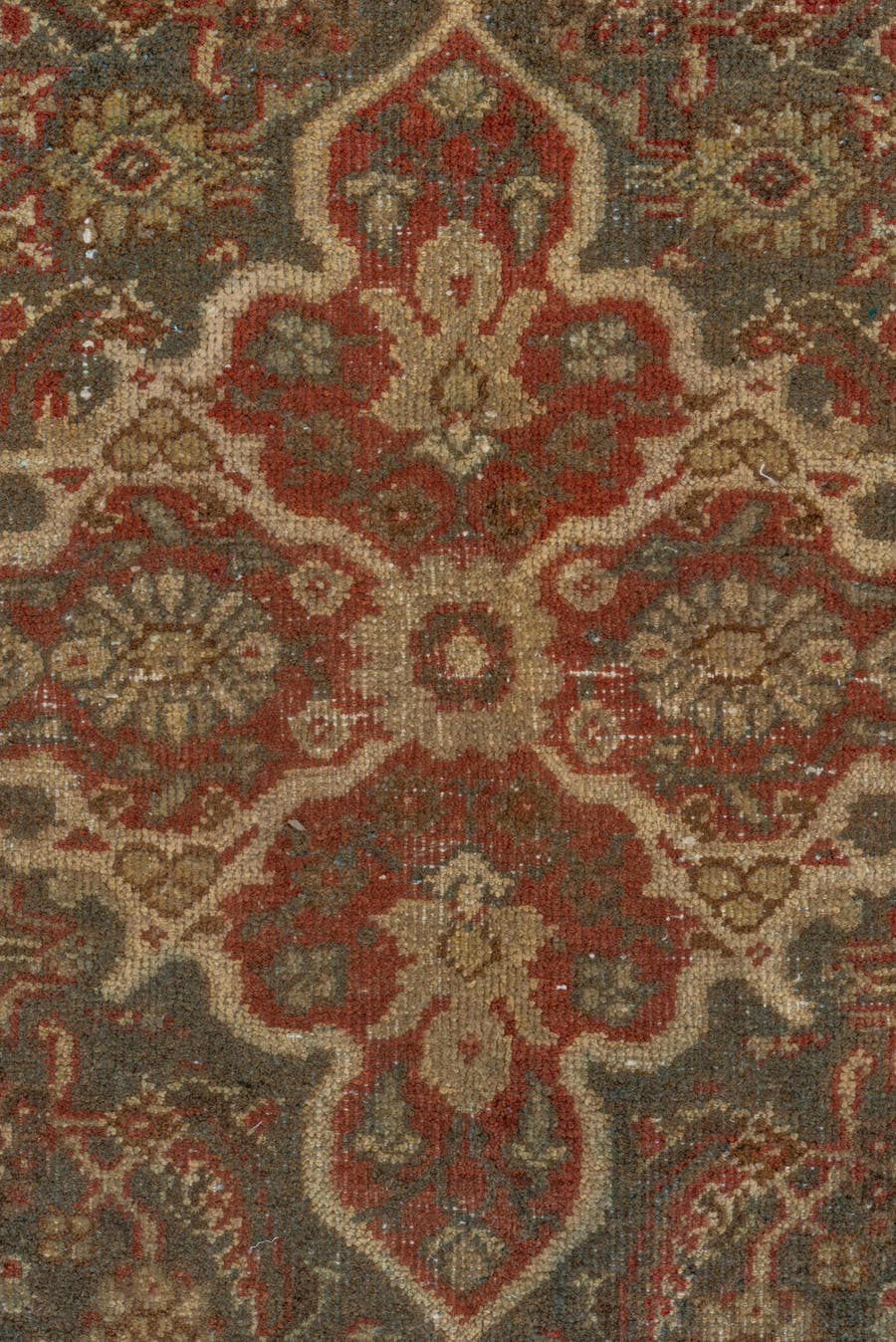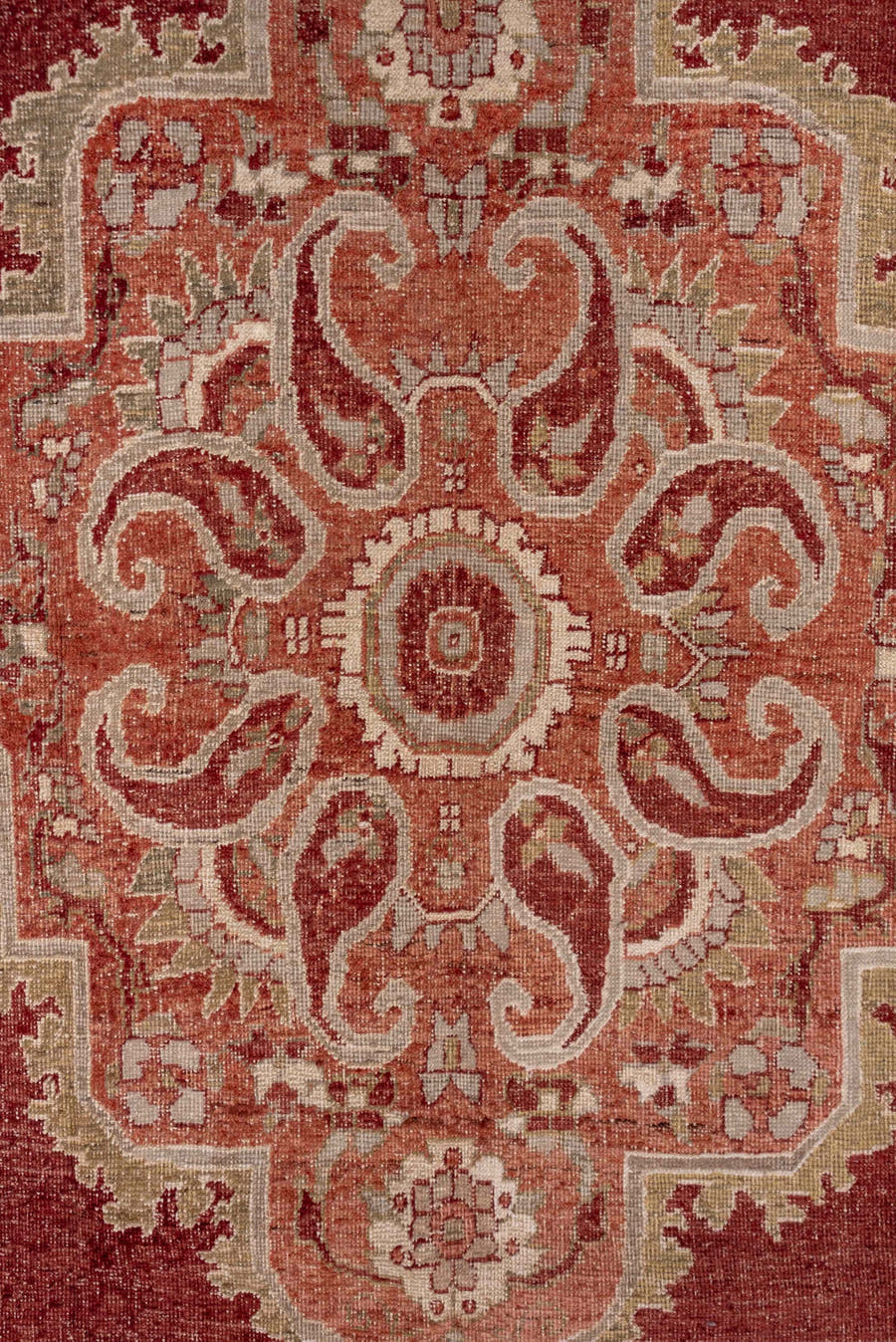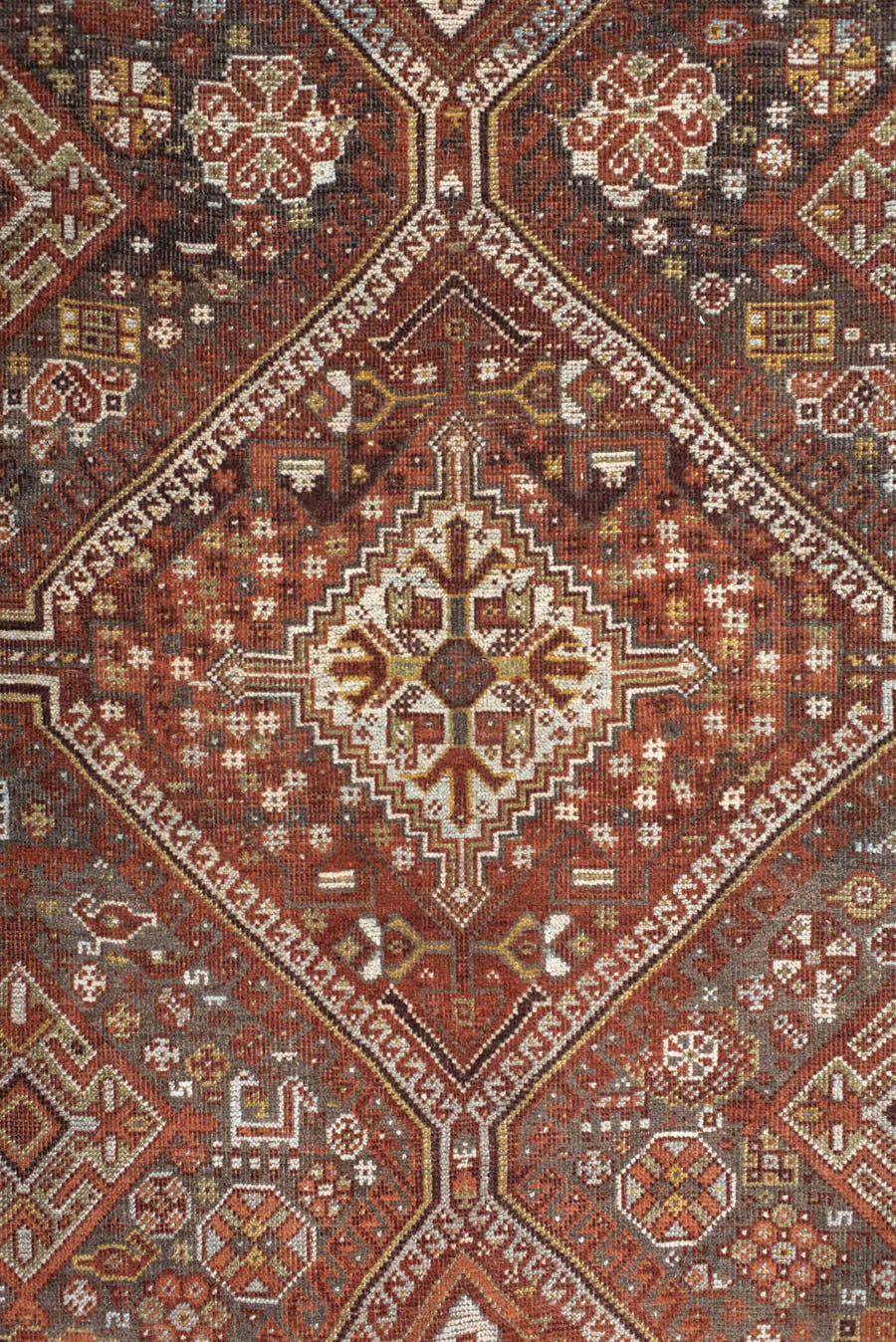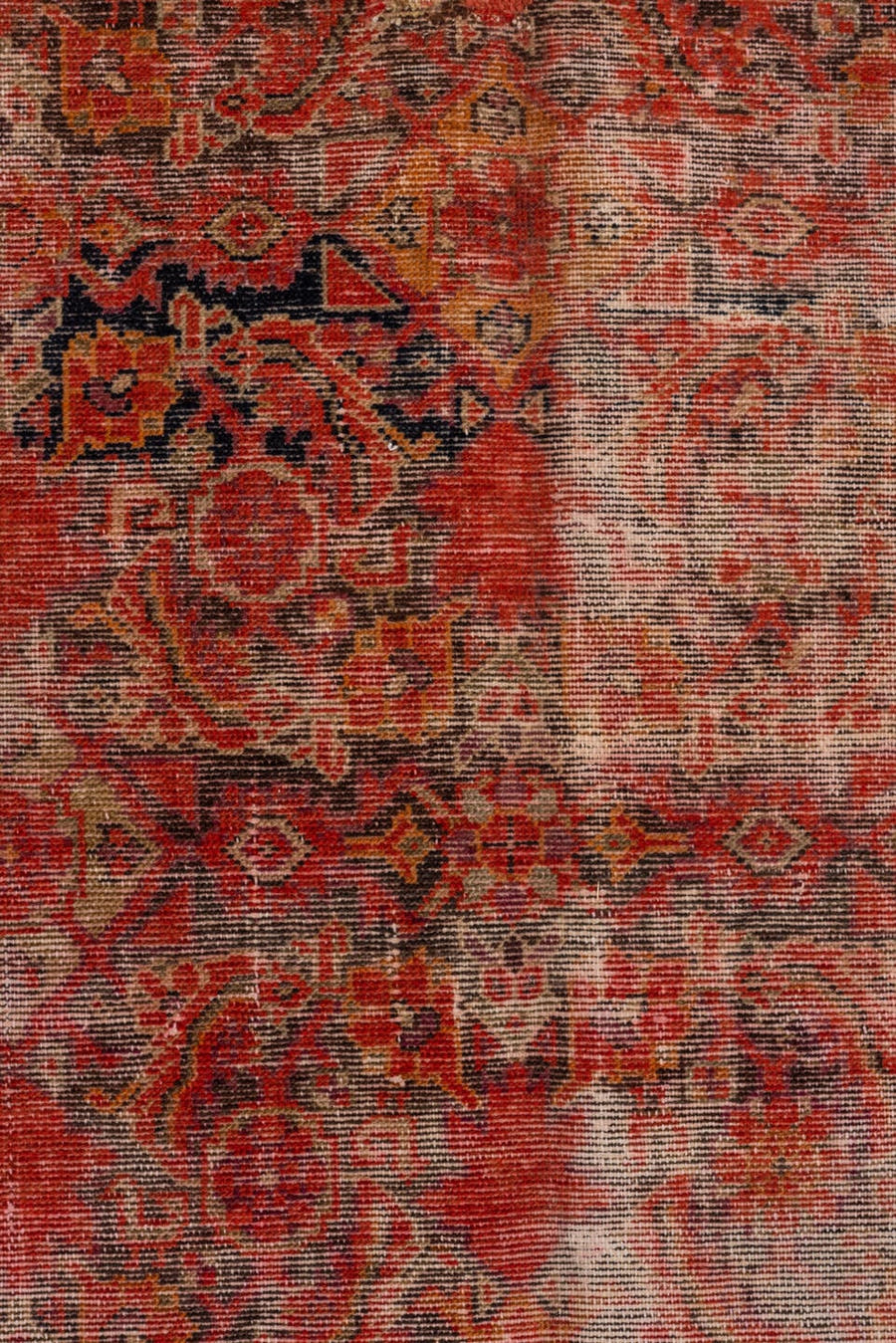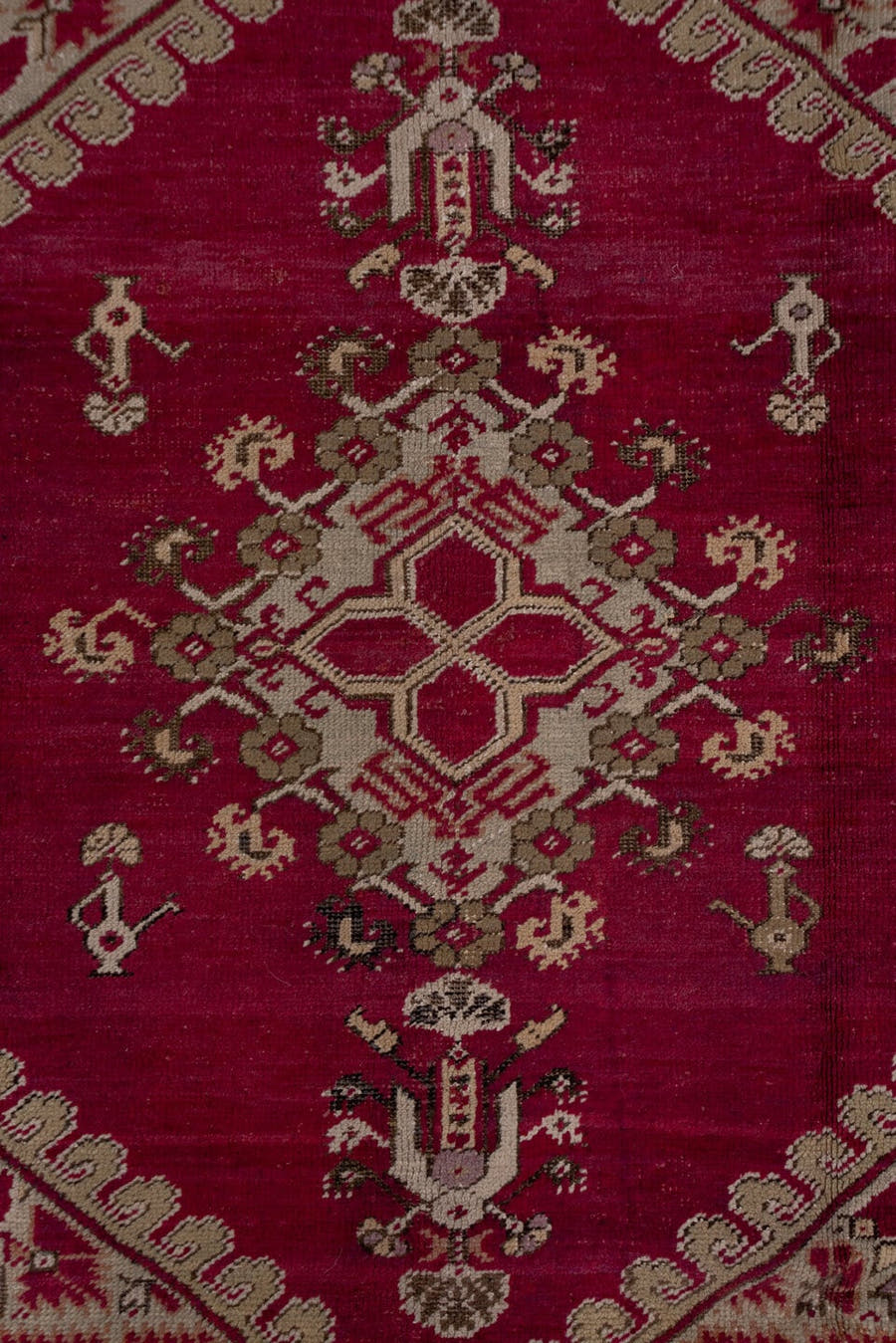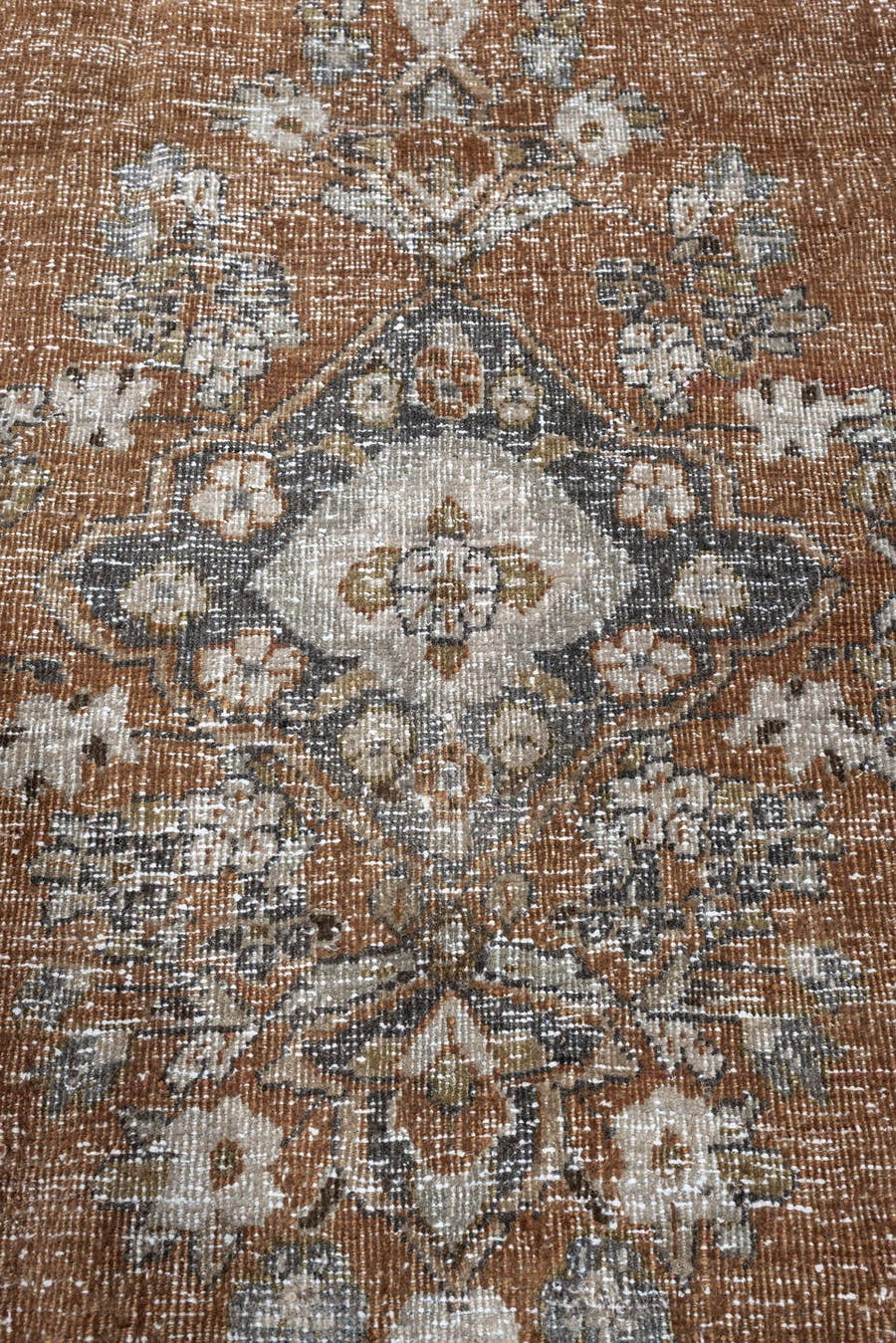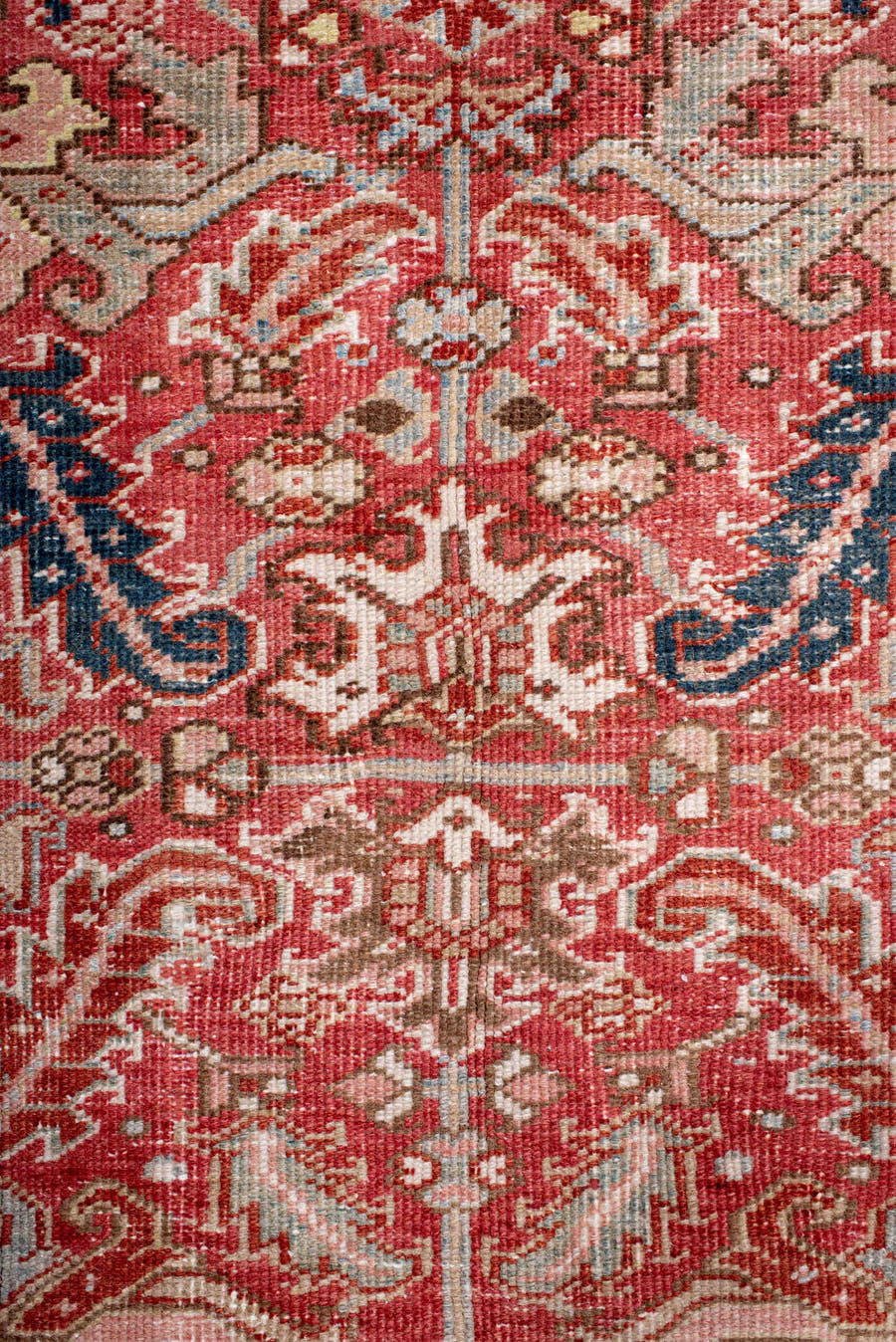
Antique Mahal Area Rug (6' x 10')
Held for you.
This rug is yours to think about until . The details are in your inbox.
Choose options

Held for you.
This rug is yours to think about until . The details are in your inbox.
Held for you.
This rug is yours to think about until . The details are in your inbox.
Dimensions: 6'6" x 10'5" (198 cm x 318 cm).
Circa: 1920.
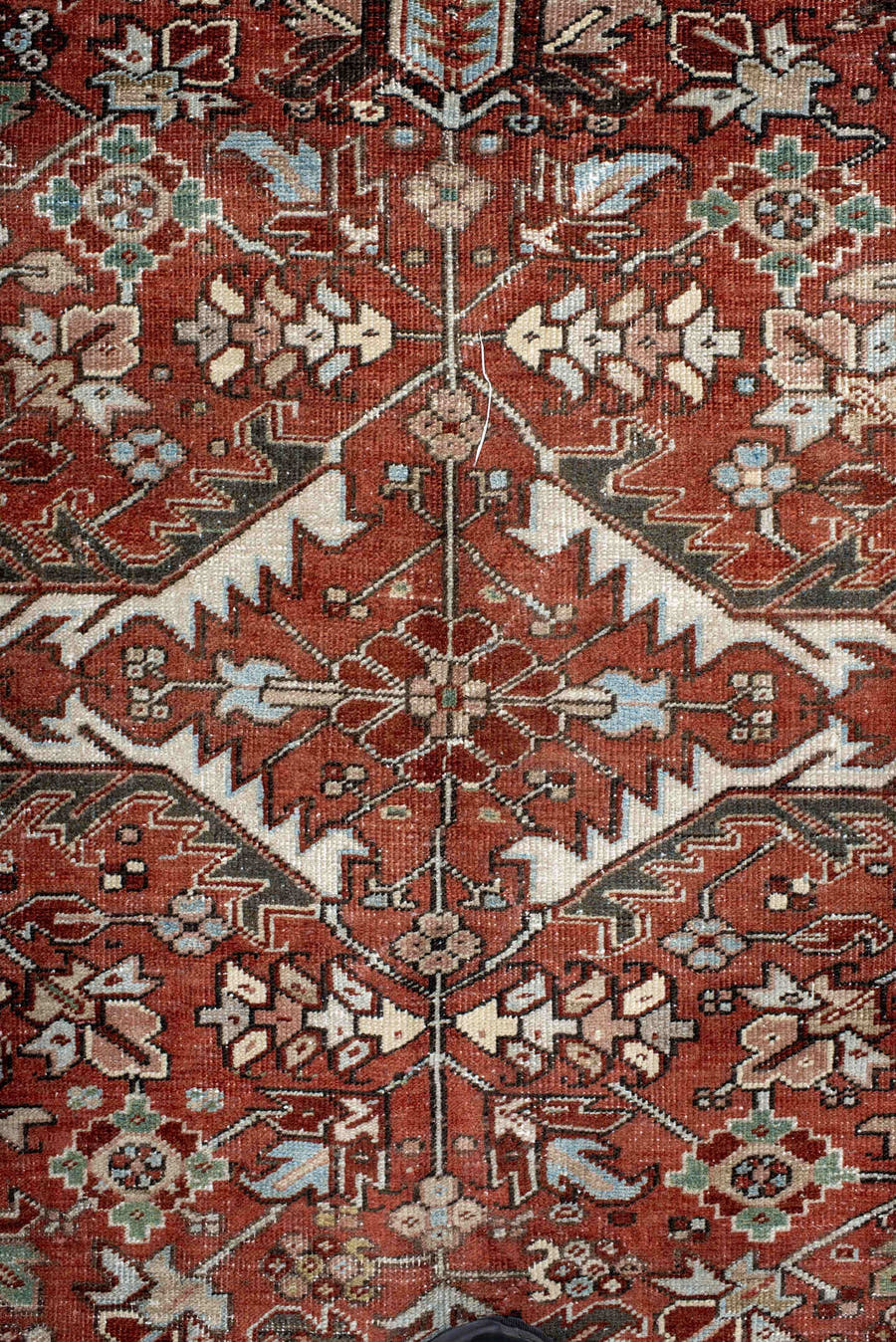
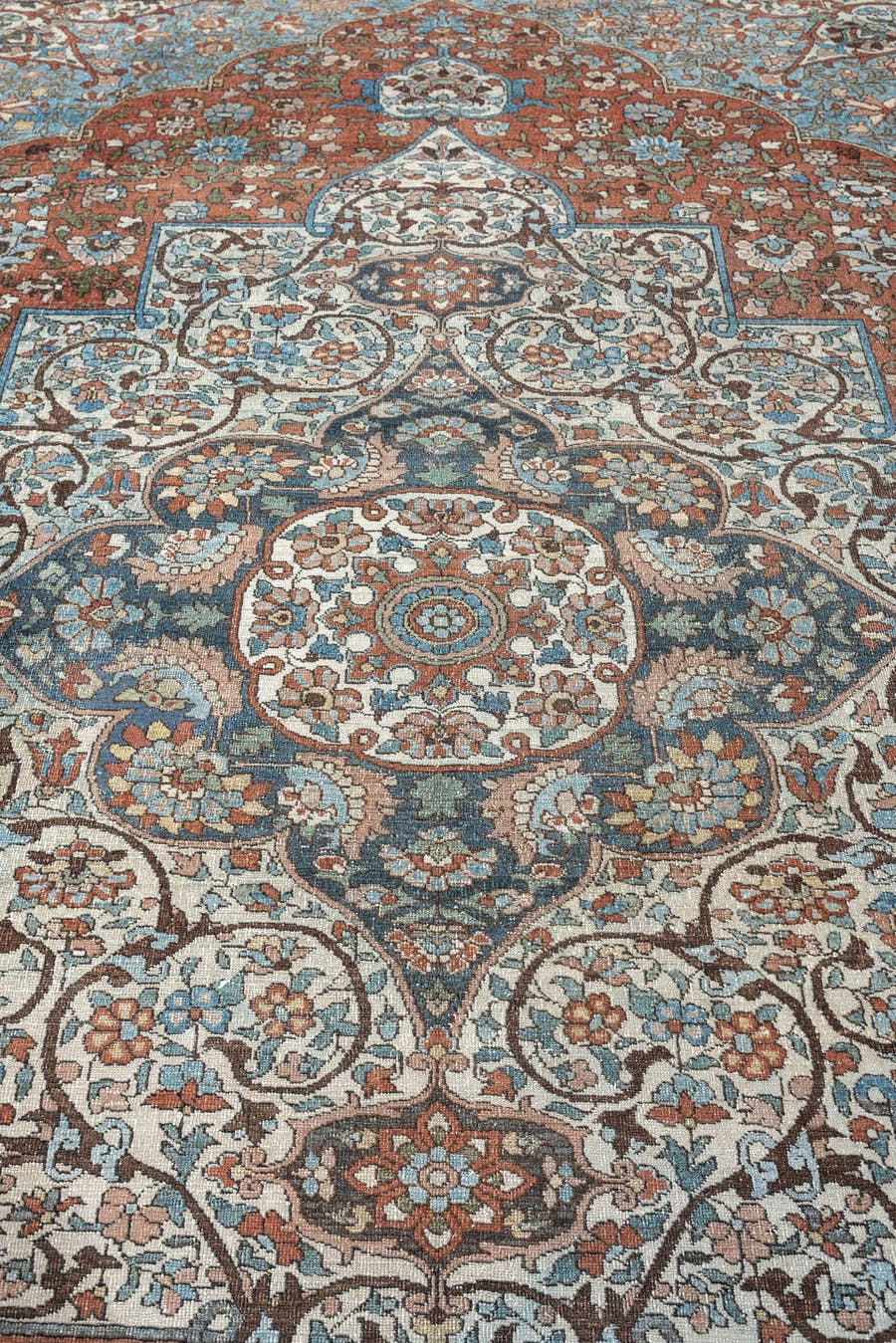
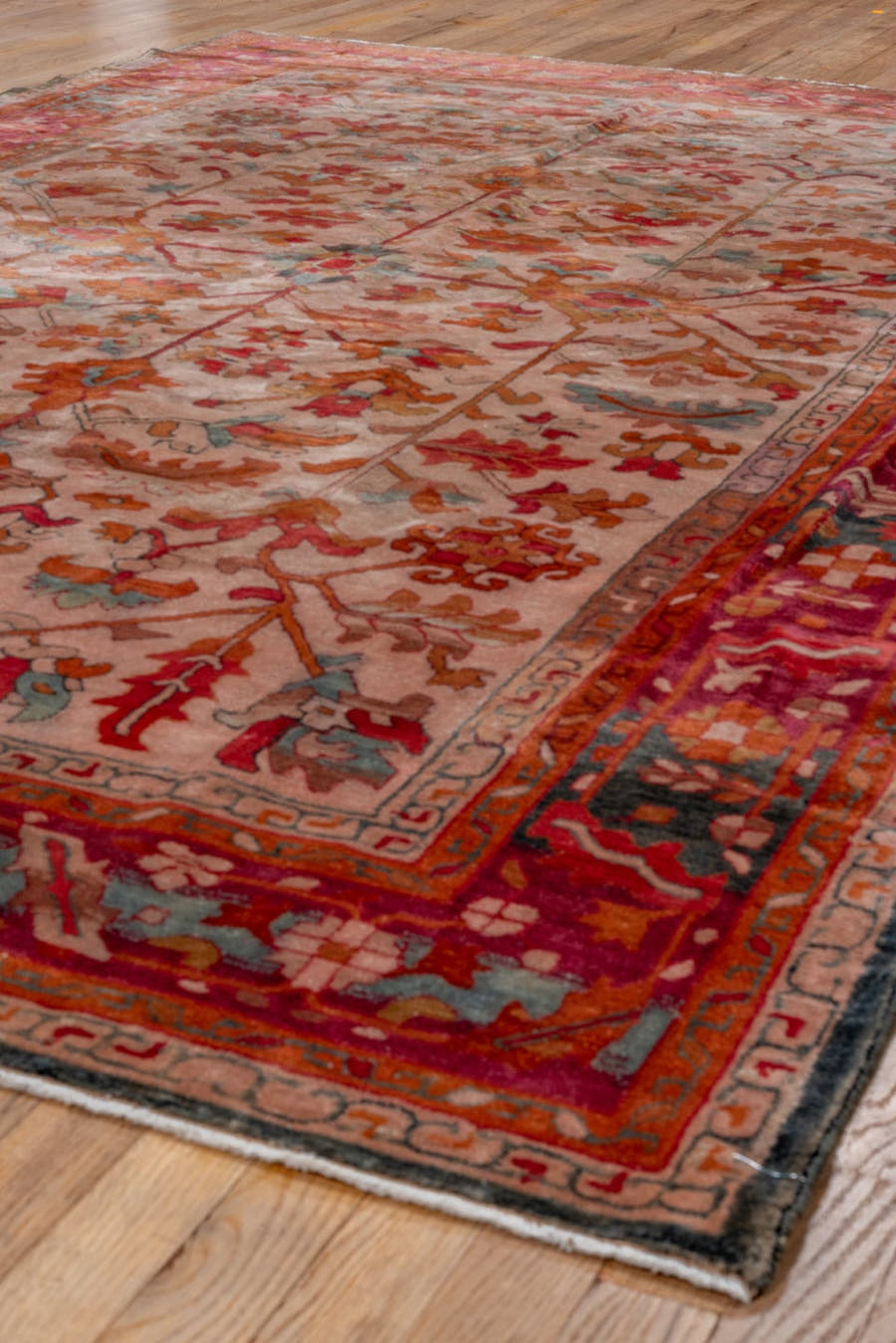
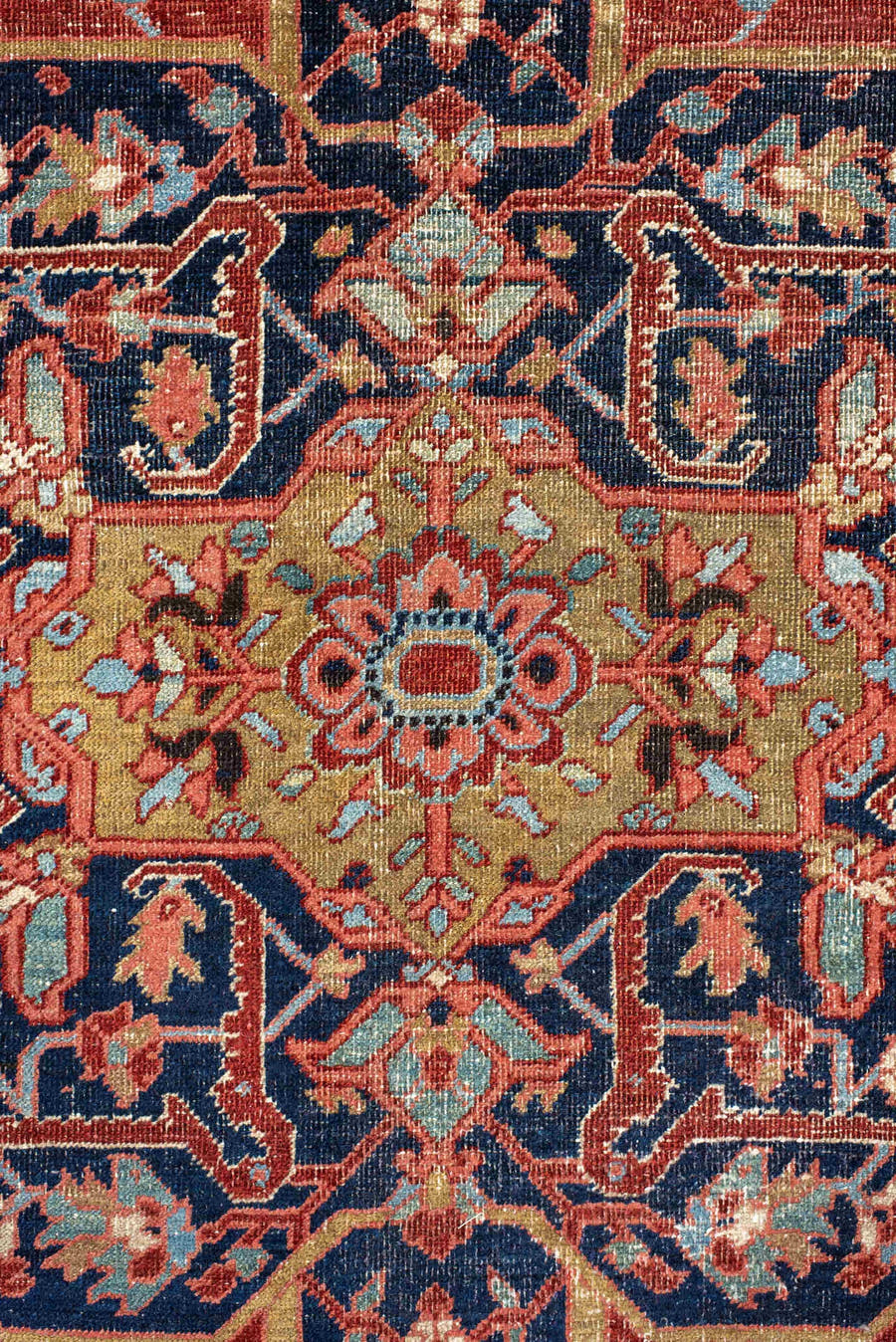
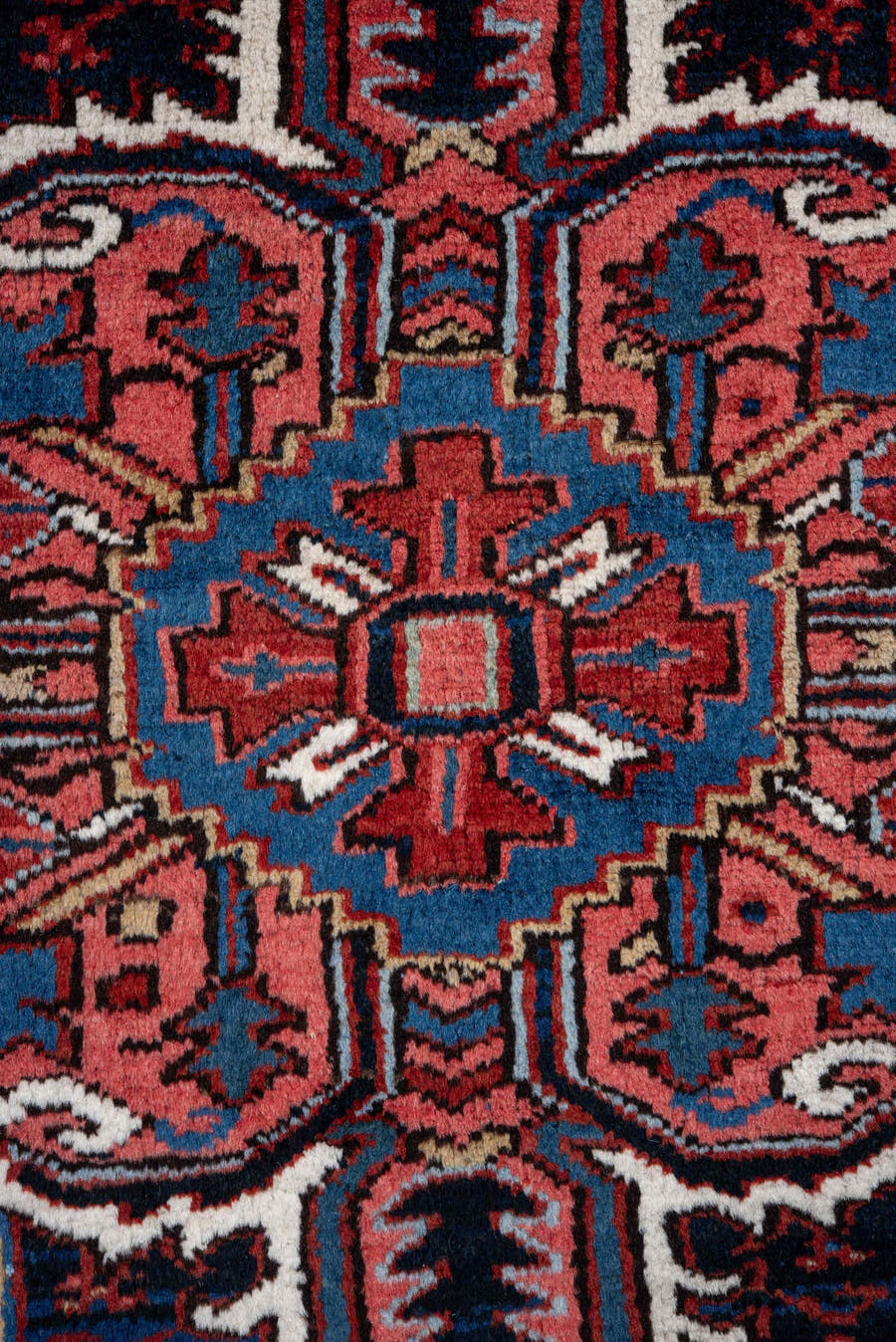
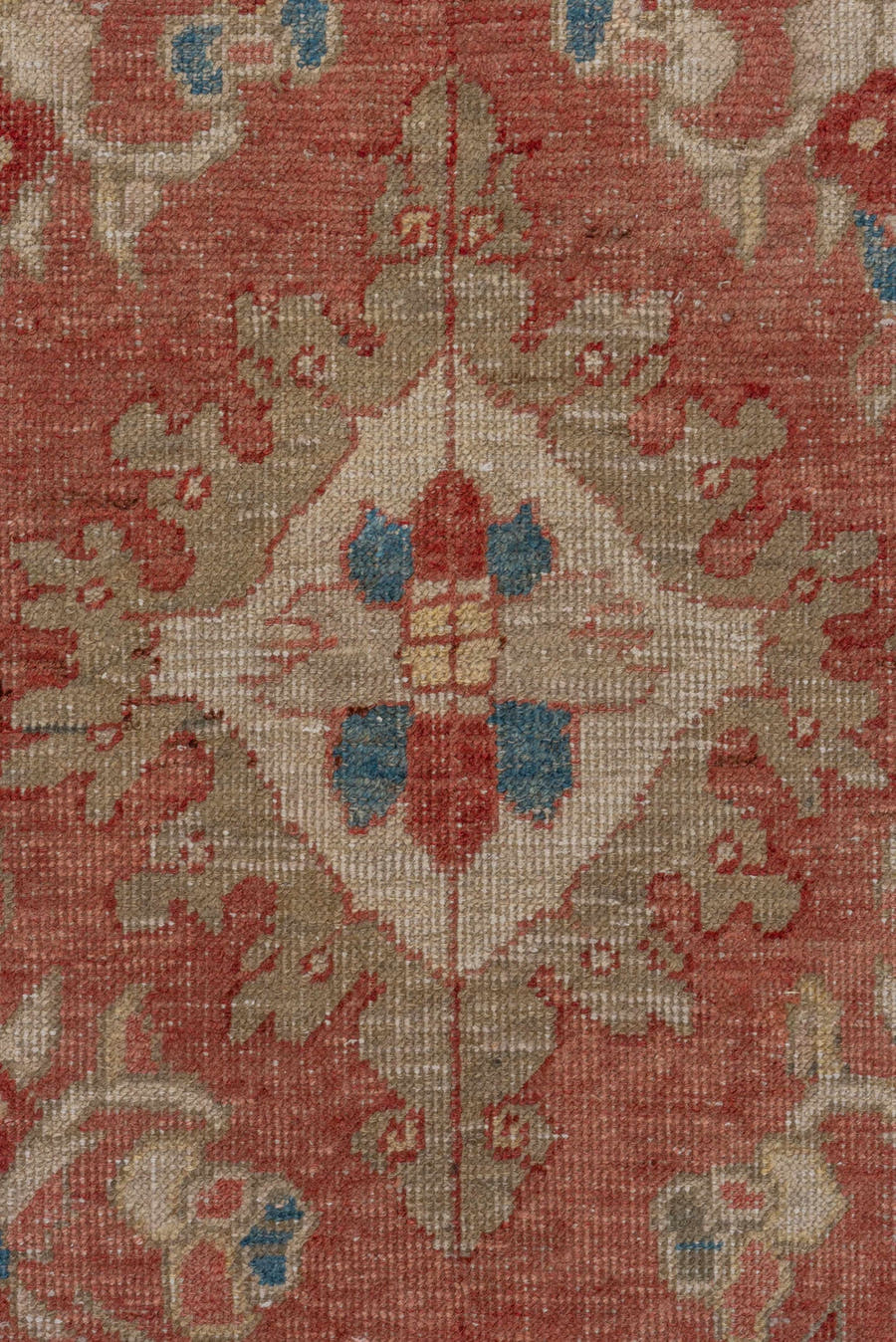
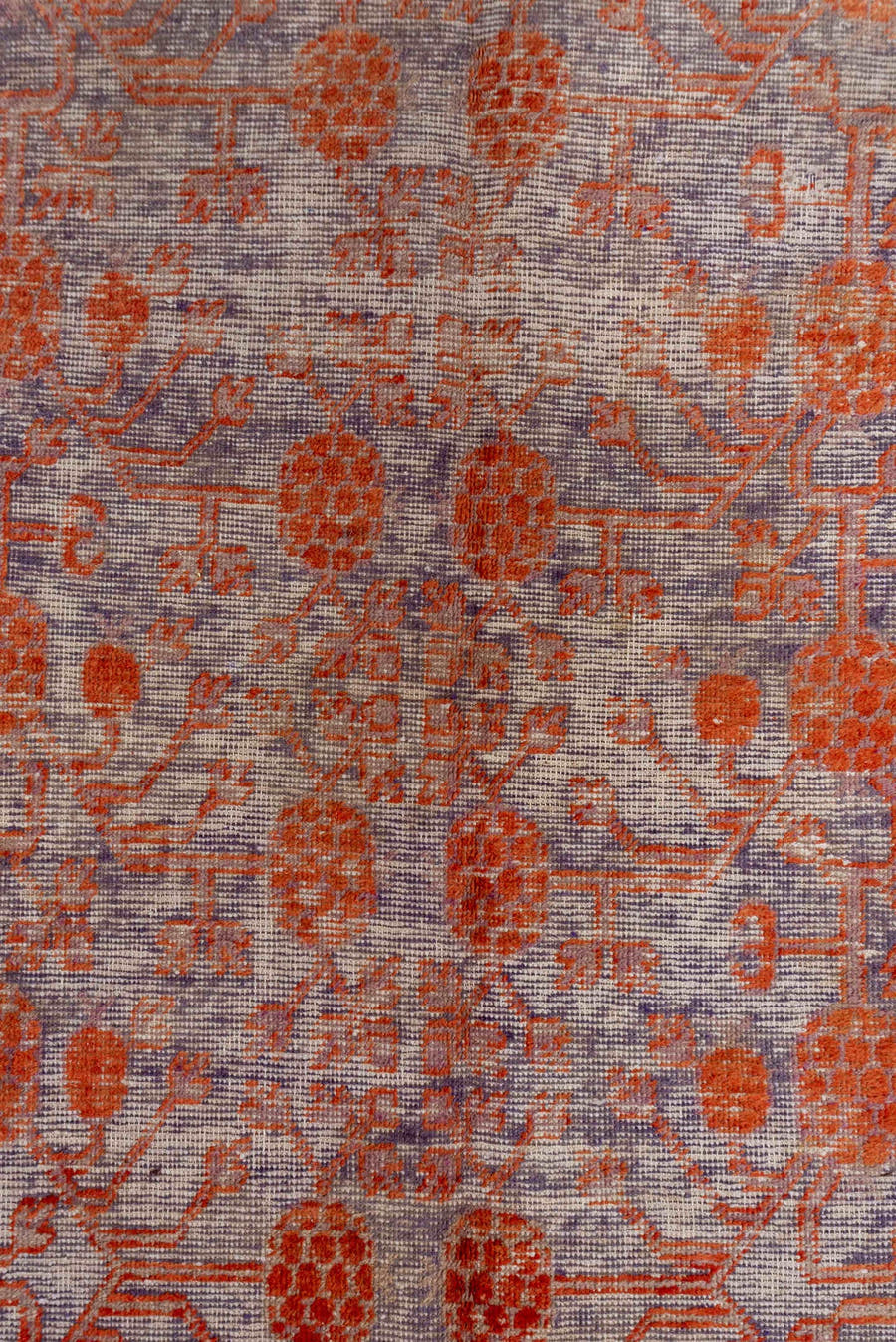
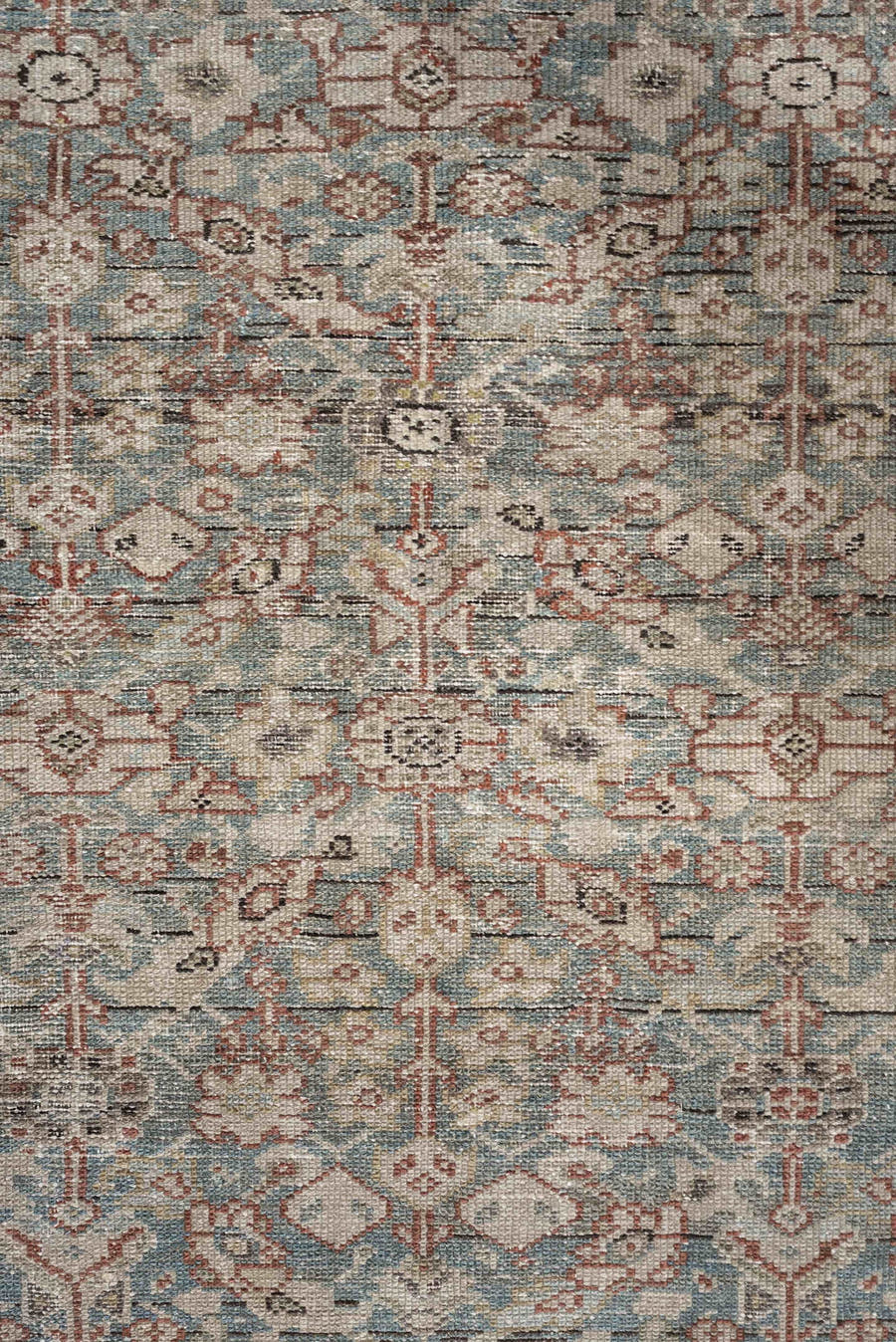
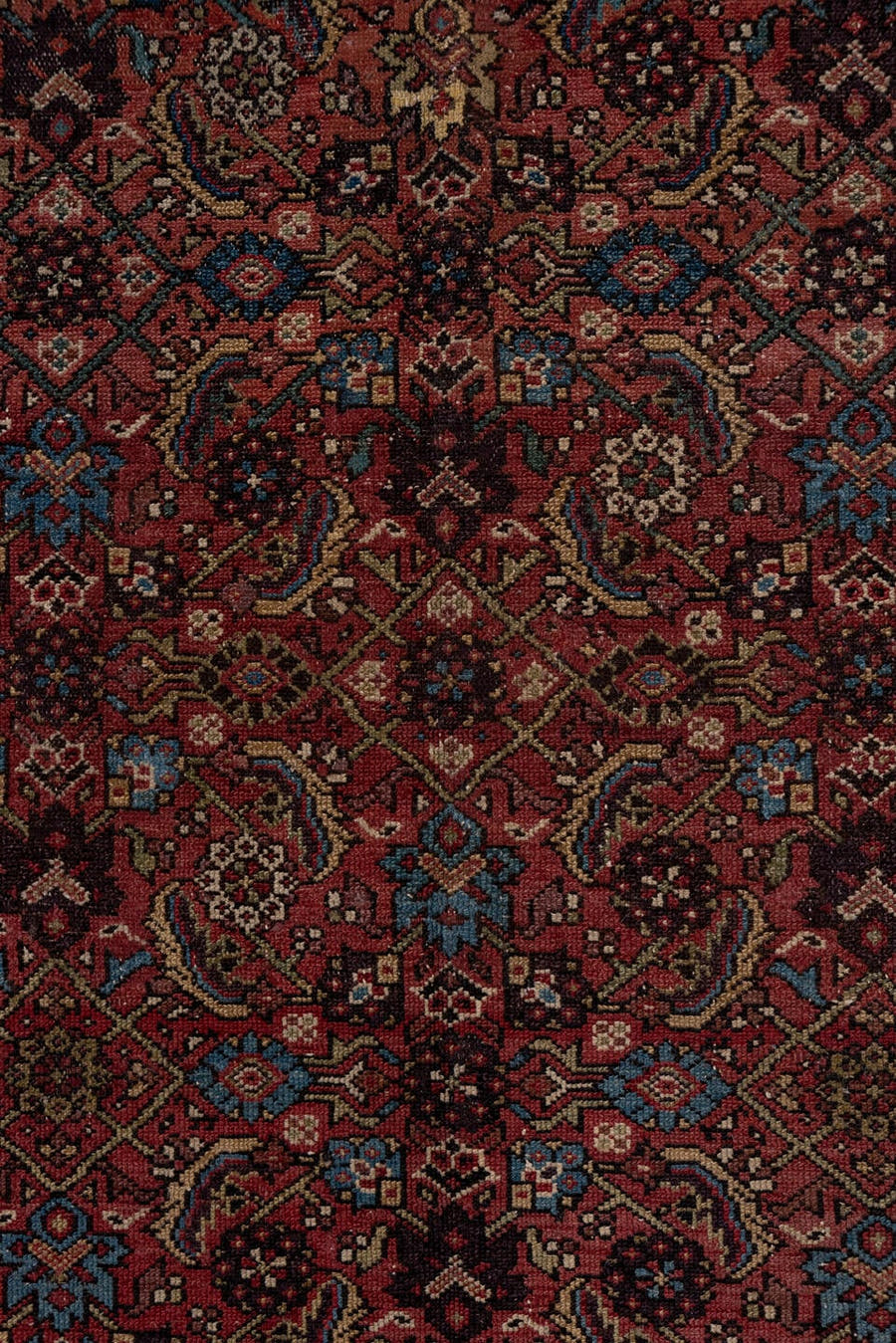
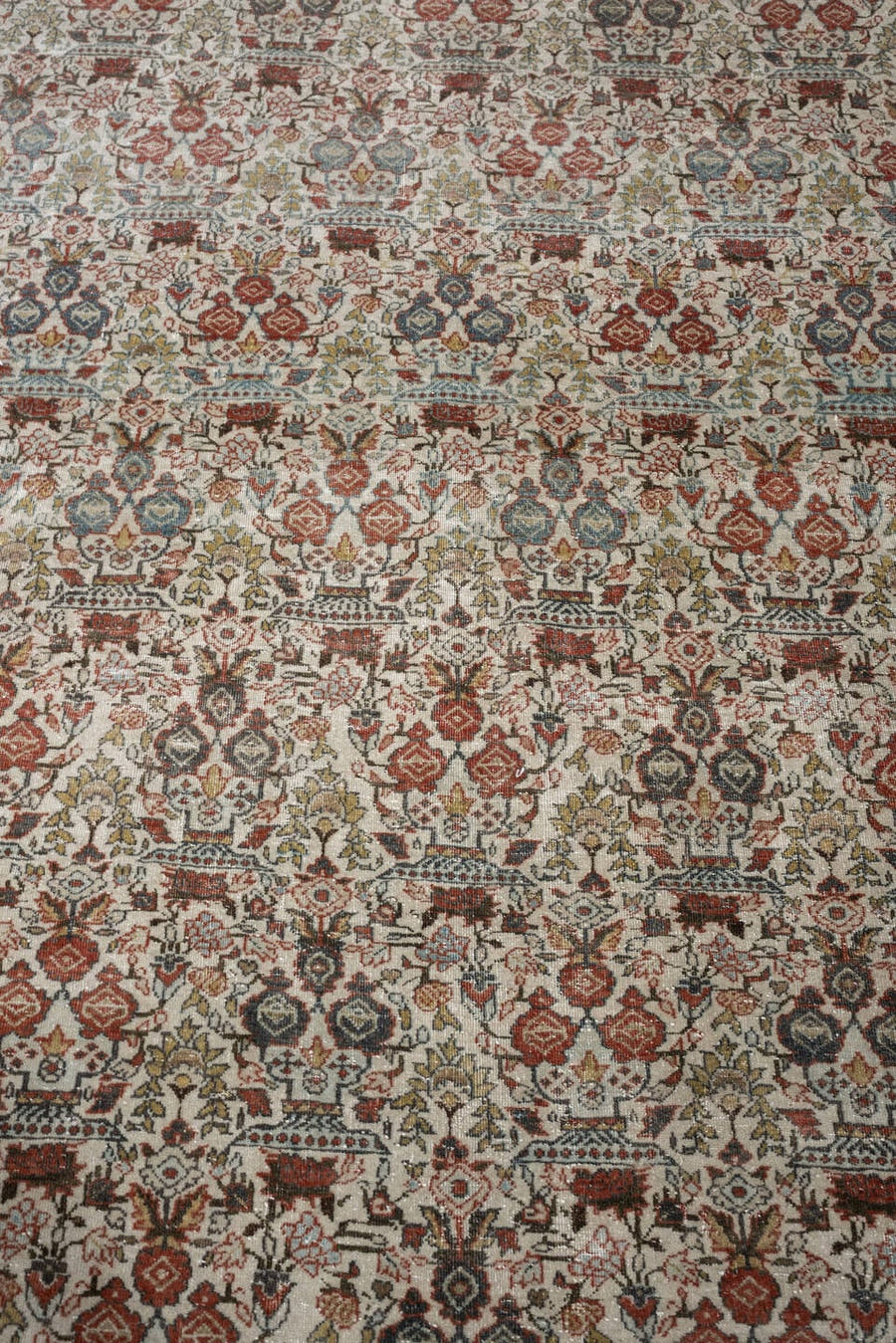
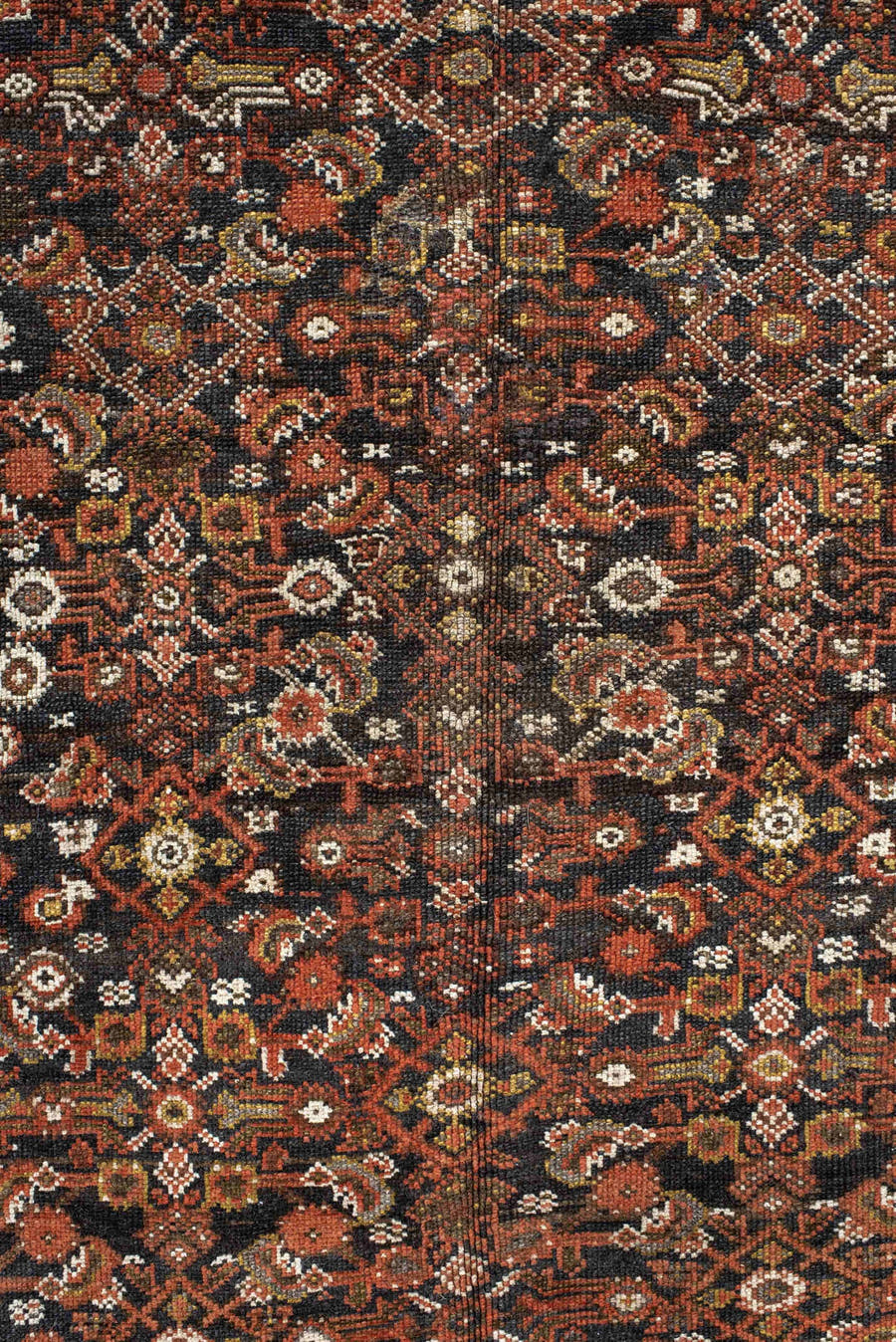
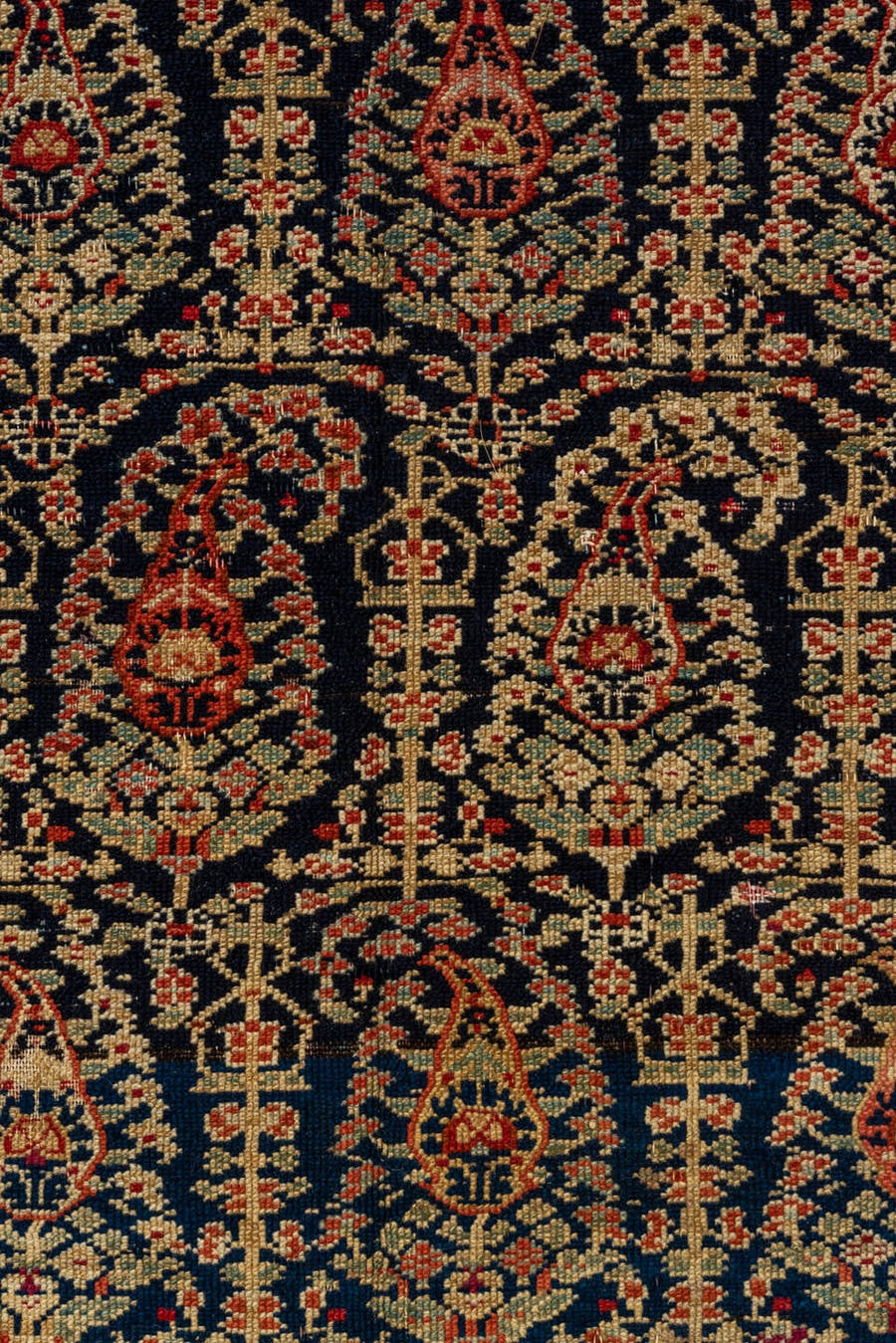
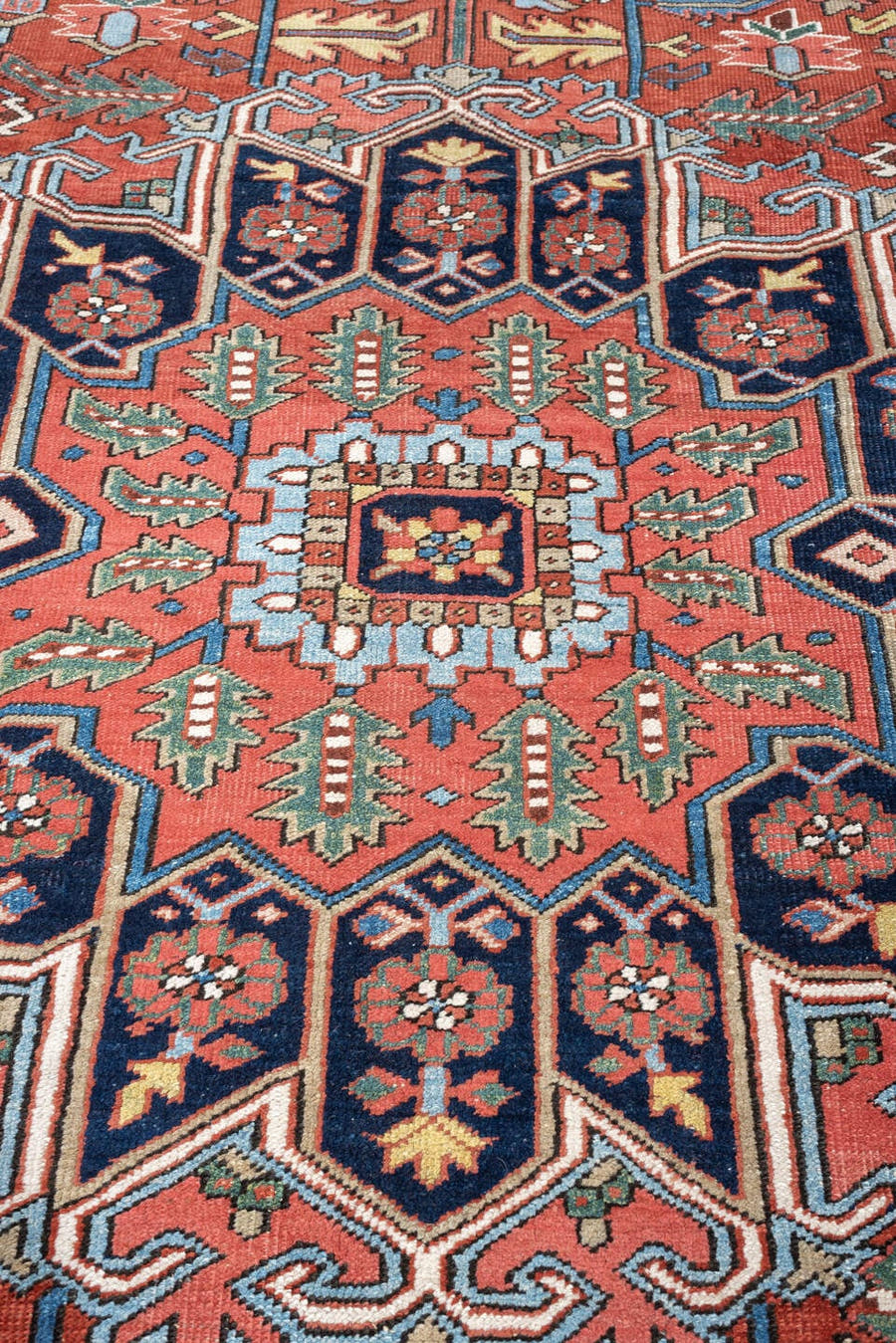
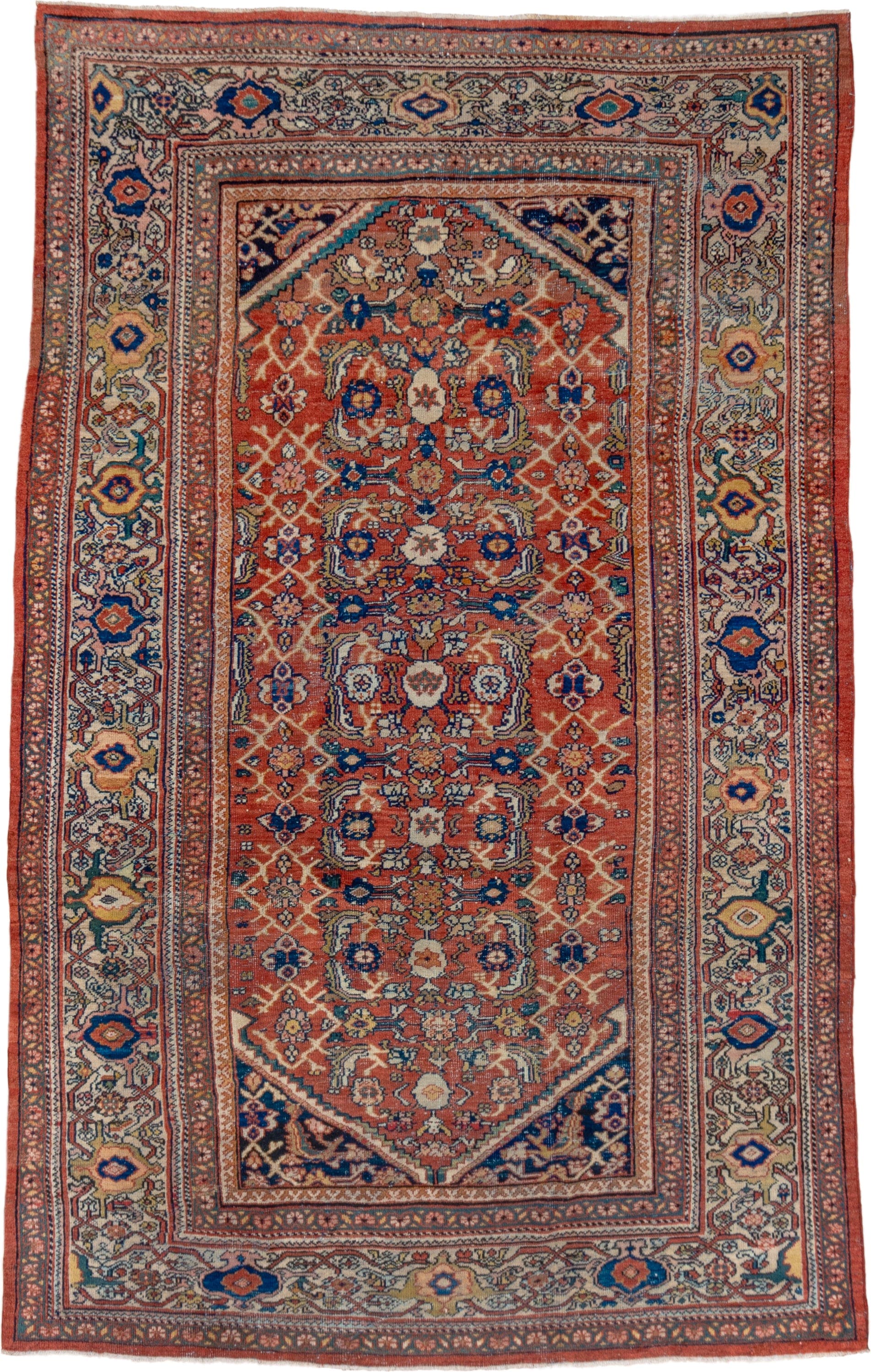
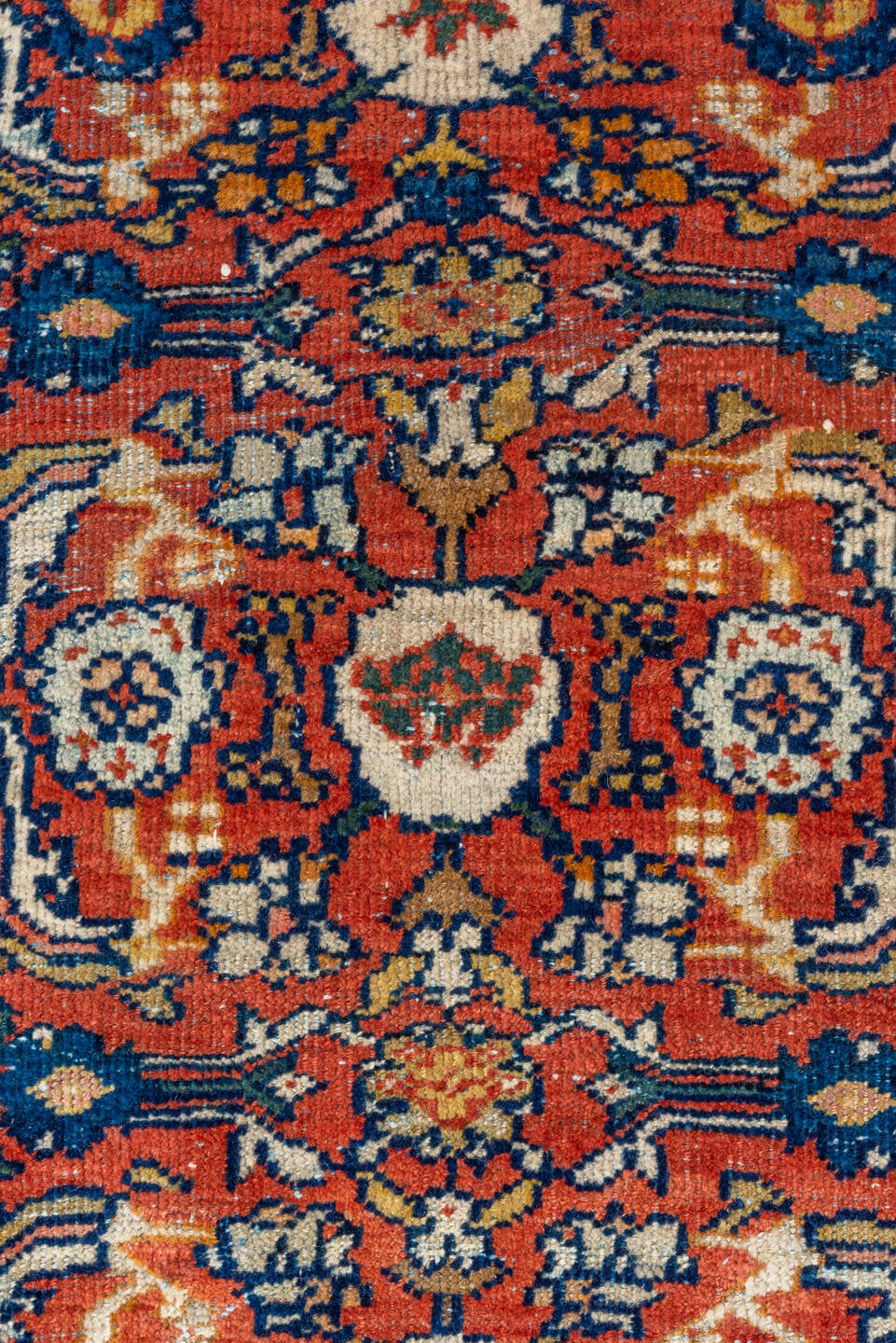
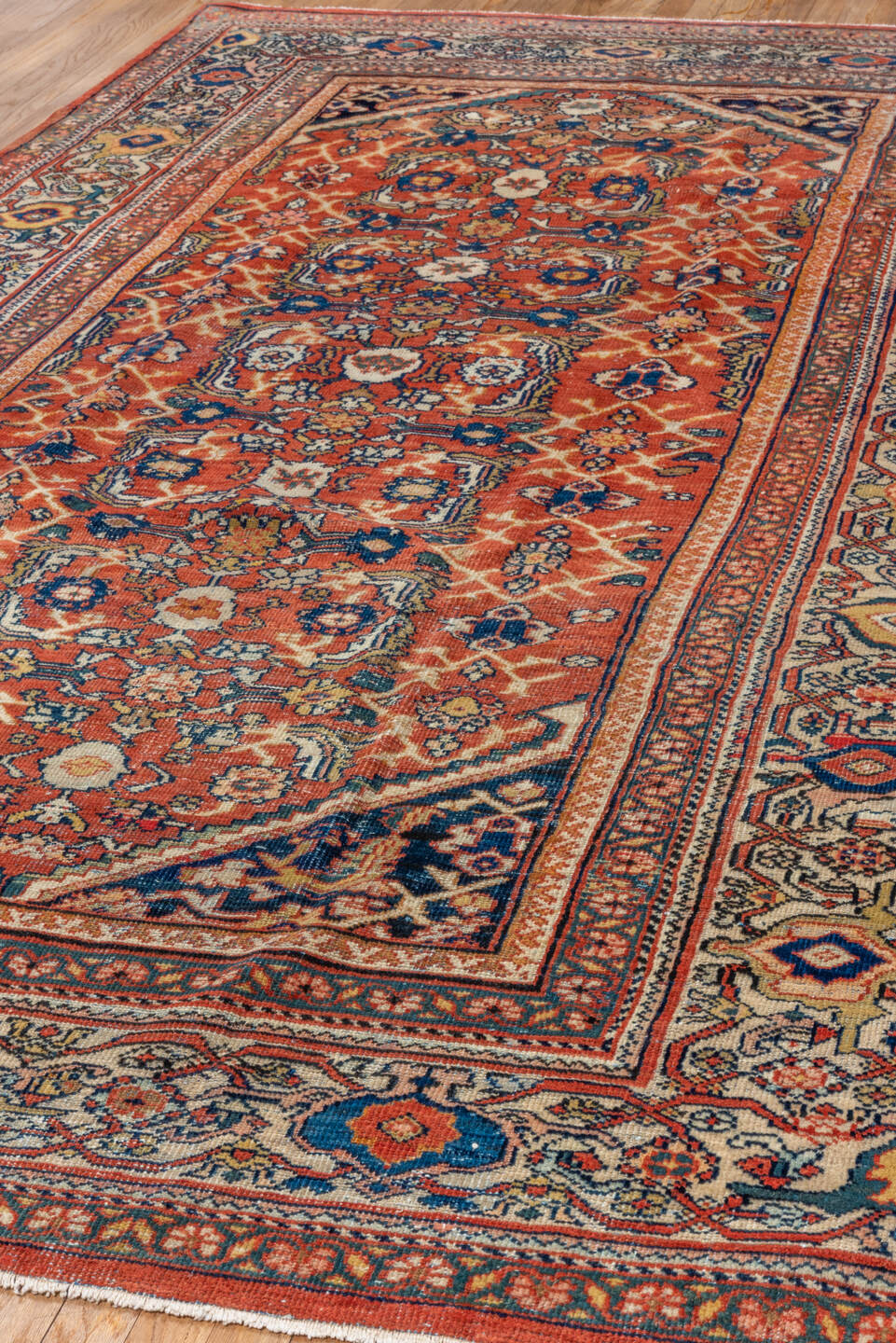
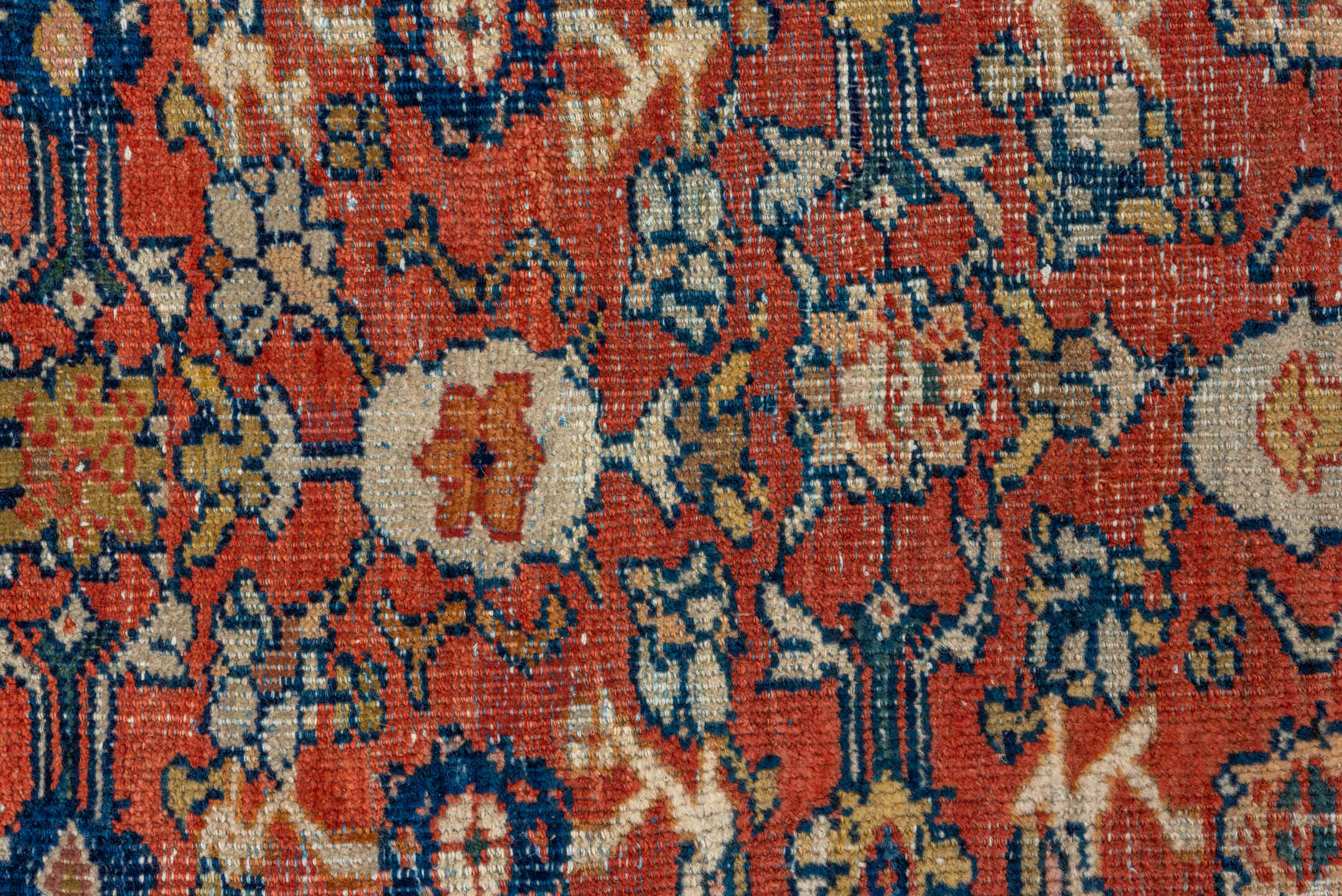
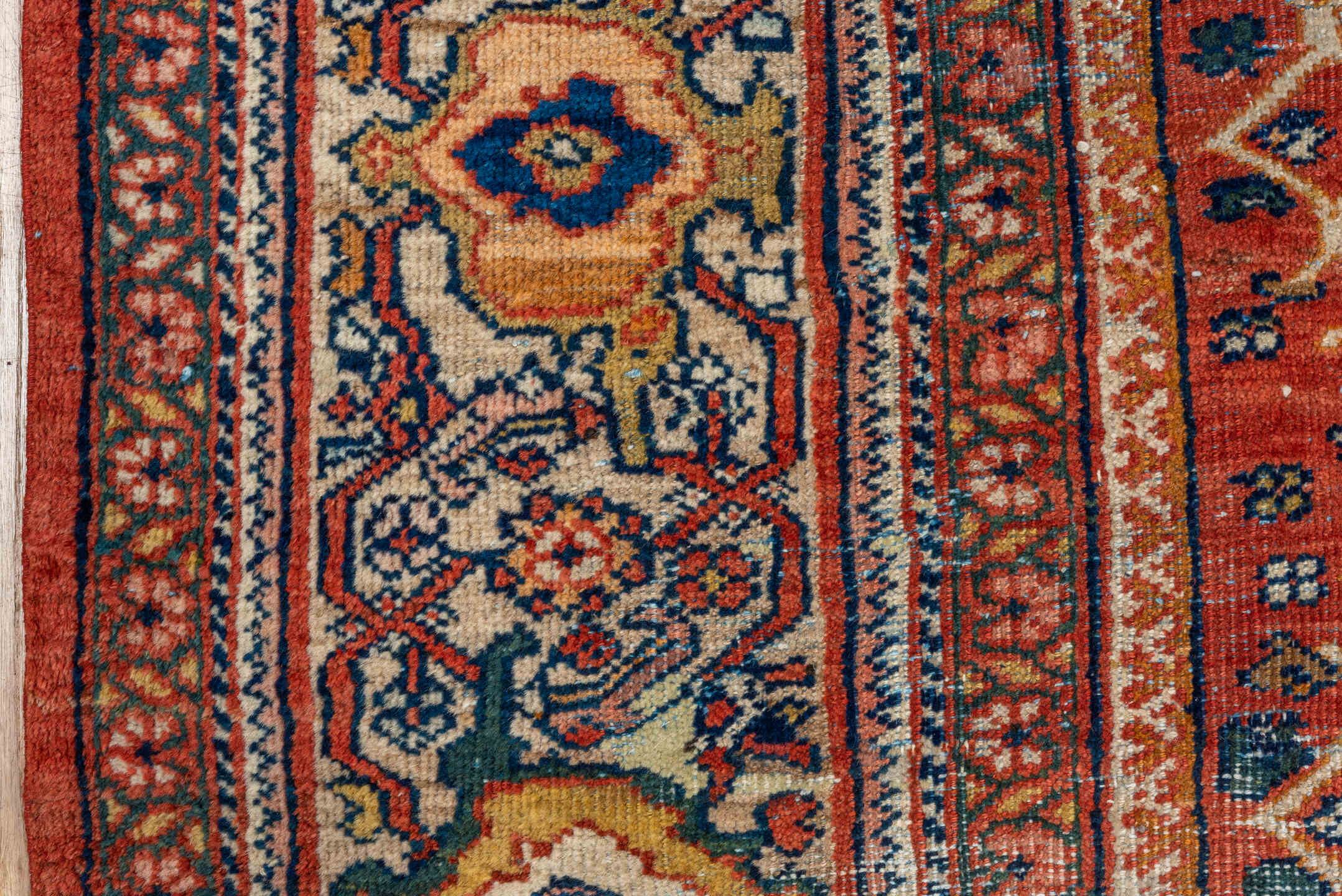
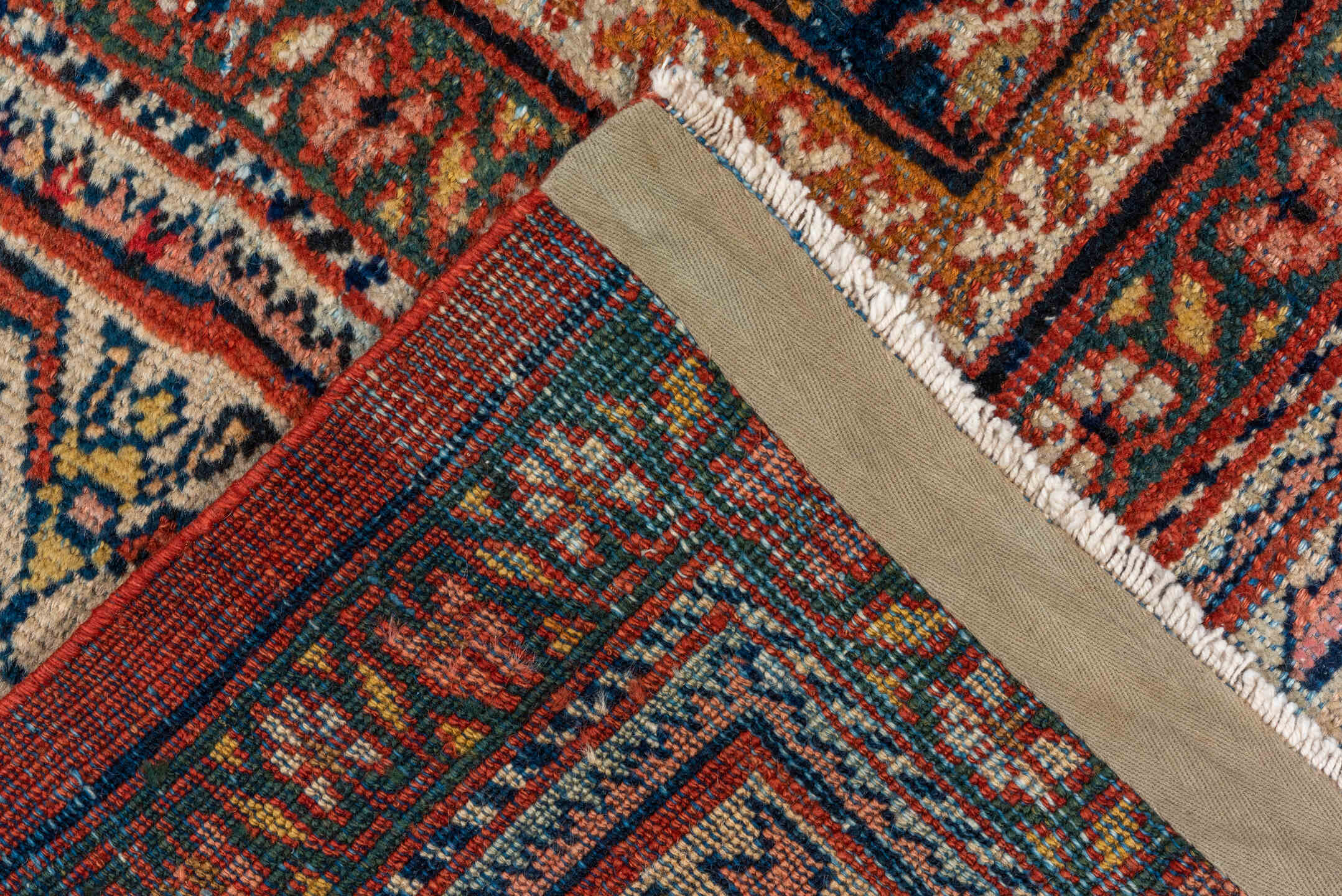
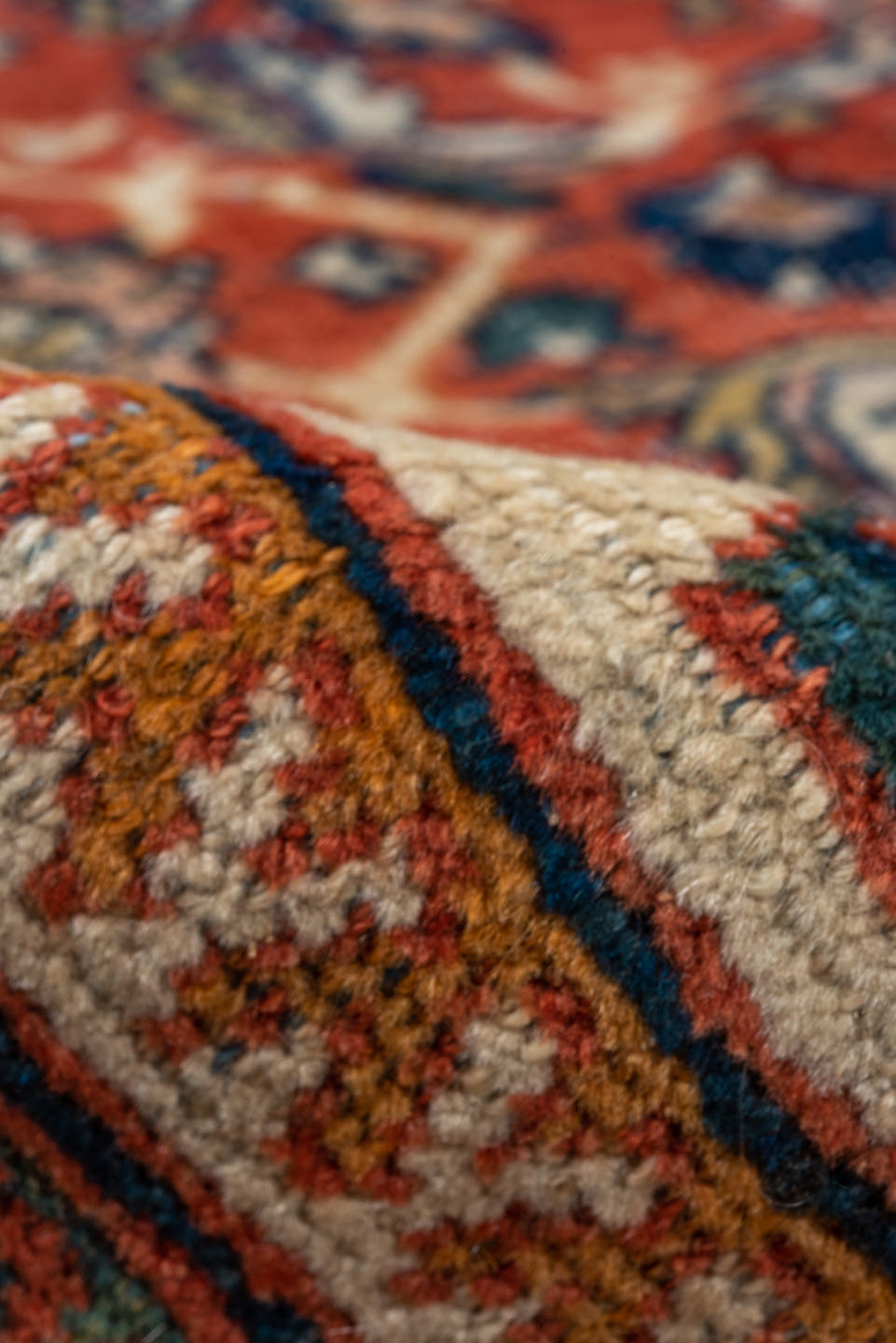
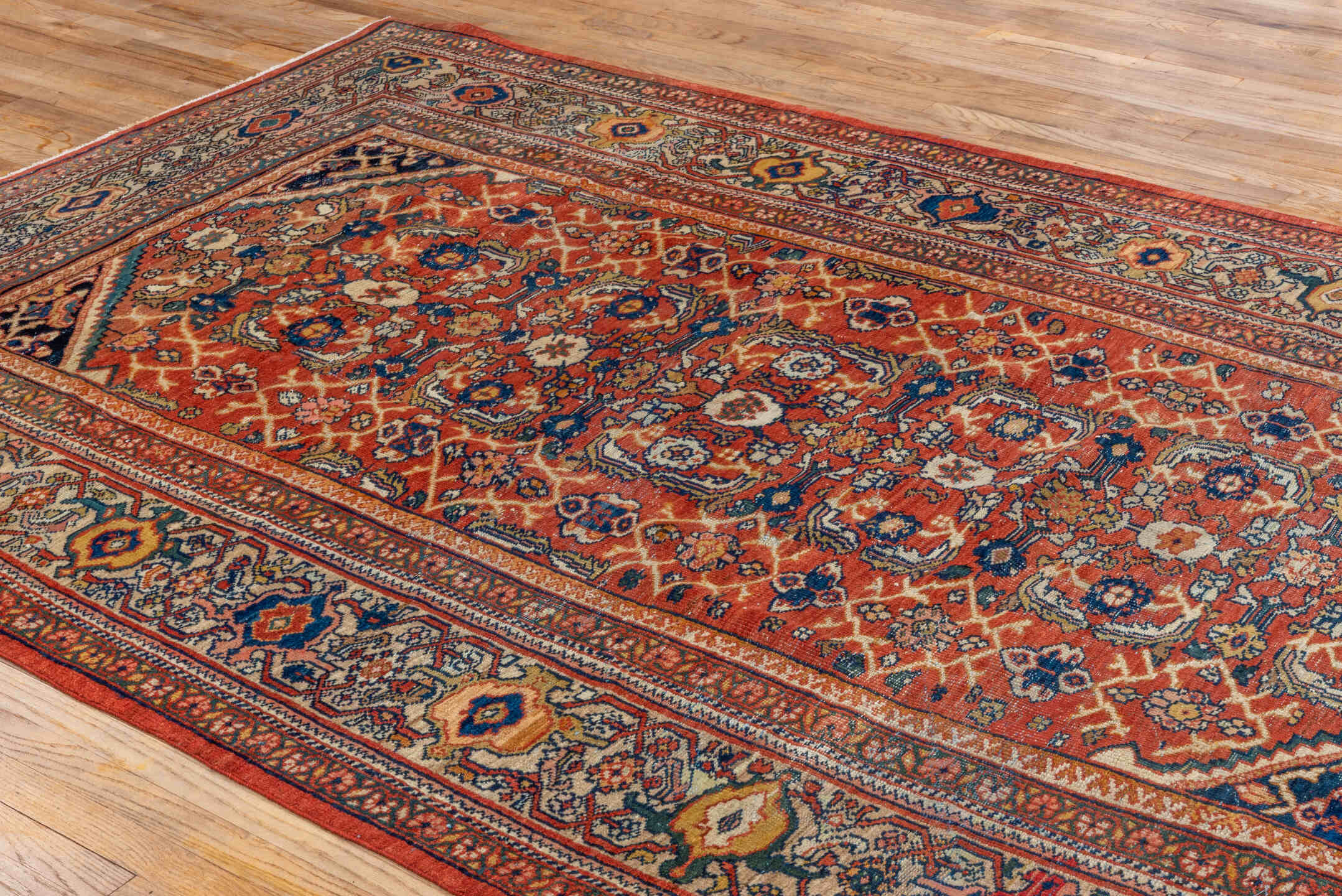
This antique Mahal rug from Persia, circa 1920, is a handmade, one-of-a-kind carpet with a richly drawn all-over floral lattice framed by an elegant ivory border. Its terracotta field, deep navy accents, and finely articulated border motifs create a warm, collector-friendly composition with the classic decorative balance that makes Mahal rugs so sought after. Hand-knotted with the nuanced character and visual depth prized in early Persian weaving, it is an ideal centerpiece for a living room, dining room, or office.
Muted warm tones of terra cotta, ivory, navy, rust, camel, gold, sage, and rose, with a terra cotta field.
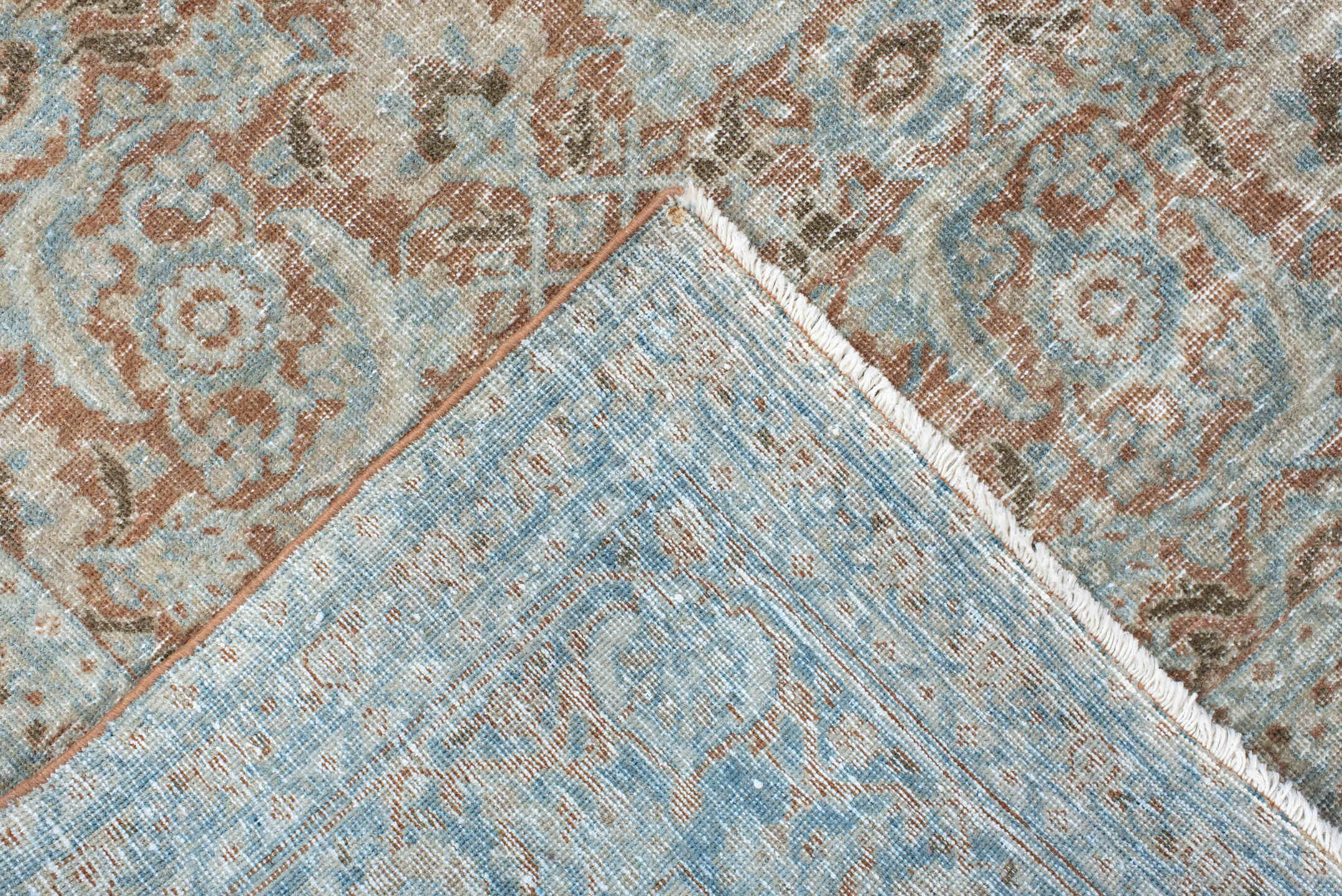
Mahal rugs are woven in the Mahallat district, about 45 miles southeast of Arak (formerly Sultanabad) in west-central Iran. Hand-knotted in a cottage industry setting on a cotton foundation using soft, lustrous wool with the Persian asymmetric knot, Mahal rugs occupy a distinctive middle ground between formal city carpets and bold tribal work — neither strictly floral nor geometric, they have an ideal informality that allows them to sit comfortably in almost any décor.
Their palette is typically subdued — ivories, grays, soft browns, and faded madder reds — and their all-over "Harshang" or herati-derived patterns have a folksy, country charm beloved by interior designers. Antique Mahal rugs are closely related to the better-known Sultanabad, sharing the same relaxed drawing and warm, lived-in quality.
Others you might love
Size
Hand-knotted rugs are never exactly nine by twelve, so a foot of give is the default.
Leave any box empty for no limit.
Width
Length
Price
Leave either box empty for no limit.