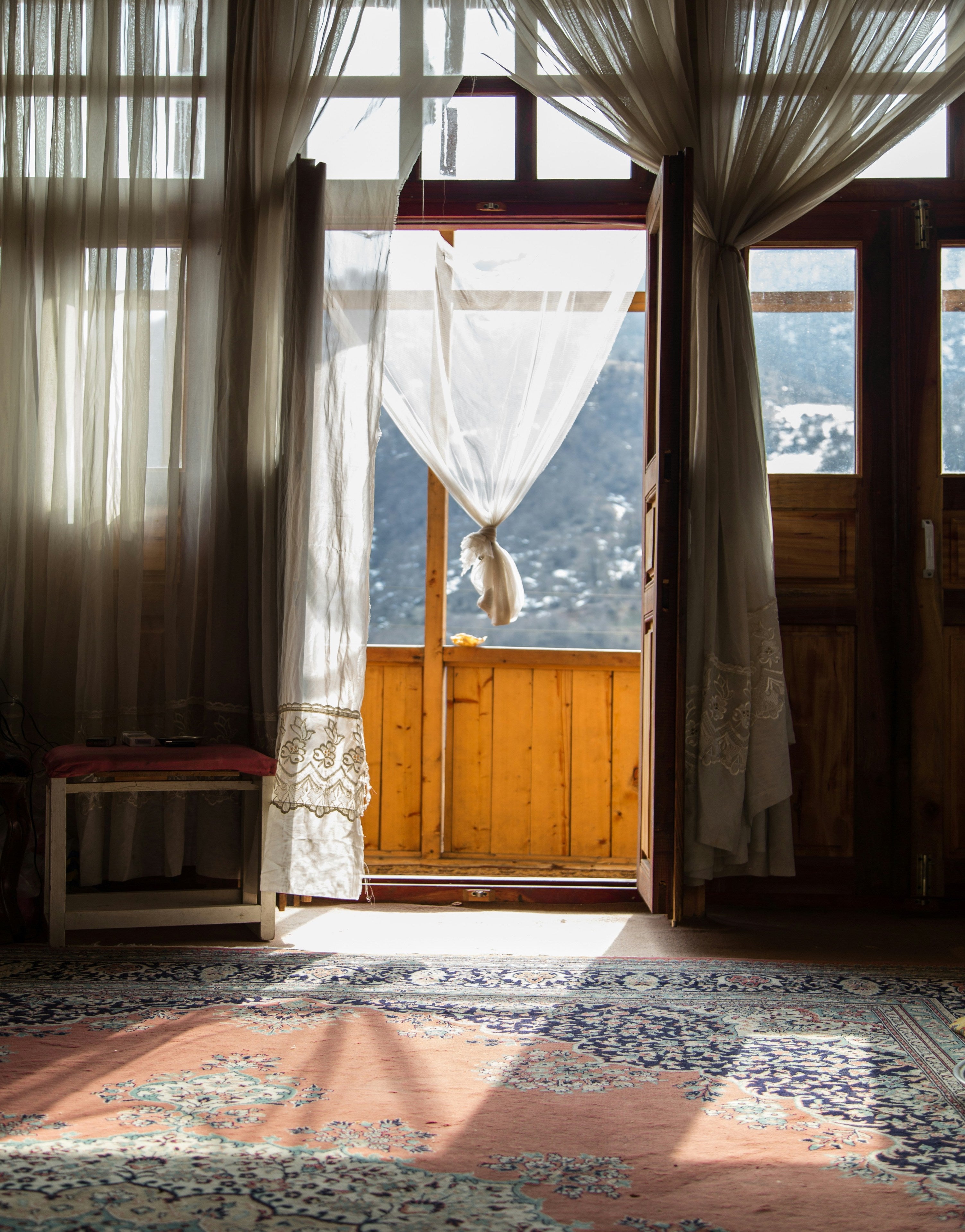

A faded vintage rug is not a rug past its prime. The washed, quiet color that photographs so well took decades to develop, and it is the reason designers keep returning to vintage pieces when a room needs pattern without noise. The muted palette is not damage. It is the point, and once you know where it comes from, it becomes hard to settle for a new rug printed in flat color.
Why natural dyes soften instead of failing
Until the late nineteenth century, nearly every rug was colored with dyes made from plants and minerals. Madder root gave reds and terracottas, indigo leaves gave every blue from near black to powder, walnut husks and pomegranate rind gave browns and golds. These dyes do not sit on the surface of the wool. Fixed with mineral salts, they bond deep into the fiber itself.
That chemistry is why old rugs age the way they do. Decades of daylight soften natural dyes slowly and evenly, so every color in the rug loses intensity together and the palette stays in balance. Madder red settles toward rose and soft brick. Indigo eases back to slate and sky blue. Nothing turns muddy, because nothing fades alone. A machine-made rug in synthetic color cannot repeat this; it holds its exact shade for years and then simply looks tired.
There is a second signature worth knowing. Village weavers dyed wool in small pots, one batch at a time, and no two batches ever matched exactly. As a rug ages, those small differences surface as gentle bands of lighter and darker color running across the field. Weavers call this abrash, and collectors prize it: it is proof of handwork, and it gives a single color the depth of an entire palette.
How to tell honest fading from a factory wash
The faded look is popular enough that plenty of new rugs are stripped in a chemical bath to imitate it. There is nothing wrong with owning one, but you should know what you are paying for, and the difference is easy to check in person.
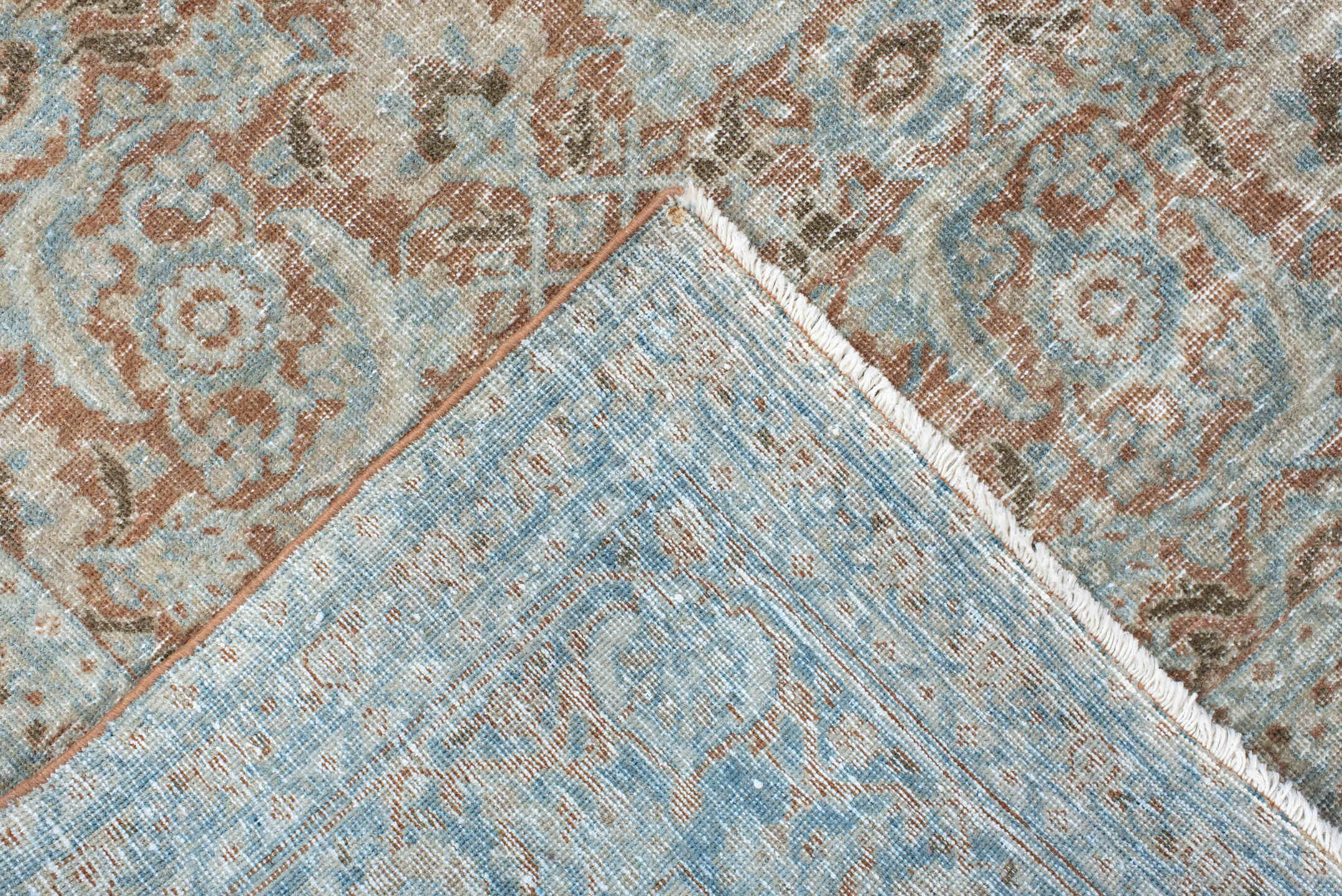
Part the pile with your fingers. On a naturally faded rug, the color deepens toward the roots, because daylight only ever reaches the tips. Then turn over a corner: the back of the rug, which never saw the sun, holds noticeably stronger color than the front. A rug lightened in a factory looks equally pale at the tips, at the roots, and on the back, because the bath reaches everywhere the sun cannot.
One practical note for whichever rug you own: rotate it once or twice a year. Daylight keeps working on wool for as long as a rug is on the floor, and rotation keeps the softening even.
Where muted palettes work in a modern room
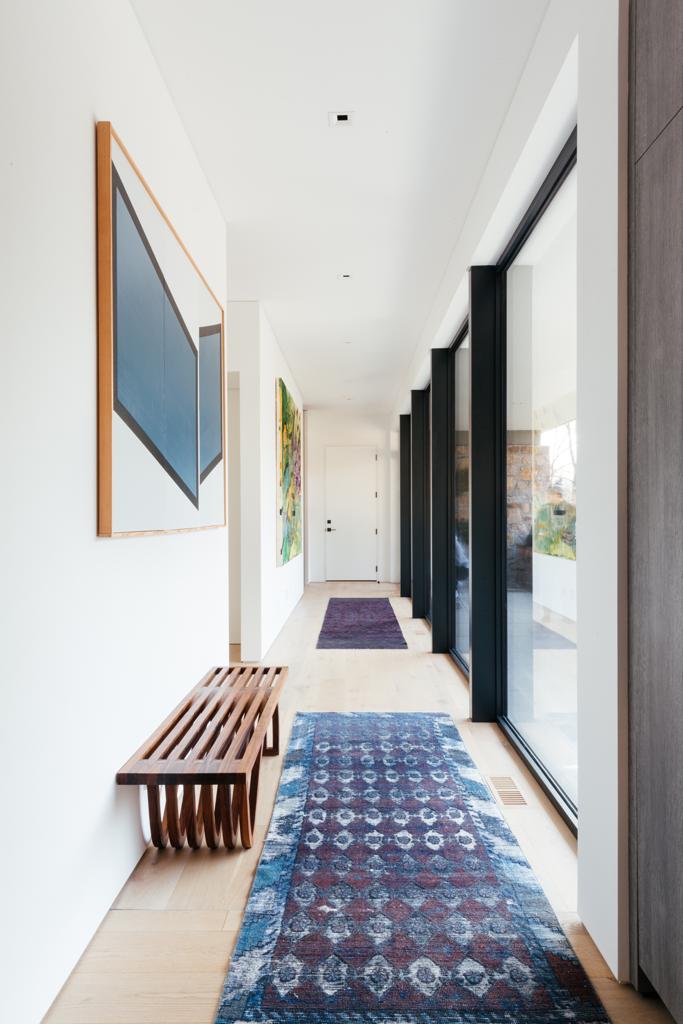
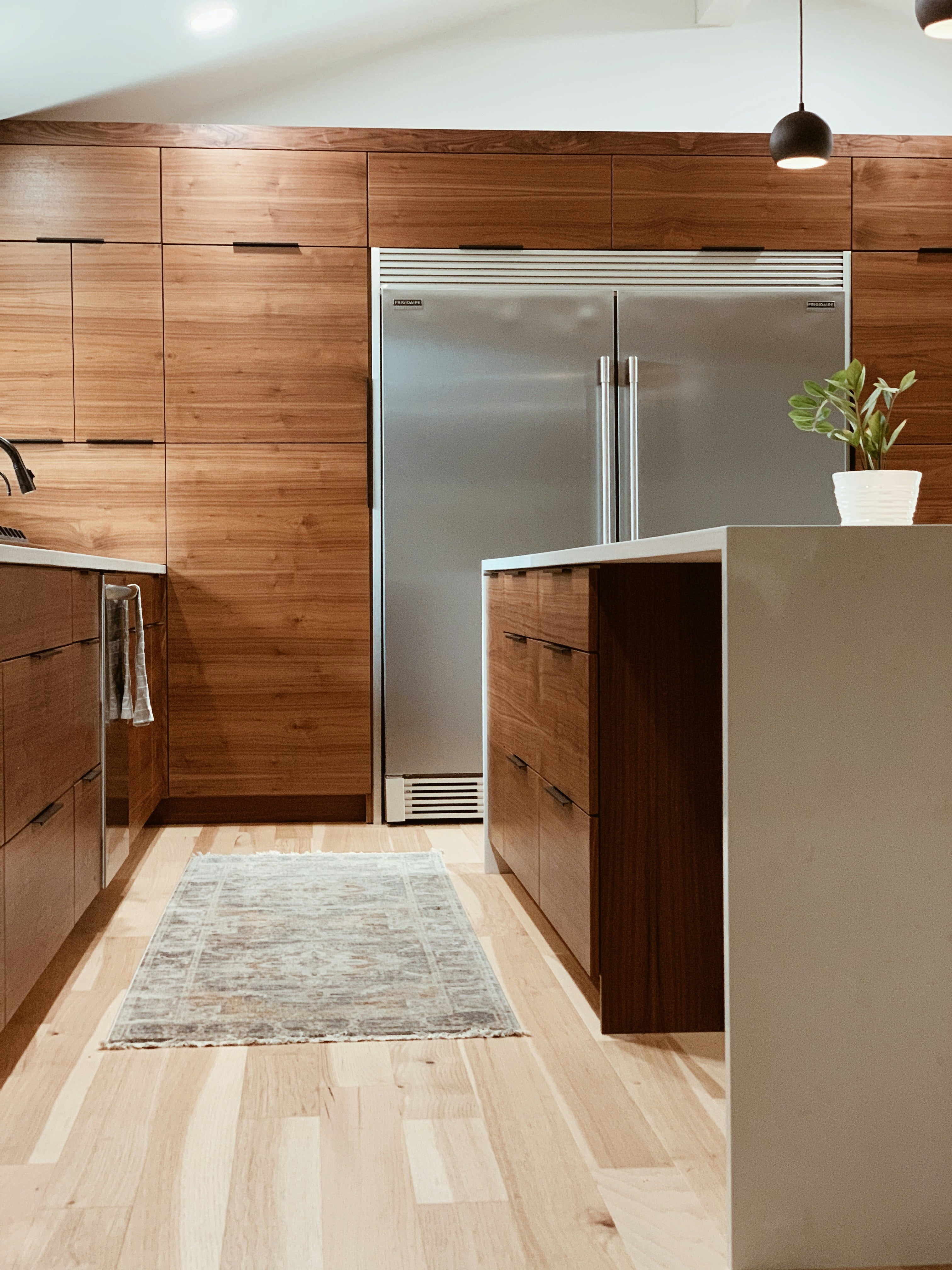
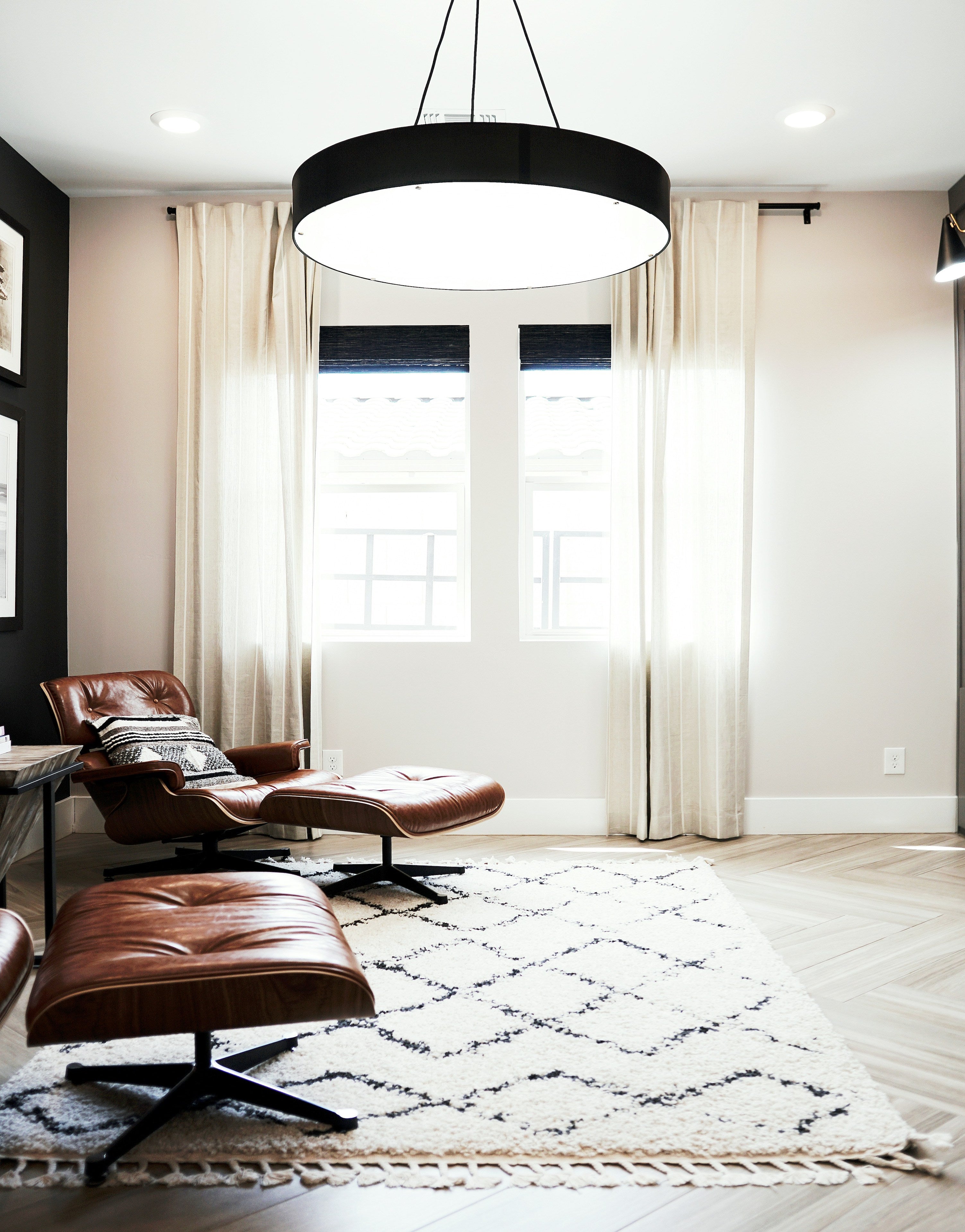
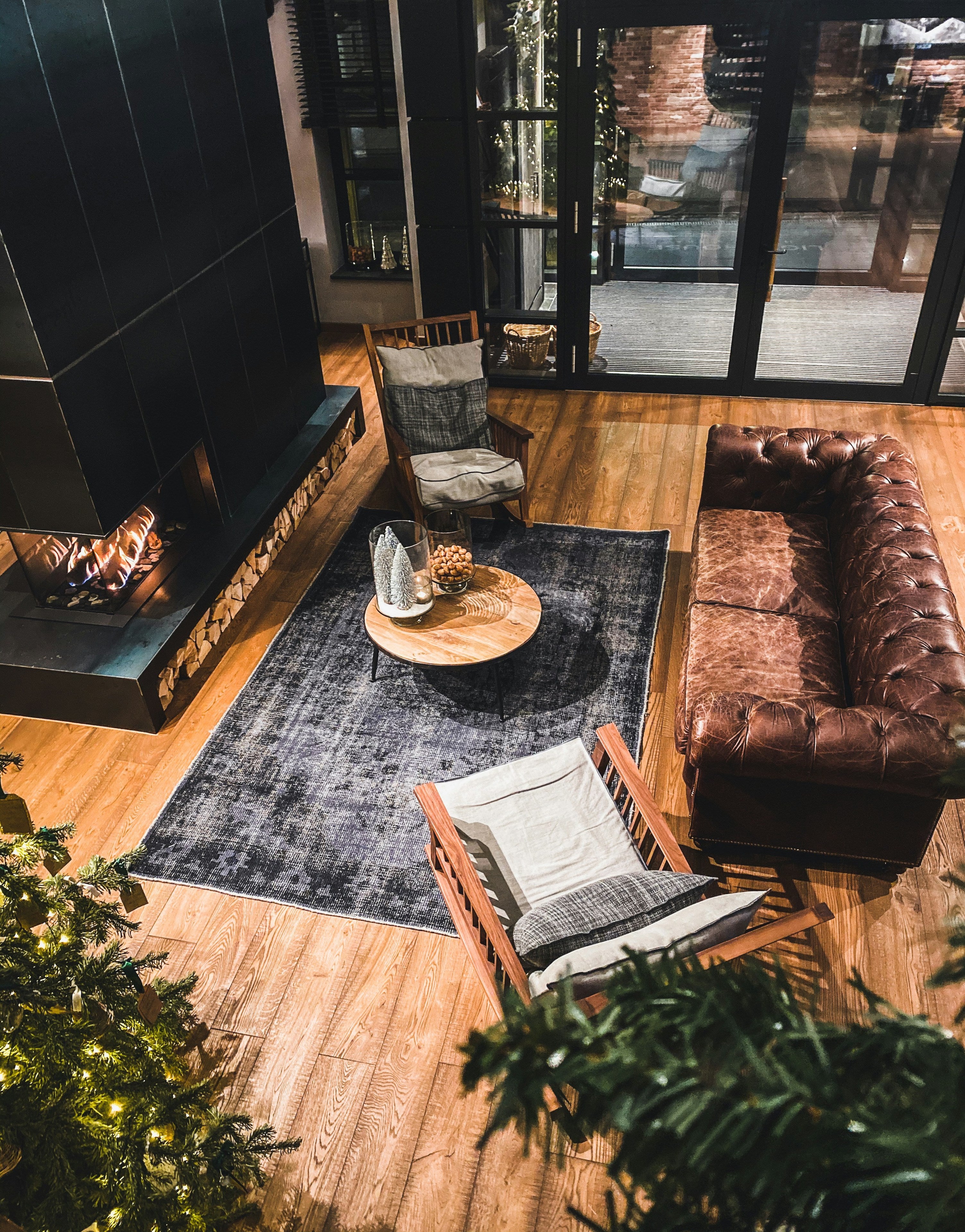
A faded rug carries a full traditional design at low volume, and that is exactly what makes it useful now. Most rooms today lean on clean lines, pale wood, and quiet wall colors. A strong-colored traditional rug argues with that; a muted one underpins it, reading as texture from across the room and as pattern up close.
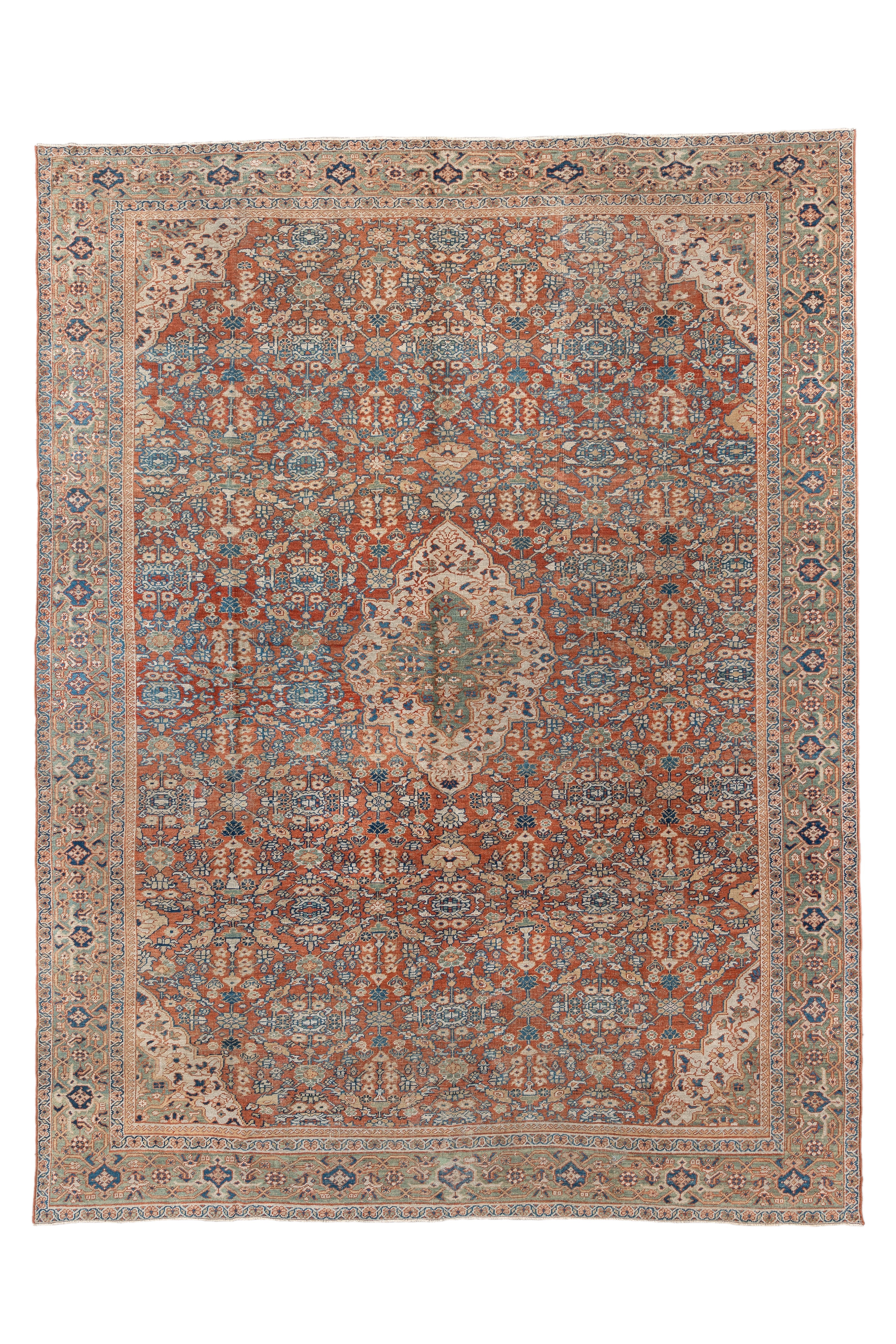
This month's Heriz arrivals are a case study. The Vintage Heriz Area Rug (7' x 9') draws its bold geometric medallion in ivory, pale blue, and taupe, so a design that once would have shouted in brick red sits comfortably under a linen sofa. The Vintage Heriz Area Rug (8' x 10') does the same work at full living room scale, and the Vintage Heriz Area Rug (7' x 10') lands in between, a size that suits a bedroom as well as a dining room that seats six.
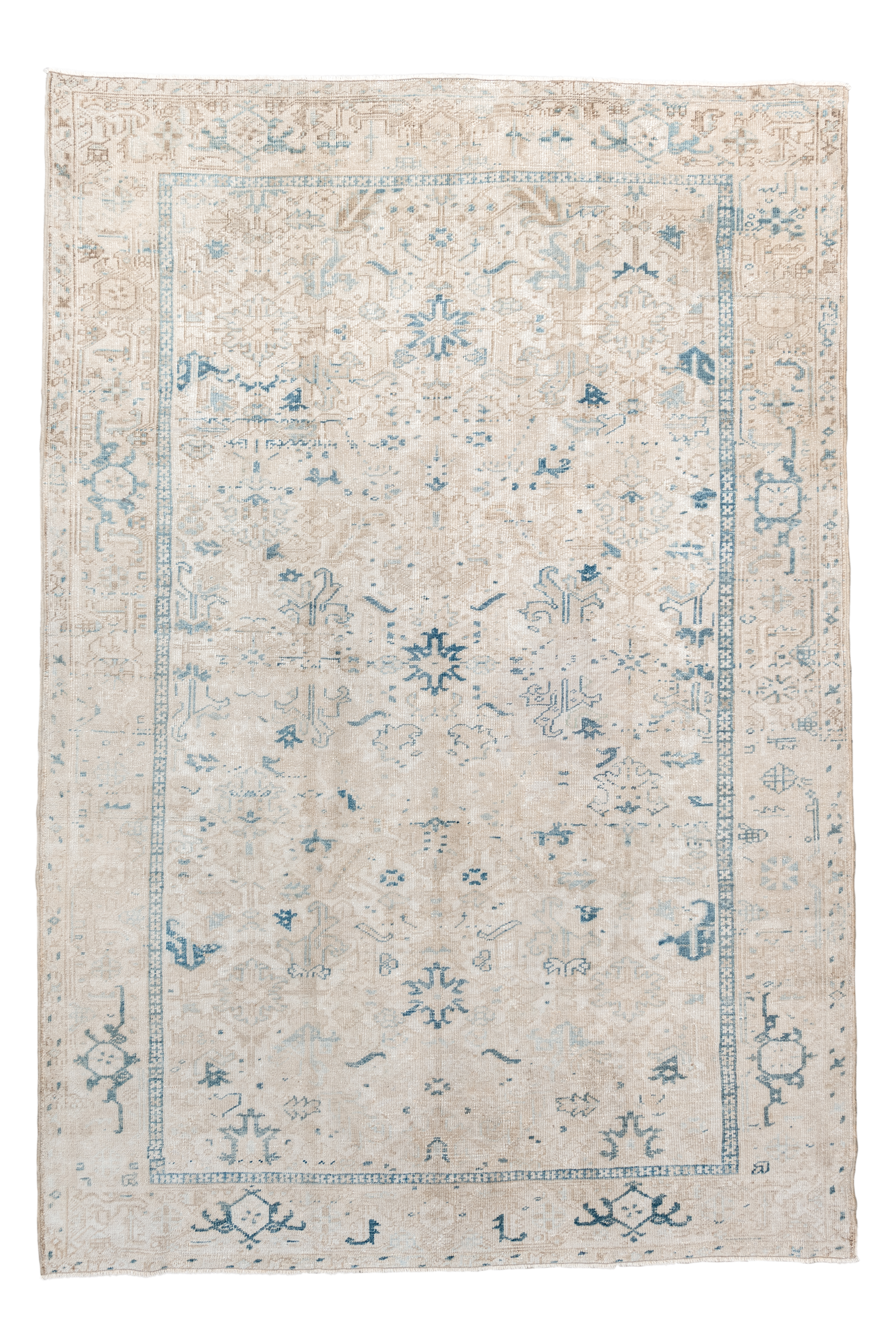
Tabriz weaving brings a finer line to the same idea. The Vintage Tabriz Area Rug (6' x 10'), mixes washed terracotta and camel into an ivory ground, a good answer for a room that runs cool and needs warming. The Antique Tabriz Area Rug (7' x 10') works the other direction, sky blue and slate over ivory, the sort of palette that settles a bedroom or a study.
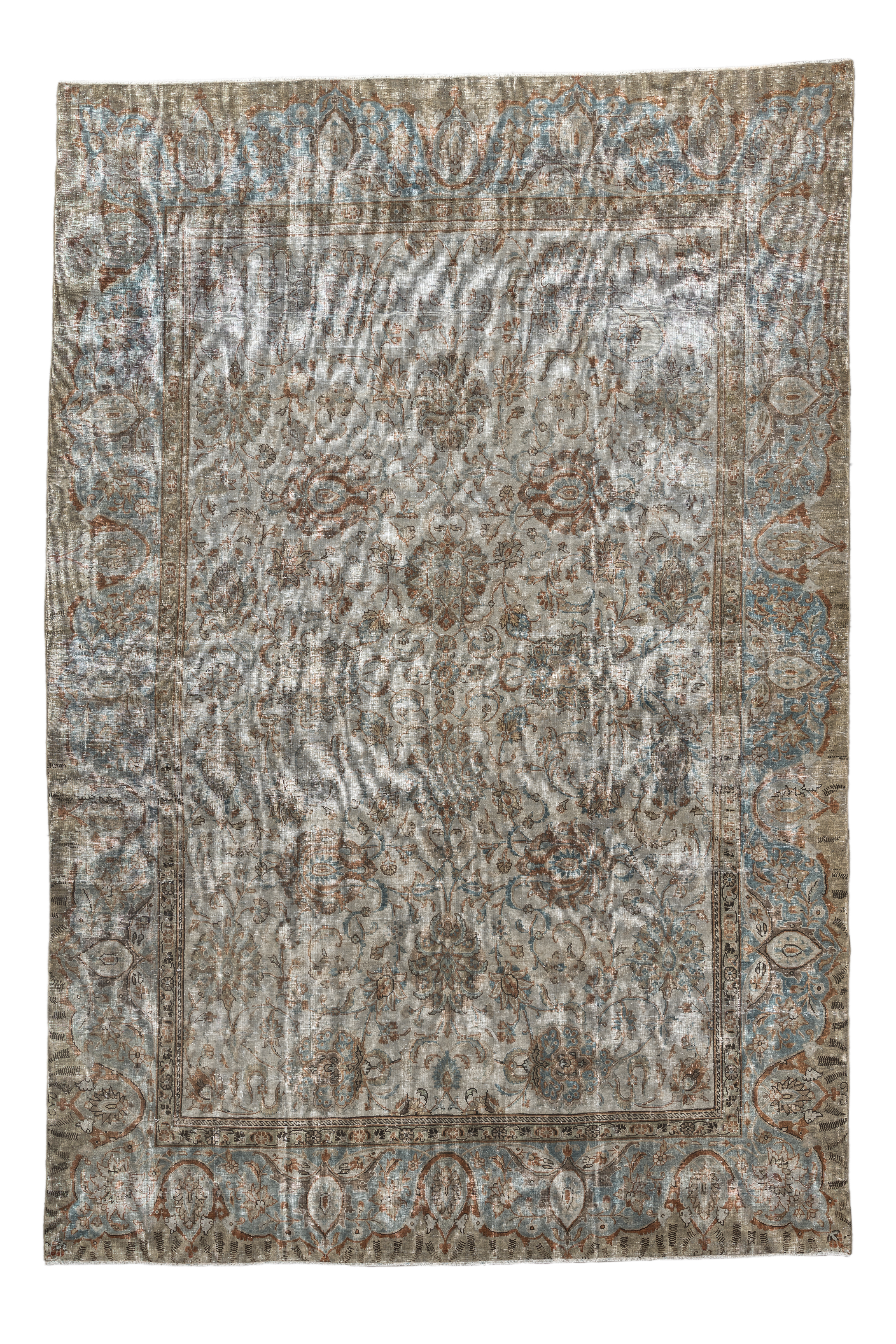
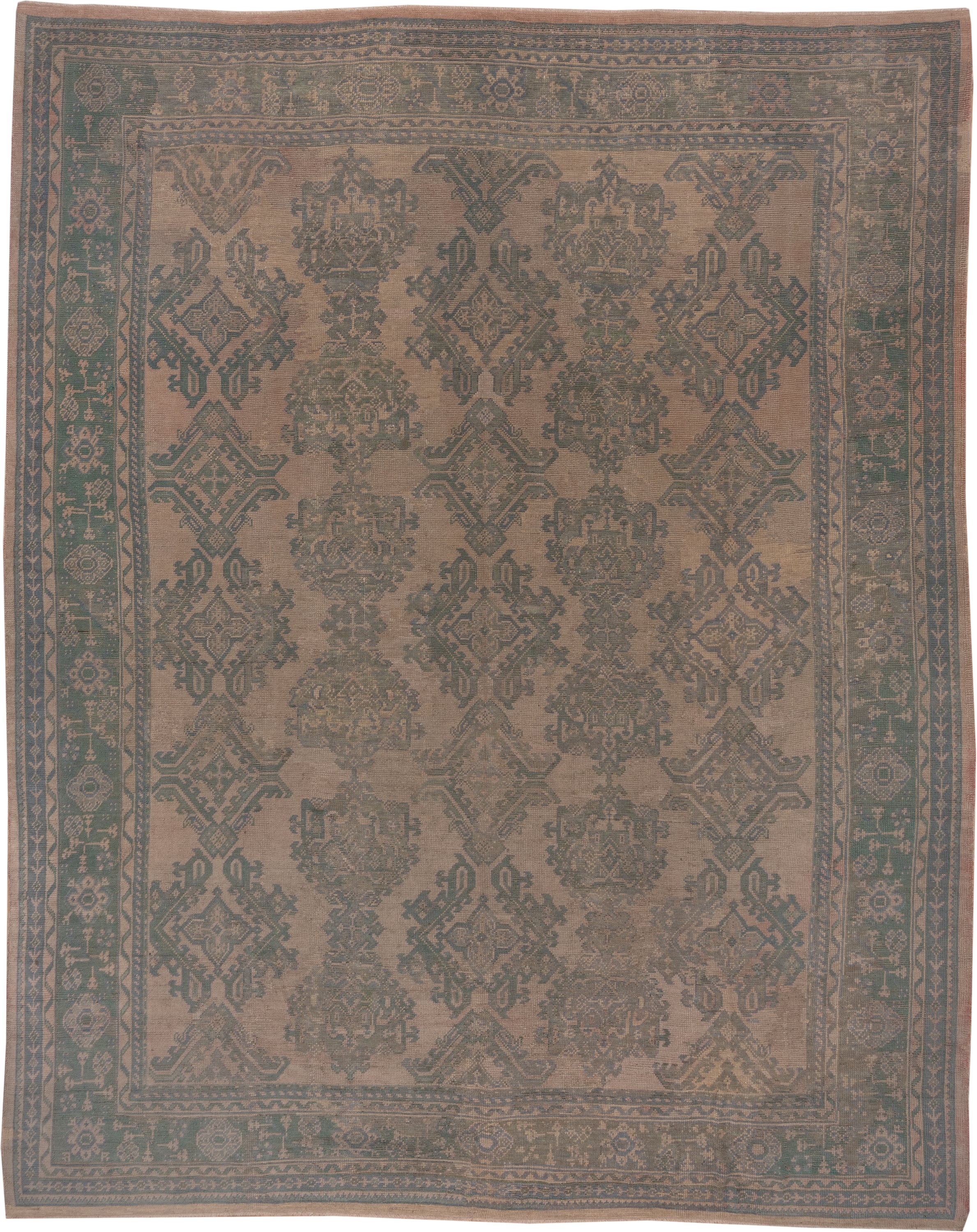
For the softest end of the spectrum, look to Oushak Rugs. Turkish weavers favored spacious patterns and gentle contrast to begin with, so an Oushak that has mellowed for decades is about as quiet as a patterned rug gets, and we keep more than a thousand of them in stock.
Where to start
We gather the pieces that earn this look in two places. Faded Rugs holds the most softly colored rugs in the shop, and Muted Rugs casts a slightly wider net across low-contrast palettes. Every piece is one-of-a-kind, hand-knotted in wool, and the kind of rug that makes a new room feel like it was composed years ago.