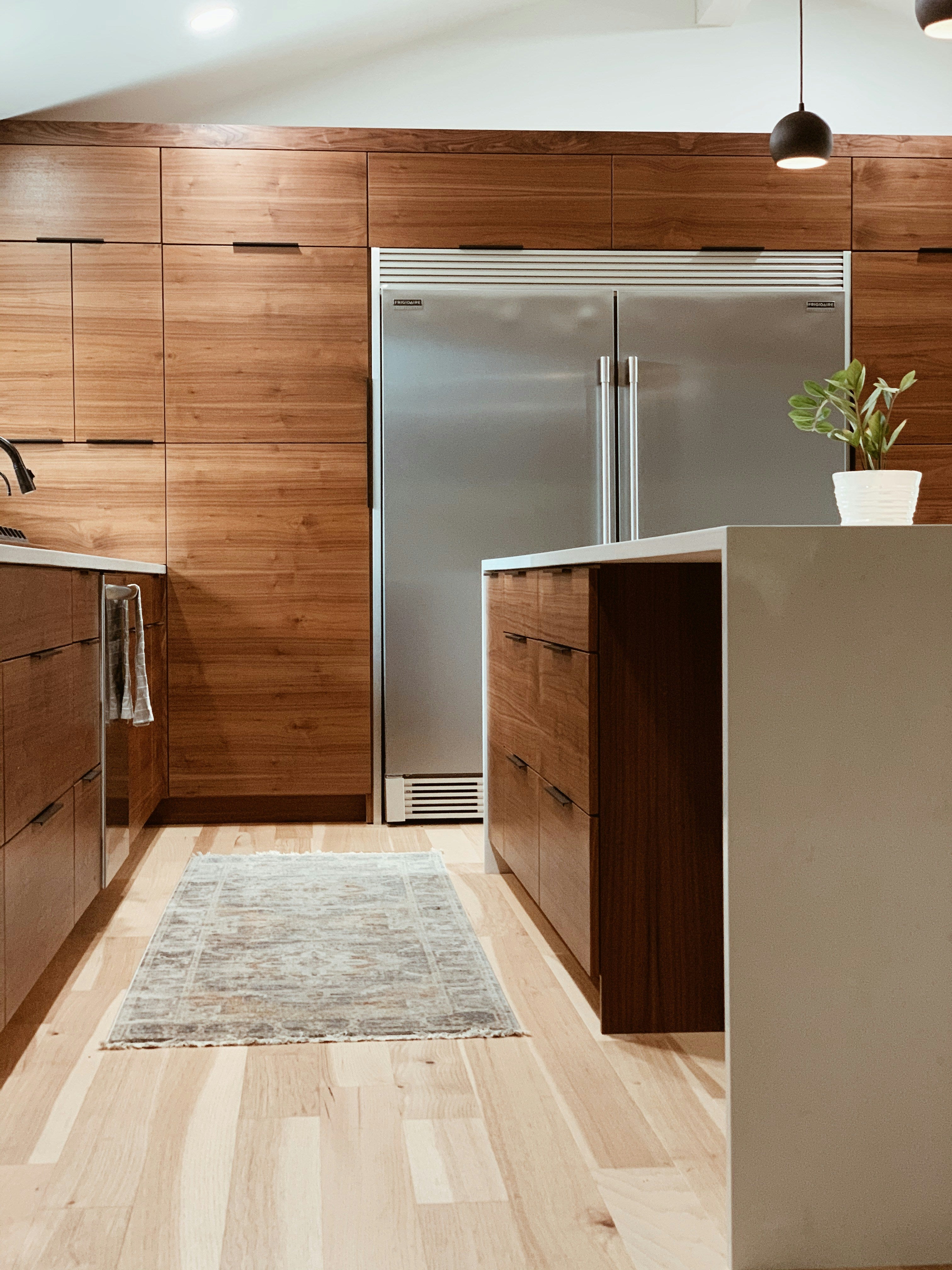
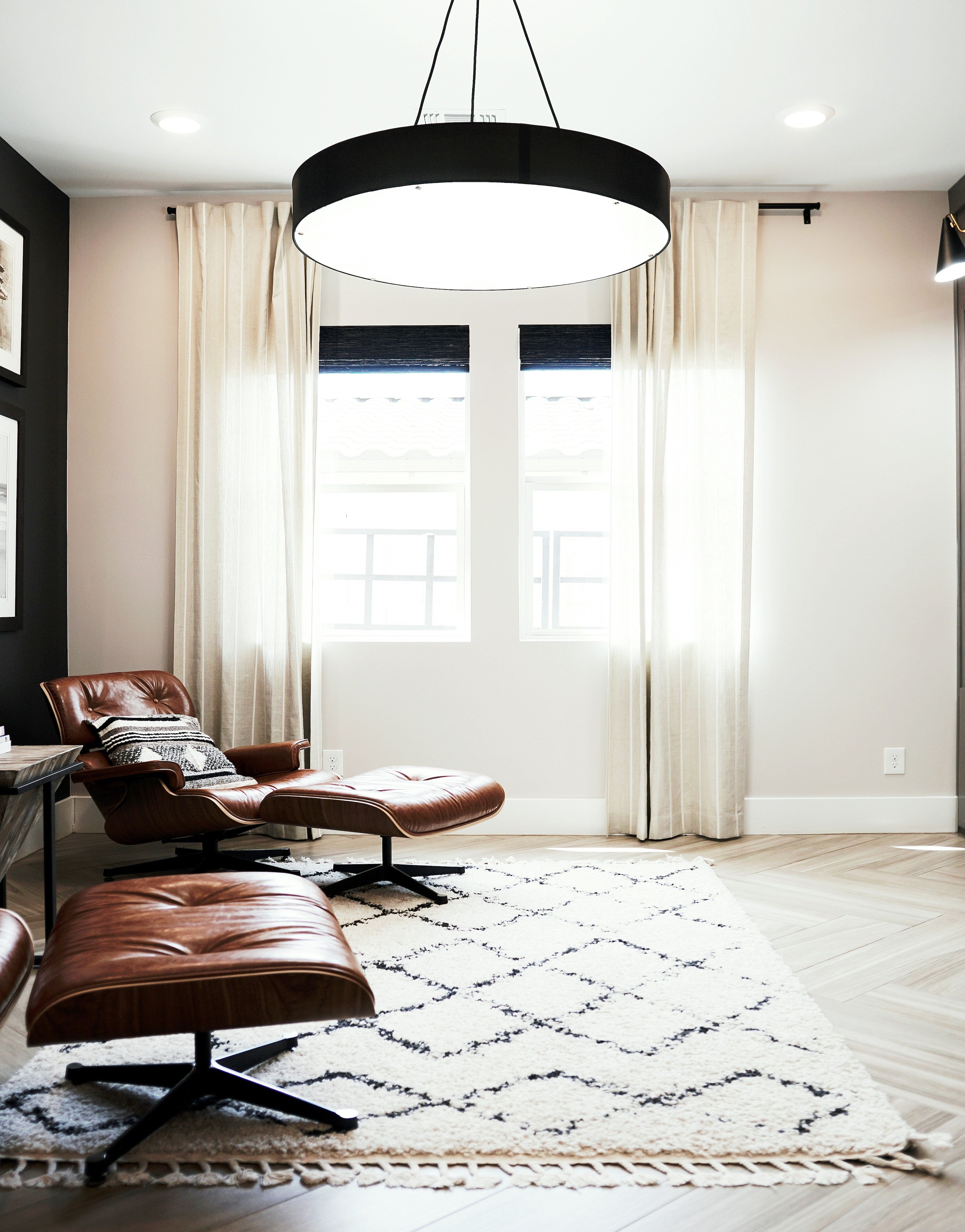
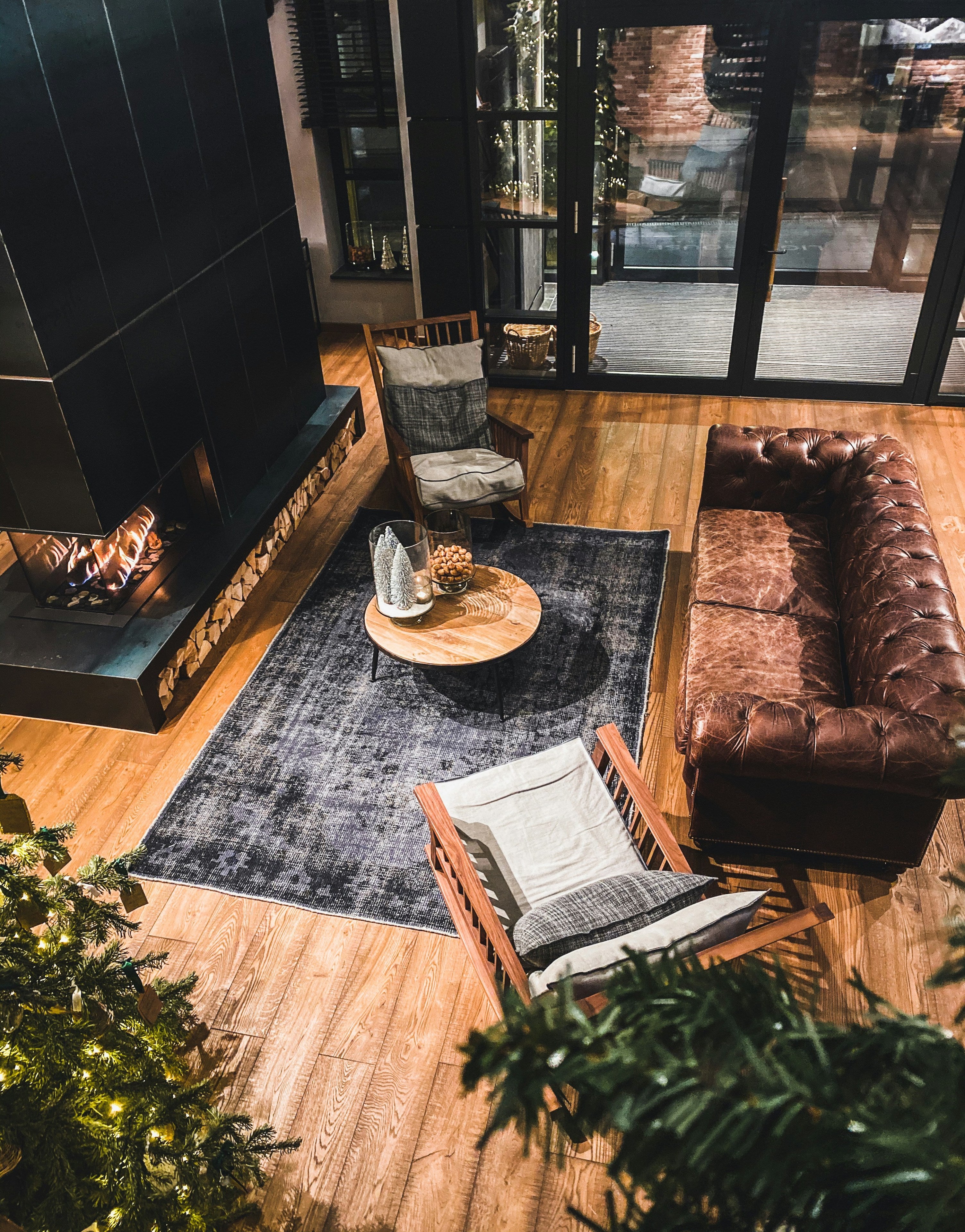
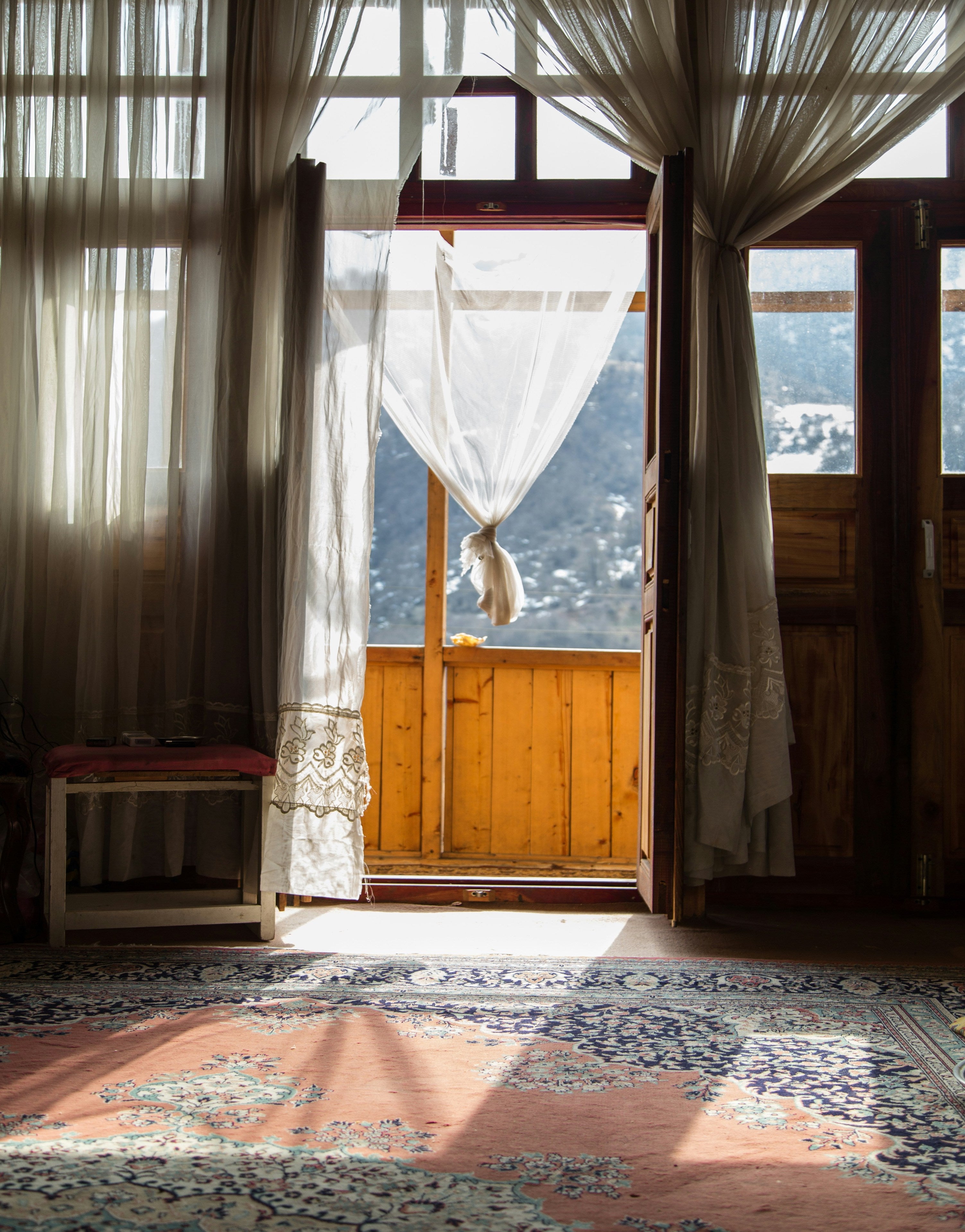

A Hamadan rug is a hand-knotted Persian rug built for daily use. It is woven in wool on a cotton foundation in the villages around Hamadan, a city in western Iran, and its pattern takes one of two forms: a bold medallion in the center of the field, the open area inside the borders, or a smaller motif repeated across the whole field. That sturdy build and clear pattern are why Hamadan Rugs suit an entry hall, a family room or a study where a desk chair rolls across the floor every day.
Hamadan is a market name more than a single style. The city is the trading center for hundreds of weaving villages in the hills and plains around it, and their rugs are sold under its name. Dealers sometimes add a village name, such as Mehraban, Bibikabad or Ingeles, when a rug's design is typical of one place. To see how a village Hamadan compares with the finer city weaves, set one beside the rugs in Persian Rugs.
How to recognize a Hamadan
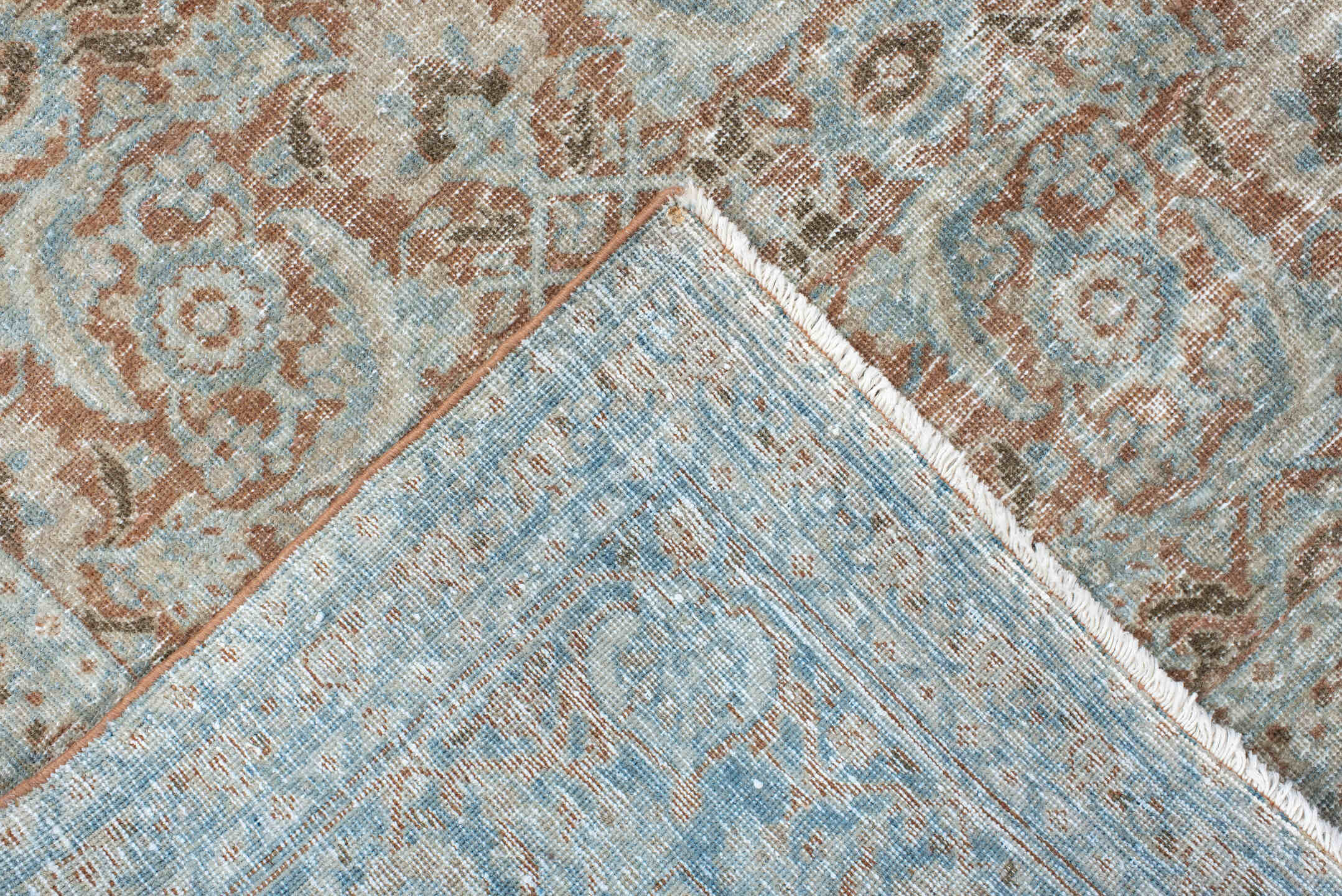
If you can see the back of the rug, start there. On most Hamadans one thick cotton thread runs between each row of knots, where most Persian city rugs use two or more. That single thread is the quickest way to tell a Hamadan from a city rug, and the cotton foundation is why a Hamadan lies flat and keeps its shape on a hard floor.
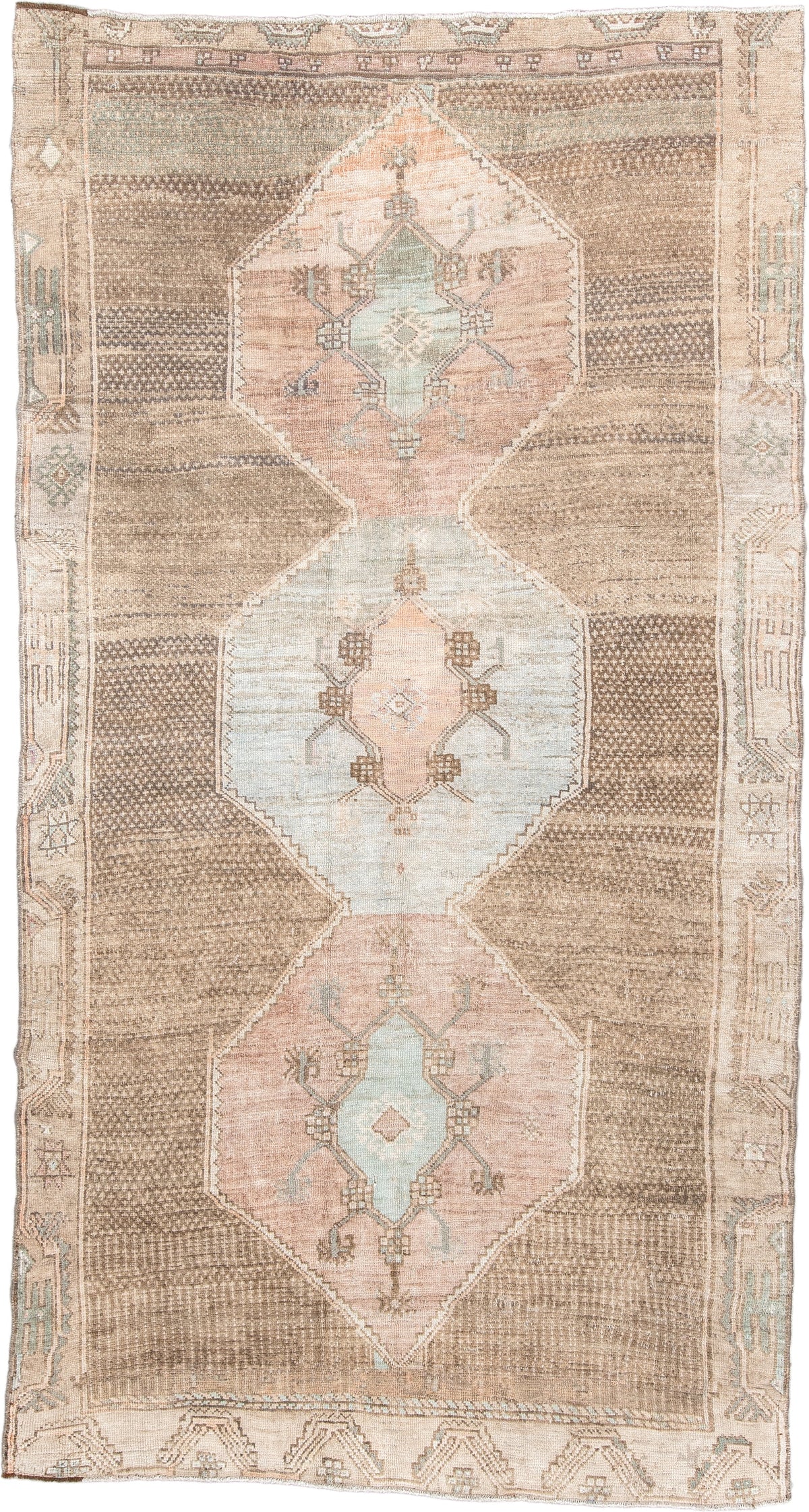
Then look at the pattern. Three in four of the Hamadans we have are built around a medallion, often a diamond or a stepped shape with the corners filled in a contrasting color, like this Antique Hamadan Area Rug (5' x 9') with two pale blue diamond medallions joined down an ivory field. The rest repeat one small motif from border to border. This Antique Hamadan Area Rug (8' x 11'), woven about 1930, covers a taupe field with a lattice of rosettes, leaves and vines and has no medallion at all.
Most Hamadans are village rugs in the full sense: the weaver worked from memory rather than from a drawn plan, so the shapes are bold and simplified and the two halves rarely match exactly. Nearly two in three of ours are tribal in style for that reason, and six in ten are geometric, built from straight lines and steps rather than curving flowers. The medallion, tribal and geometric pieces overlap heavily, and each gives a den, a family room or a study a pattern that reads clearly from across the room.
 Medallion Hamadan Rugs
A diamond or stepped medallion at the center.
Shop
 Tribal Hamadan Rugs
Bold, simplified shapes woven from memory.
Shop
 Geometric Hamadan Rugs
Straight lines and steps, clear from across the room.
Shop
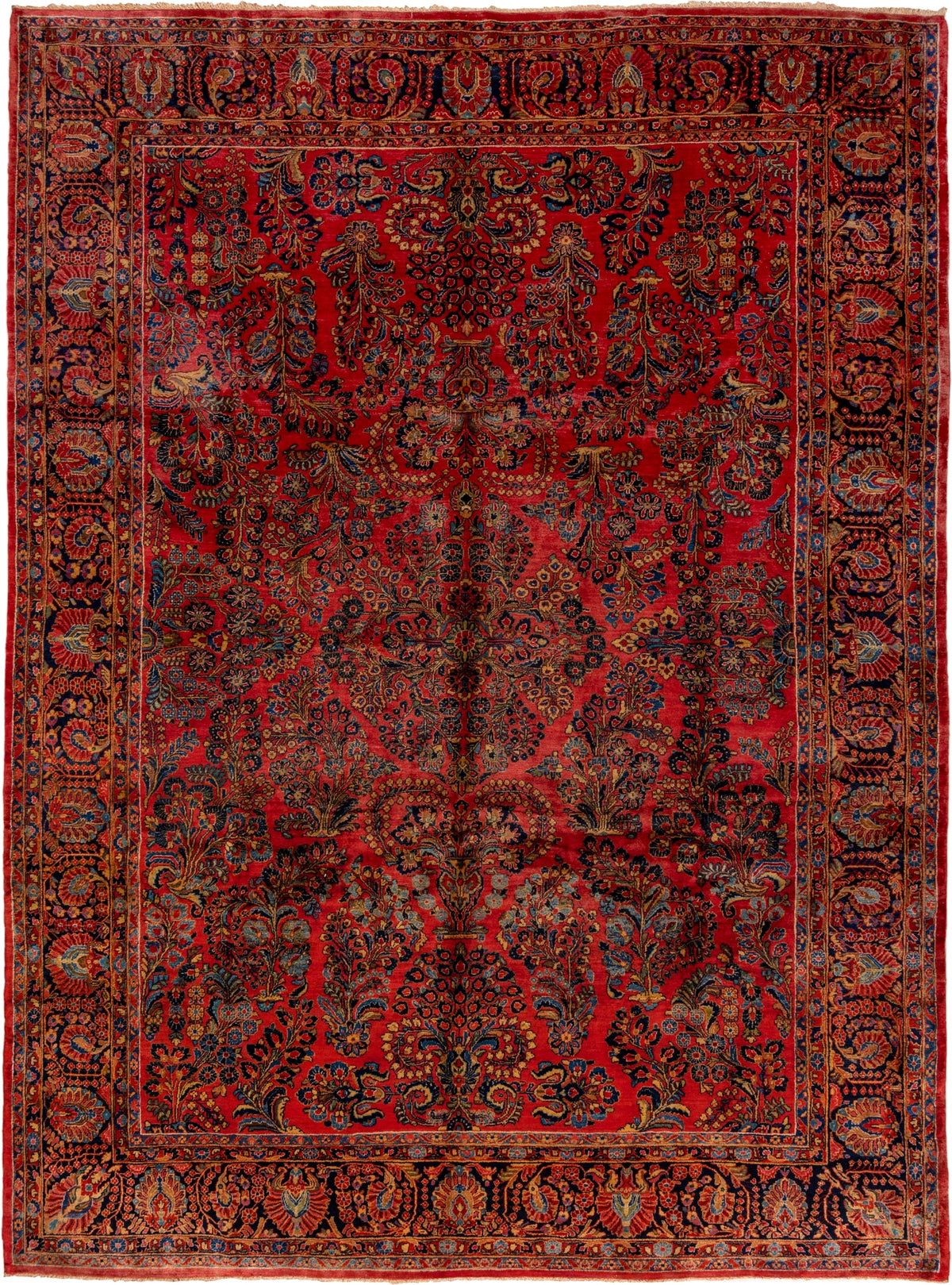
Expect a soft palette. Old Hamadans were often woven in strong red, deep blue and camel, but nine in ten of ours have faded, and ivory and taupe now lead, with camel, blush and sky blue as accents. Faded Hamadan Rugs gathers them on one page. Just over half sit in neutral ivory, taupe and beige, and Neutral Hamadan Rugs is the shortcut for pale walls and modern furniture.
Antique or vintage
Both come from the same villages and the same patterns, so the choice is about surface, color and size rather than quality. Three in four of our Hamadans are antique, meaning eighty years and older, and most are dated to about 1930, when Hamadan rugs were shipped to America and Europe in large numbers. An antique has usually worn its pile lower, so it lies thin and flat, and nearly all of ours are runners or rugs under 5' wide.
A vintage Hamadan is younger and usually keeps more of its pile, so it feels thicker underfoot. Seven in ten of ours sit on an ivory field, against four in ten of the antiques, which makes vintage the lighter choice for a modern room. Vintage also holds more of the room sizes: five of our nine Hamadans at 5' x 8' or larger, including two at 8' x 11'.
 Antique Hamadan Rugs
Eighty years and older, worn low and flat.
Shop
 Vintage Hamadan Rugs
Ivory fields, a thicker pile, and more of the room sizes.
Shop
Runners and small sizes
Our Hamadans run small. Nearly nine in ten are under 5' wide, the single most common size is 4' x 6', and three in ten are runners. That makes the type a good source for the spots an area rug cannot fill: a hallway, an entry, the side of a bed, the floor in front of a kitchen sink.
Our Hamadan runners are 2' to 4' wide and 6' to 16' long, and almost half are 9' long, enough for most hallways. The longest, this Antique Hamadan Runner Rug (3' x 16'), carries an all-over floral pattern in navy, rust and ivory down a long corridor. For an entry or a bedside, the small sizes, 4' x 6' and under, are the easiest way to put an antique Persian rug in a room that cannot take a large one.
 Hamadan Runner Rugs
Most often 9' long, for a hallway or a kitchen.
Shop
 Small Hamadan Rugs
4' x 6' and under, for an entry or a bedside.
Shop
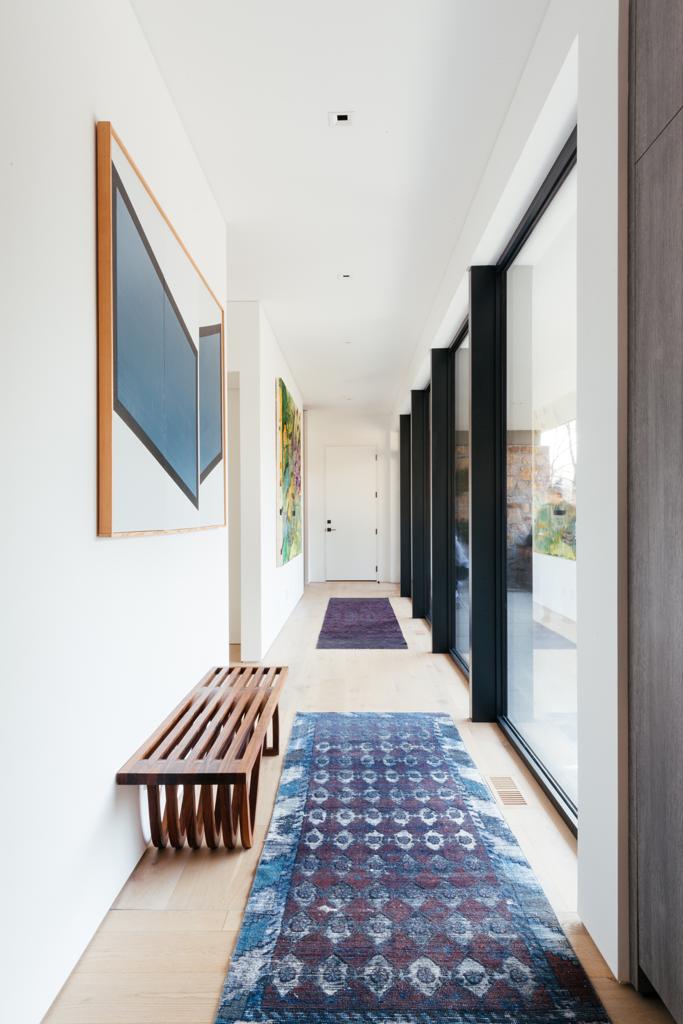
Placement follows the size. In a hallway, center the runner and leave a few inches of floor on each side. At a front door, lay a 4' x 6' with its long side along the threshold; beside a bed, lay it along the side of the bed. In a living room, rest at least the front legs of the sofa and chairs on the rug. Care is simple: put a pad under the rug on hard floors, vacuum without the beater bar, rotate it once or twice a year so sun and traffic wear it evenly, and send spills to a professional cleaner.
If you are shopping for a room rather than a hallway, start with the room sizes, because they are the scarce part. This Vintage Hamadan Area Rug (8' x 11') sets a small diamond medallion in a field of blue and ivory motifs, and the antique 8' x 11' above is the all-over version in taupe. Every Hamadan we have is hand-knotted and one of a kind, the kind of rug an entry hall or a family room can use every day.
One of a kind, photographed flat Every Hamadan in the shop, on one page Explore All Hamadan Rugs