
One hundred fifty-three rugs came through the door in the last thirty days, and fifteen of them stand out well ahead of the rest. Almost all are antique Persian weaves from the 1920s and 1930s, most of them in faded ivory, taupe, and pale blue, with a few pieces that keep the terracotta and indigo intact.
They are grouped below by what they do in a home, and ordered inside each group by what our sales data says moves fastest. Every rug here is hand-knotted, one of a kind, and in stock as this was written.
the two kashans at the top of the list
Both outscored everything else in the intake, and they arrived the same size and the same decade from opposite ends of the Kashan repertoire. Kashan is city weaving rather than village weaving, which shows up as finer knotting, more controlled floral pattern, and borders that hold their symmetry the whole way around. The rest of the shop's oldest pieces are in Antique Rugs.
- Antique Kashan Area Rug (7' x 10'). Circa 1920, with an all-over floral pattern that age has washed down to pale aqua, ivory, and terracotta. There is no medallion, so it reads as texture from the doorway and as fine vinework up close.
- Antique Kashan Area Rug (7' x 10'). The formal answer to the piece above: a pale blue field, a centered medallion, and floral borders drawn with real precision. Choose this one when the room wants a focal point on the floor.
quiet pieces for rooms that are already decorated
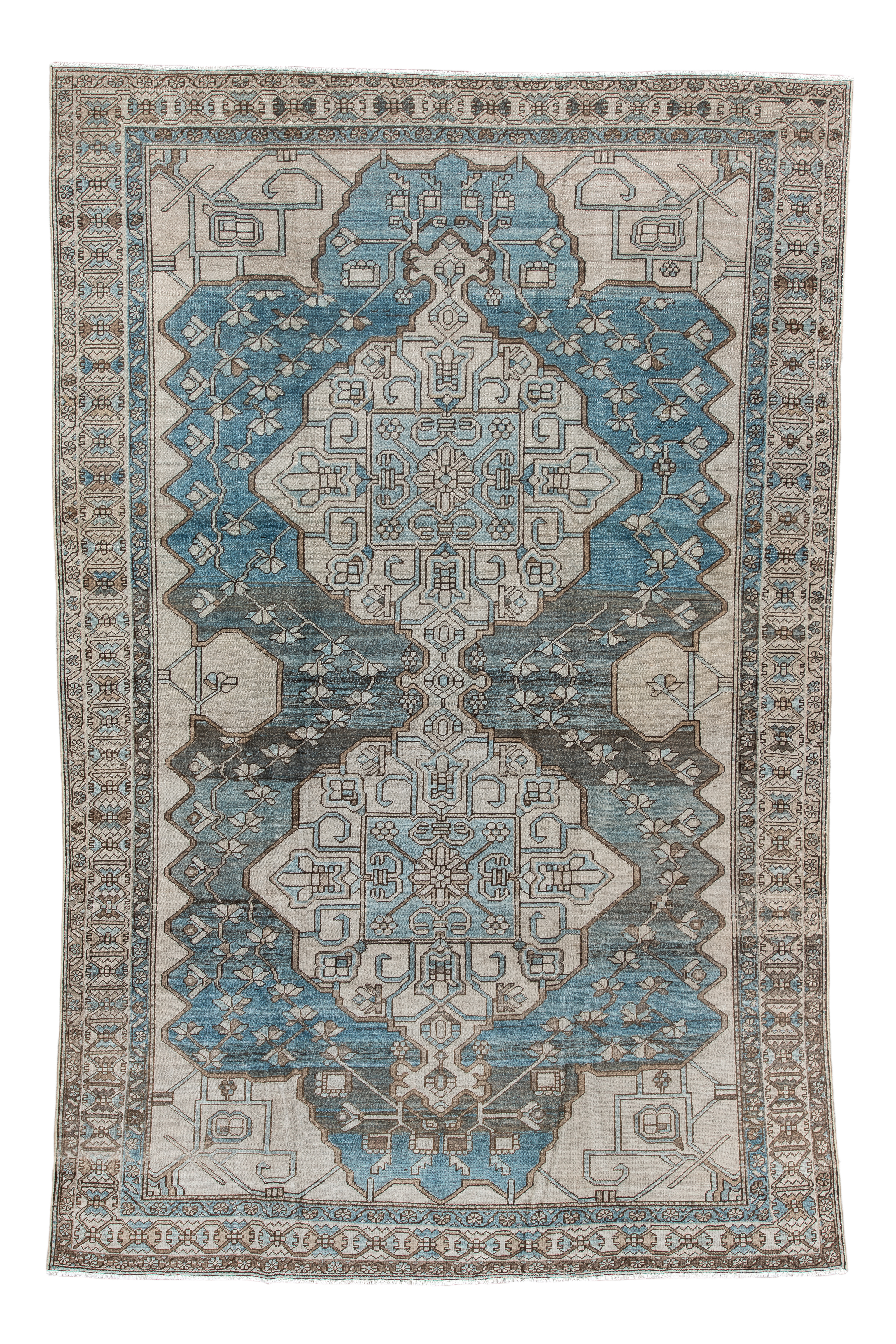
Four arrivals carry a full traditional pattern at low volume. Ivory and taupe grounds, soft blue accents, nothing that will argue with upholstery you already own. Three are Persian and one is Turkish, and the two traditions that repeat elsewhere on this list have their own pages in Antique Malayer Rugs and Sivas Rugs.
- Antique Malayer Area Rug (6' x 9'). Circa 1920. An elongated medallion in faded blue gray on ivory, with sage and rust worked into the borders. The best-scoring room-size piece of the month.
- Antique Ardebil Area Rug (6' x 10'). Circa 1920. A geometric medallion over a pale blue field, outlined in soft taupe and framed by crisp narrow borders. The most architectural rug in this group, and the calmest.
- Antique Tabriz Area Rug (5' x 8'). Circa 1930. Ivory, taupe, and pale blue in a balanced all-over pattern. A five-by-eight footprint suits a bedroom, a study, or a seating area that does not need a full room-size rug.
- Antique Sivas Area Rug (4' x 6'). Circa 1930, hand-knotted in Turkey. Stylized flowers and vines in taupe, camel, and pale blue over an ivory field, with faint lavender and rose showing through. The softest palette on the list.
bold geometry, from room size down to accent
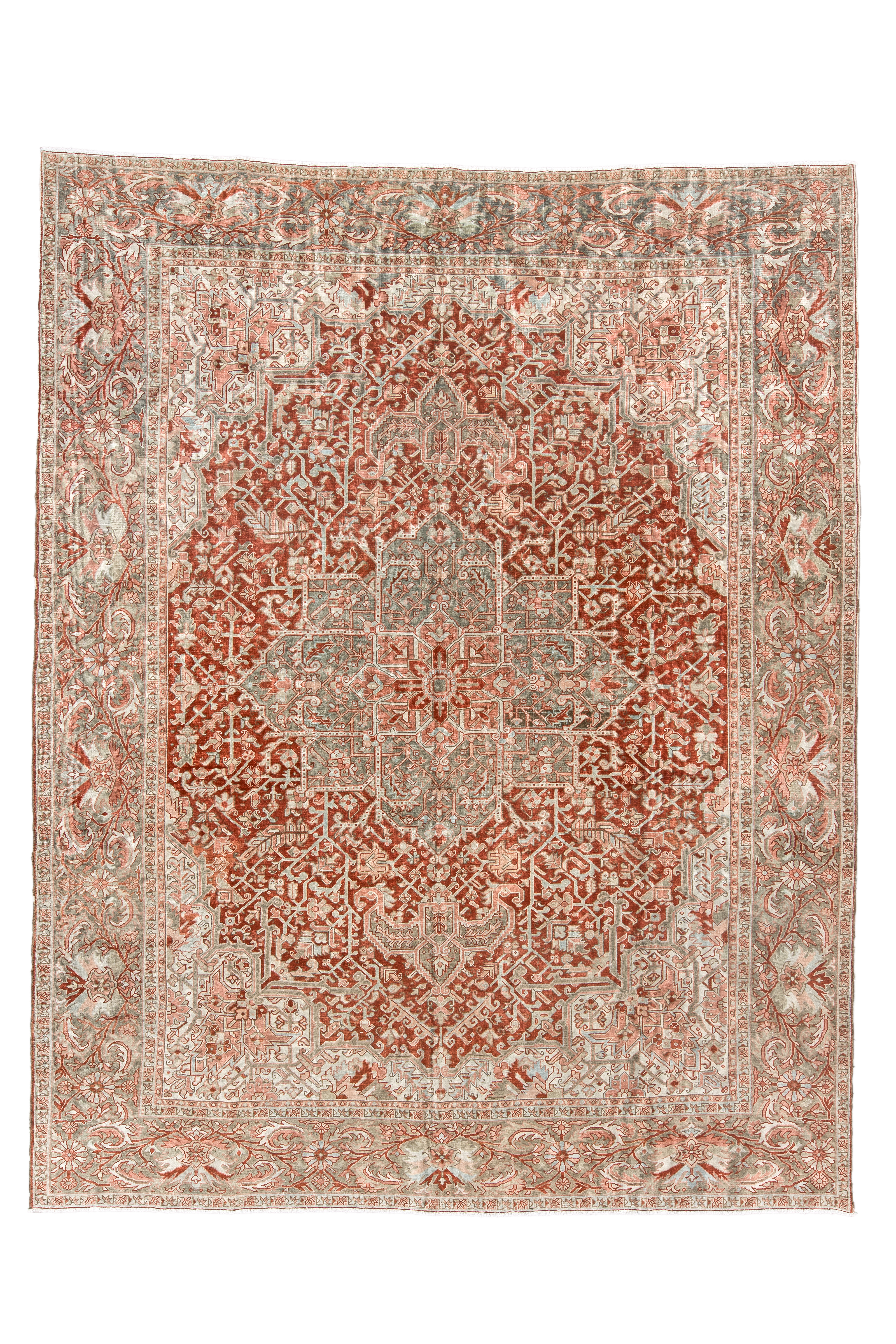
Six arrivals go the other way: terracotta and indigo, angular medallions, pattern you notice before you notice anything else in the room. Four of them measure roughly 4' x 6', the size that works beside a bed, in an entry, or under a small seating group. Heriz depth is in Antique Heriz Rugs, and the accent size across every weave is in 4' x 6' Rugs.
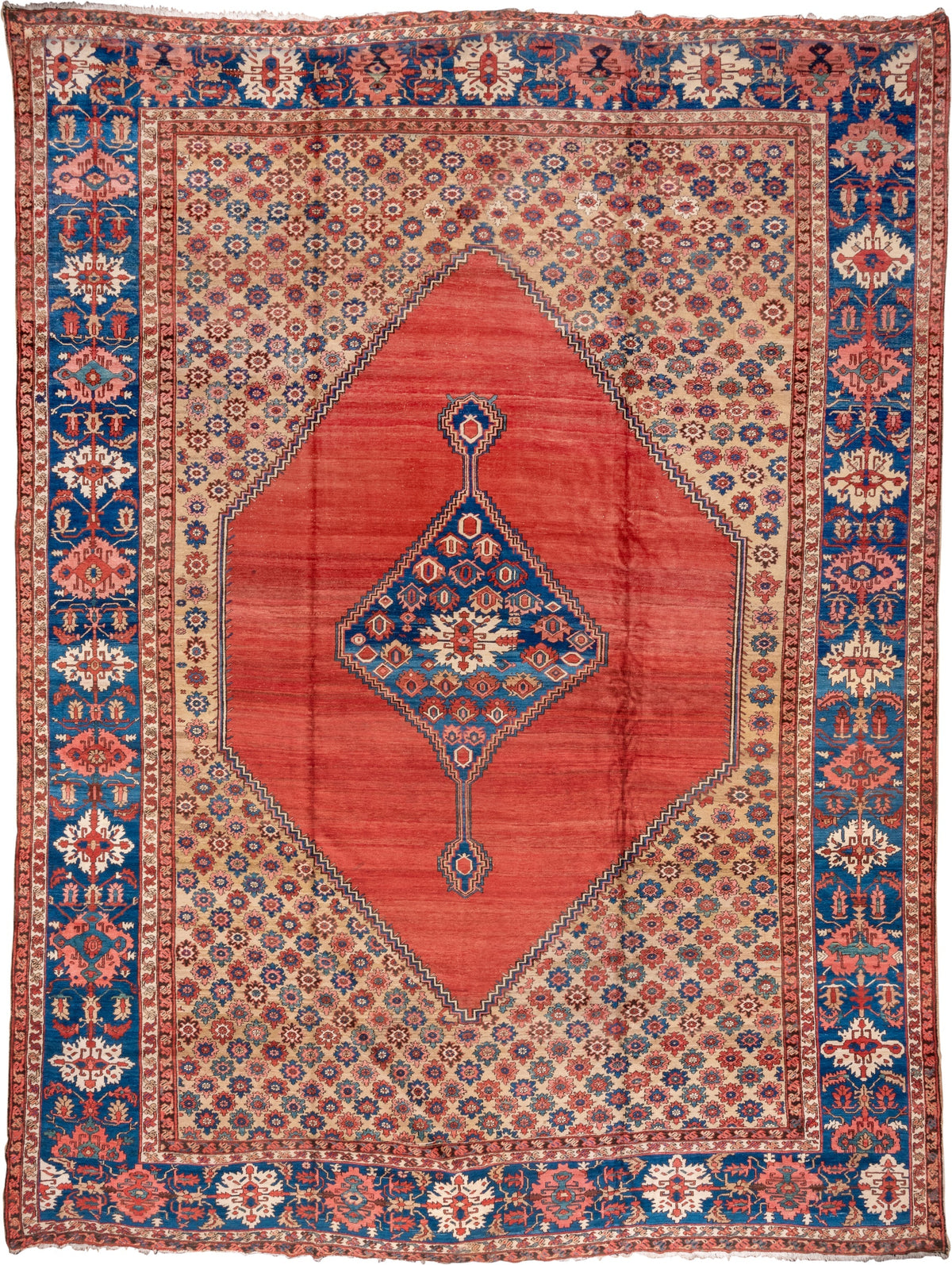
- Vintage Heriz Area Rug (12' x 9'). A terracotta field, a pale blue medallion, and ivory corner panels inside a spacious floral border. The only true room-size rug on the list, and the one piece here that can carry a living room on its own.
- Antique Heriz Area Rug (6' x 8'). Circa 1930. Angular floral and vine motifs across terracotta, framed by a deep indigo border. The pile shows its age in places, which is what gives the color its depth.
- Antique Baktiary Area Rug (4' x 6'). Circa 1920. A geometric Tree of Life on a weathered blue gray field, with rust, ivory, and blush in the angular flower and animal forms. The most detailed of the four accent rugs.
- Antique Karaje Area Rug (4' x 6'). Circa 1930. A faded camel field inside an intricate blue gray border, with a geometric medallion and angular tribal motifs. Warm without turning red.
- Antique Farahan Area Rug (4' x 6'). Circa 1920. A clear light blue field under a fine all-over pattern of small repeating flowers, bordered in rust and brown. The coolest palette of the accent group.
- Antique Malayer Area Rug (4' x 6'). Circa 1920. A soft blue field filled with paisley and floral shapes in rose, ivory, and rust, held by a wide geometric border. The gentlest of the four, and the easiest in a bedroom.
three runners for halls and entries
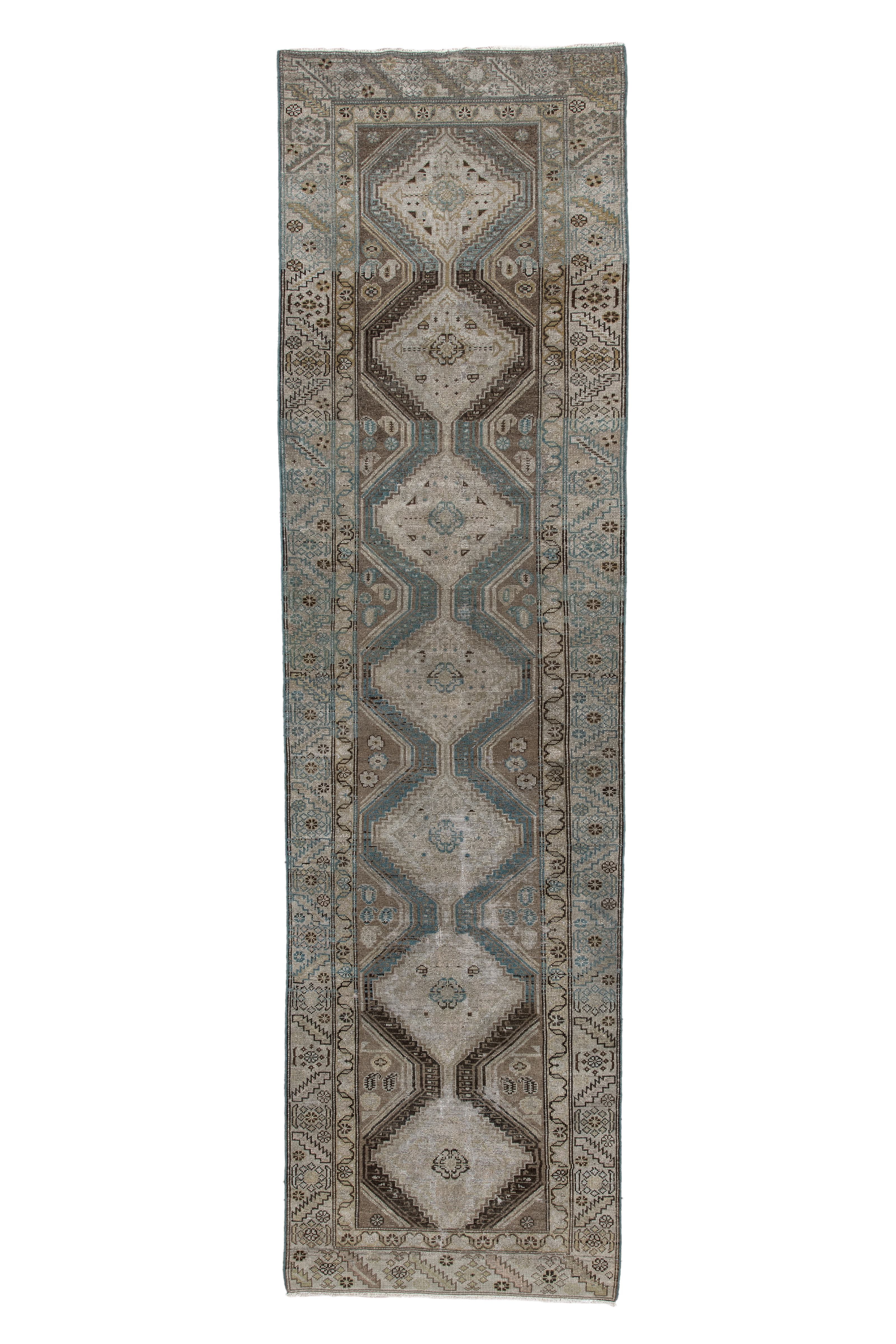
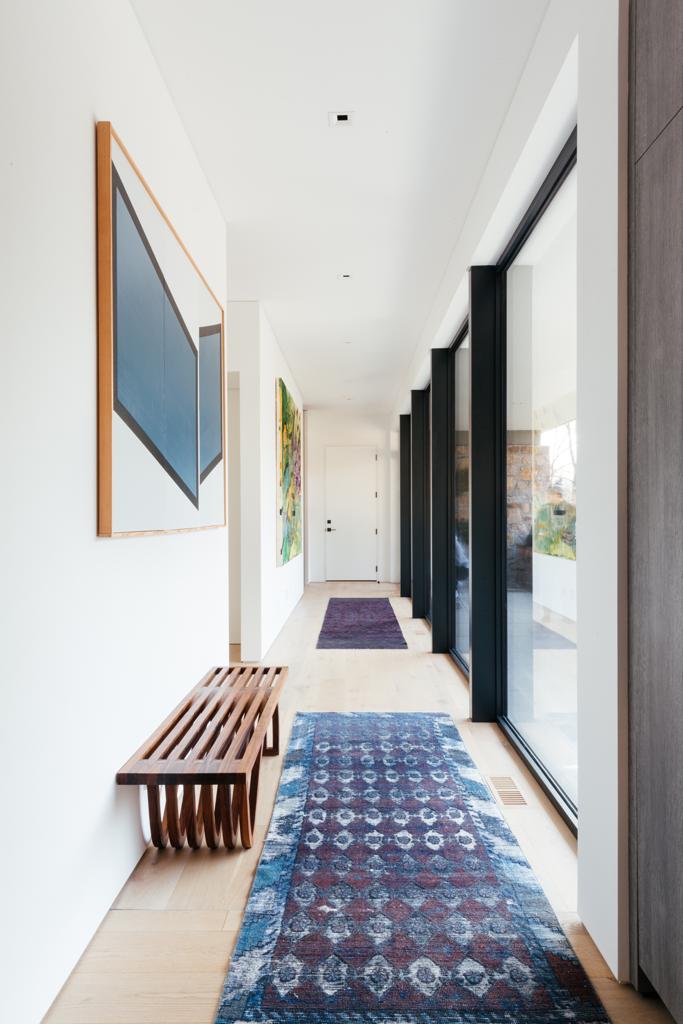
Runners are the hardest thing on this list to buy well, because the length has to match the corridor and old pieces come in whatever length the weaver made. These three cover eleven to twelve feet. Two are Malayers, the village weave that handles narrow formats best, which you can see across Malayer Runner Rugs; the wider range of lengths and widths is in Antique Runner Rugs.
- Antique Malayer Runner Rug (3' x 11'). Circa 1920. A chain of stepped diamond medallions down an ivory field in taupe, sky blue, and brown. The highest-scoring runner of the month, and at 3'2" wide it fits a standard hallway without crowding the baseboards.
- Antique Malayer Runner Rug (3' x 12'). Circa 1920. Small-scale all-over geometry on aged ivory, inside narrow rust and camel borders. The longest of the three at 12'2", for the corridor that usually gets two runners and a gap in the middle.
- Antique Sarab Runner Rug (2' x 11'). Circa 1930. Geometric medallions and angular tribal motifs in muted ivory, taupe, sage, and pale rust. At 2'10" wide it is the one for a genuinely narrow hall or a galley kitchen.
Every rug above is one of a kind, so this list thins out as the month goes on. If none of the fifteen is quite right, the rest of the month's intake is in Just In.