
Kilim rugs do three things no pile rug can: they lie flat enough to clear a low door, they weigh little enough to move rooms on a whim, and they are woven the same on both sides, so every piece is reversible. This guide covers what a kilim actually is, when a flatweave beats a pile rug, and how to size and layer one. Our Kilim Rugs collection holds more than six hundred handmade pieces if you would rather look while you read.
What makes a rug a kilim
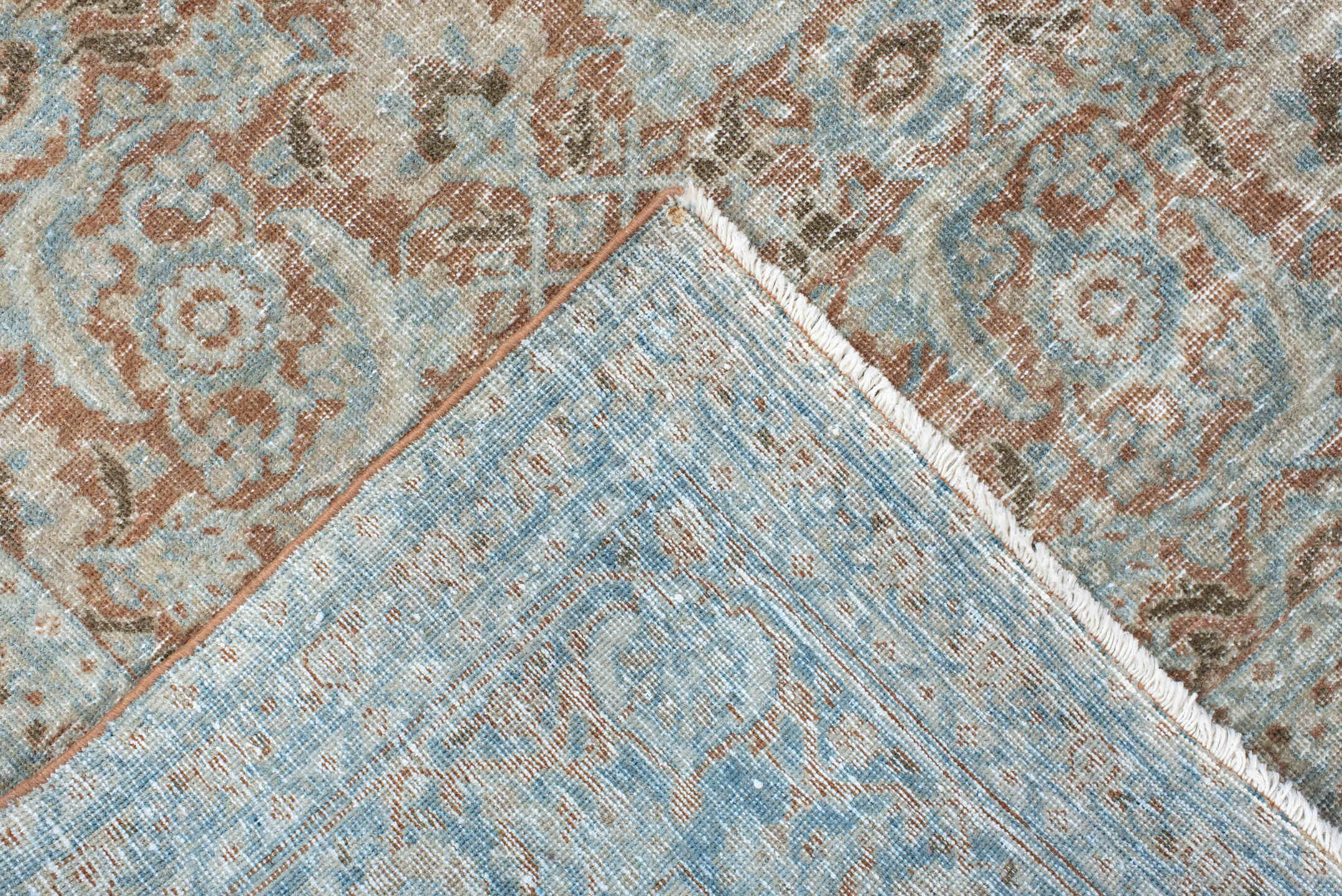
Every rug in our shop is made by hand, but kilims are made differently. A pile rug is built from thousands of individual knots tied onto a foundation and then sheared, which is what gives it that dense, brushable surface. A kilim skips the knots entirely: the weaver passes colored wool over and under the foundation threads and packs each row down tight, so the pattern is the fabric itself rather than a surface sitting on top of it.
That construction explains most of what people love about kilims. With no pile there is nothing to crush, so furniture legs leave no permanent dents. A kilim finishes at a fraction of the thickness and weight of a knotted rug the same size. And because the pattern goes all the way through, the rug works face up or face down; when one side has taken a summer of sun, turn it over.
Kilims belong to a wider flatweave family that includes sumak, with its braided-looking surface, and dhurrie, the flatweave tradition of India. Our Antique Kilim Rugs collection gathers these cousins in one place alongside the kilims themselves.
Kilim or pile: how to choose
Choose a kilim when the floor has to work. Doors that barely clear a rug, dining chairs that need to slide, entries where a thick rug would trap grit: a flatweave handles all of it. Kilims are also the easiest handmade rugs to live with seasonally. A piece light enough to fold over one arm can move from the living room to a bedroom in a minute, or store flat in a closet for the winter.
Choose pile when softness is the point. A knotted rug holds warmth and cushions bare feet in a way no flatweave can, which is why bedrooms and dens usually call for pile, and a thick rug quiets a room while a kilim leaves it lively. Neither is better across the board; the room decides.
Sizing and layering
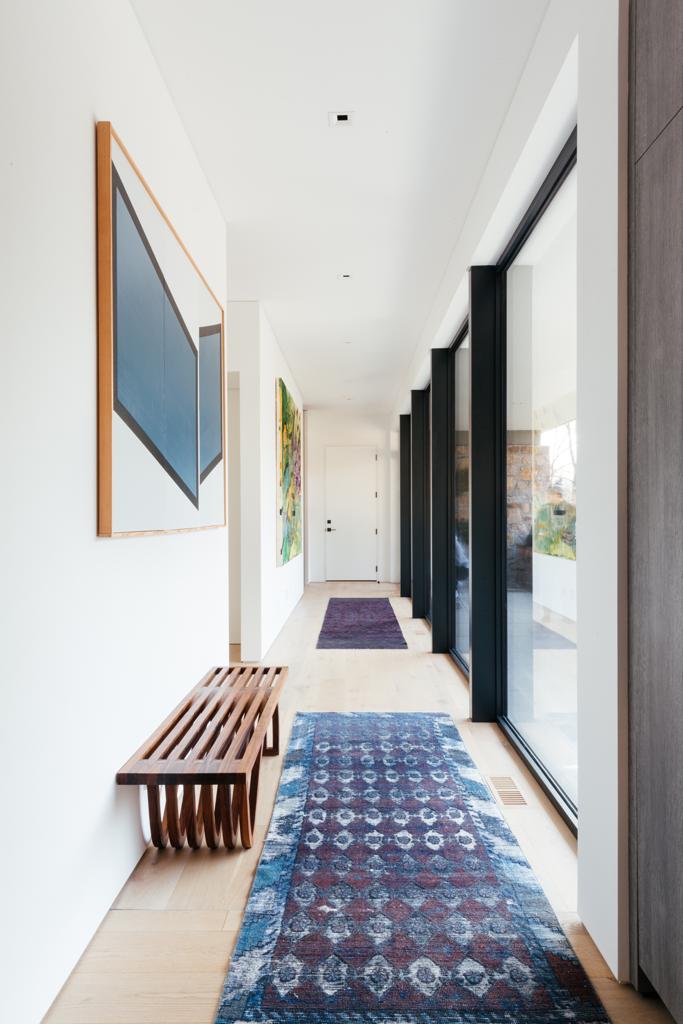
Kilims come into their own in narrow spaces. A flatweave runner clears every door along a hallway, stands up to kitchen traffic, and shows its full pattern because nothing sits on it. Our Kilim Runner Rugs range from short entry pieces to hall lengths of thirteen feet.
In living and dining rooms the sizing rule is the same as for any rug: front legs of the furniture on the rug, or all legs on, with enough margin in a dining room that chairs stay on when pulled out. Kilims scale further up than most people expect. The Vintage Kilim Area Rug (9' x 11') carries a full living room seating group, and the Vintage Kilim Area Rug (12' x 18') proves the format goes as large as any knotted carpet.
Layering is where kilims lead, and where trend coverage for 2026 keeps placing them. A flat rug is the natural base layer: lay a kilim down first and float a smaller pile piece over it, or run a kilim over wall-to-wall carpet, where a knotted rug would sit too tall. The flat profile means no rocking furniture and no tripping edge where the layers meet.
The palettes worth starting with
Bold reds and indigos are the kilims everyone pictures, but the pieces that settle fastest into modern rooms are quieter. Faded kilims have had their color softened by sun and years of use, so the geometry reads as texture rather than statement. Neutral kilims in ivory, sand, and brown layer under almost any palette a room already has. And vintage pieces carry the small irregularities of a rug woven by hand and lived with, which is exactly what machine-made copies miss.
 Faded Kilim Rugs
Geometry softened to texture.
Shop
Faded Kilim Rugs
Geometry softened to texture.
Shop
 Neutral Kilim Rugs
Ivory, sand, and brown, ready to layer.
Shop
Neutral Kilim Rugs
Ivory, sand, and brown, ready to layer.
Shop
 Vintage Kilim Rugs
Woven by hand and lived with.
Shop
Vintage Kilim Rugs
Woven by hand and lived with.
Shop
Start with the room that needs the least pile: the hallway with the tight door, the dining room with the sliding chairs, the living room ready for a layered look. There is a flatweave in stock for each of them.
One of a kind, photographed flat Every kilim in the shop, on one page Explore All Kilim Rugs