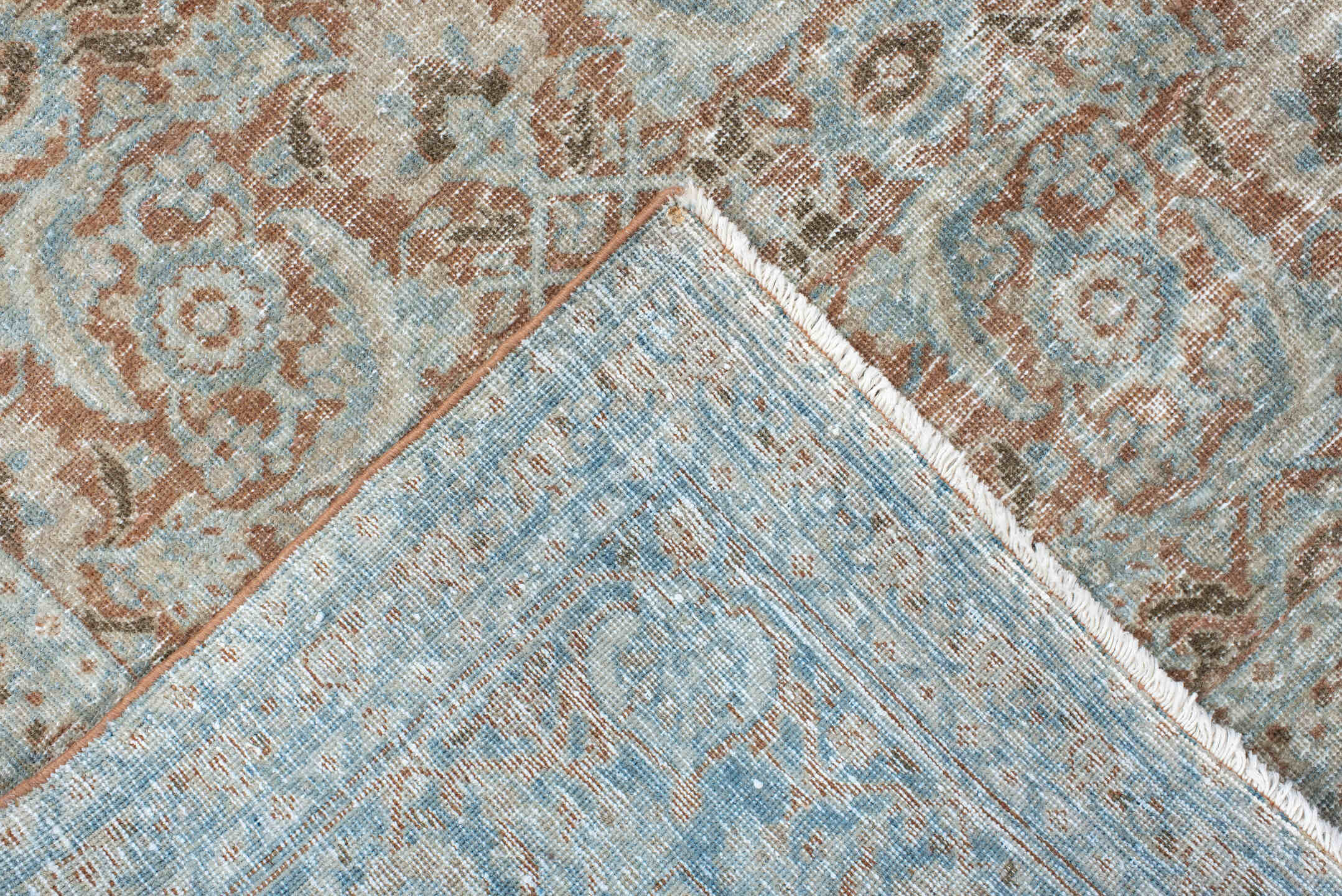
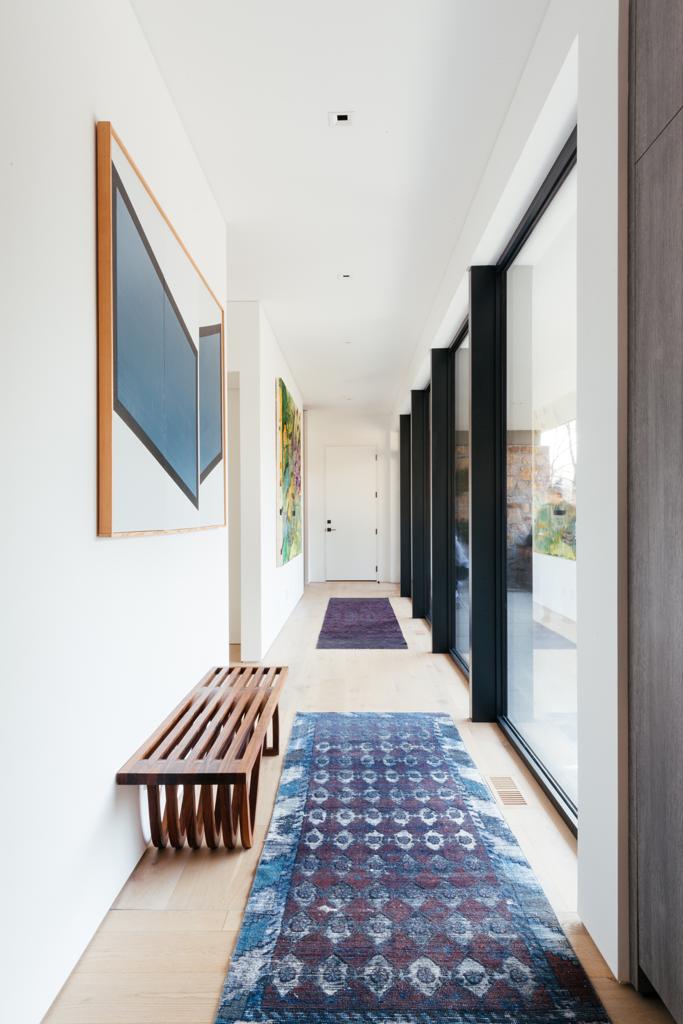
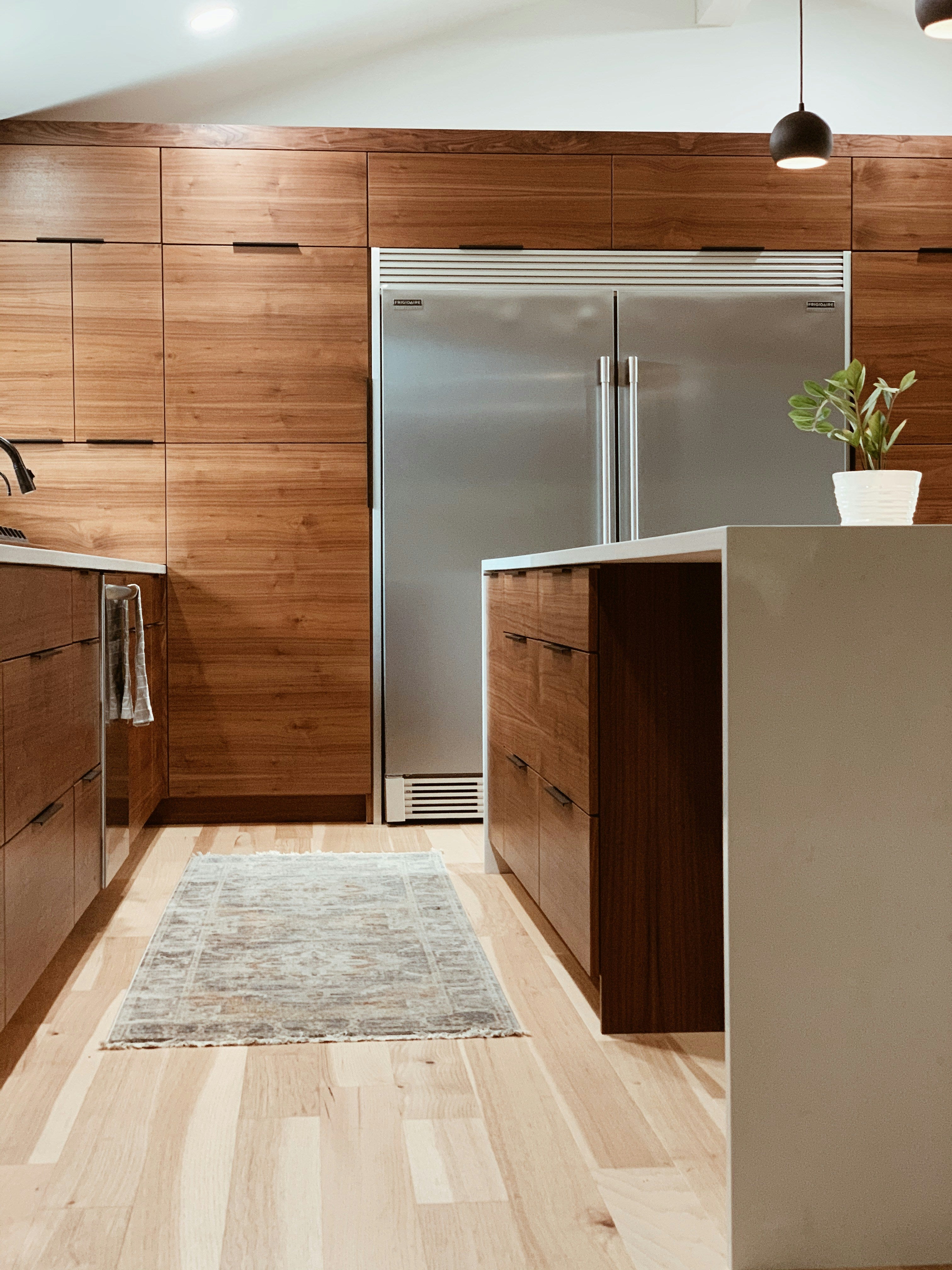
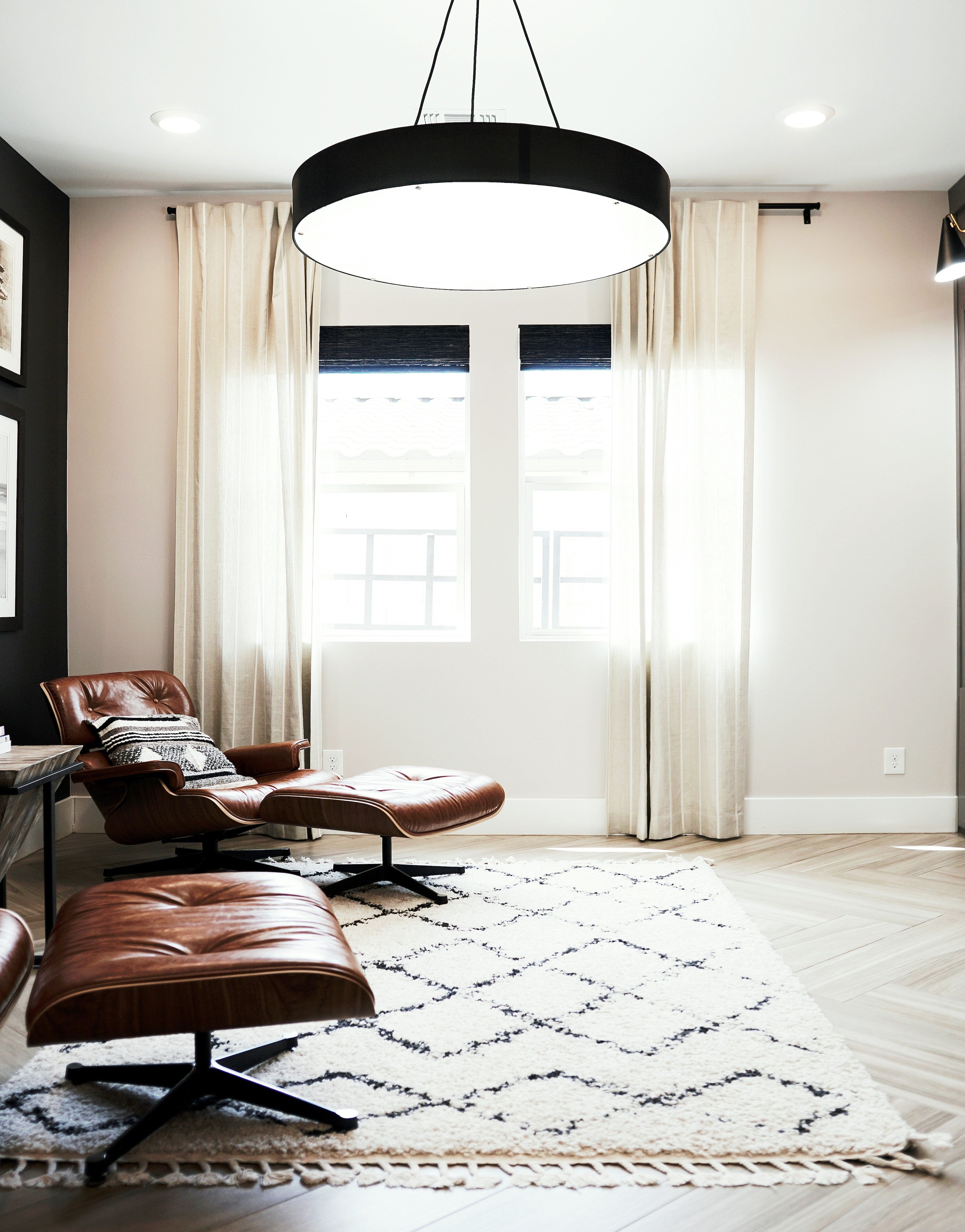

A rag rug is the handmade rug that began life as something else. The weaver cut worn-out clothing, bedsheets and sacking into long strips and wove them, in place of yarn, across a cotton warp on a household loom. The result is a flat, light rug with a slightly nubby surface, colored by whatever cloth the house had used up, and no two are alike. Our Rag Rugs are vintage and antique pieces woven from fabric strips, often cut from old clothing or household textiles.
Two kinds of rag rug
Most of ours are the flat kind: horizontal bands of color across an ivory ground, each band one garment or one sheet used up. A household loom was narrow, so a room-size rag rug was woven as two or three long panels and sewn together, and the seam is part of the design. This Antique Rag Rug (6' x 7') is two panels of ivory with fine bands of charcoal and faded blue, and the join runs down its middle.

The other kind is shaggy. The strips are tied into the weave so their ends stand up, which gives a thick, soft surface in whatever colors the cloth came in; Morocco calls these boucherouite, from a word for scraps. They turn up among our runners and small rugs, and they are the loudest rag rugs we have, pink, crimson and turquoise in the same piece.
Which kind to buy depends on the room. The flat striped rugs on an ivory ground are the quiet ones, neutral enough to sit under a modern sofa. The vintage ones have the ivory softened to cream and the colors eased by years of sun and washing, so a rag rug reads as a worn textile rather than a new one.
 Striped Rag Rugs
Bands of color on an ivory ground, one garment per stripe.
Shop
 Neutral Rag Rugs
Neutral enough to sit under a modern sofa.
Shop
 Vintage Rag Rugs
Vintage color, eased by years of sun and washing.
Shop
Where a rag rug works
A rag rug is light enough to lift and shake out, so it belongs where a rug gets the most daily wear and the least ceremony: a kitchen, a mudroom, a child's room, a summer porch, the floor inside the back door. A flat one also layers well over a plain jute or sisal rug in a living room, where the stripes carry the color and the jute takes the traffic.
The pattern picks the room. Striped on ivory is the farmhouse kitchen rug and the easiest to live with. Geometric rag rugs, with triangles, diamonds and chevrons worked in the strips, are the ones for a modern room, where the geometry reads as design rather than thrift; this Vintage Rag Rug (5' x 9') is a field of triangles in ivory, black, blush and sky blue. Bohemian rag rugs are the multicolor ones, flat and shaggy both, and they suit a studio, a sunroom or a bedroom that already has color in it. If the room runs cold, the warm ones lean to crimson, rose and terracotta.
 Geometric Rag Rugs
Triangles, diamonds and chevrons worked in the strips.
Shop
 Bohemian Rag Rugs
Multicolor, for a studio or a sunroom.
Shop
 Warm Rag Rugs
Crimson, rose and terracotta for a room that runs cold.
Shop
Rag rug sizes
Rag rugs were woven for cottage rooms and hallways, and the sizes follow. The size that turns up most often is around 4' x 8', which fits a galley kitchen or the foot of a bed. Runners are common too, from a short 2' x 6' to lengths past twelve feet for a long gallery hall, flat and shaggy both; this Vintage Rag Rug (3' x 8') is flatwoven, with bands of crimson, ivory and pale aqua, for a hallway or the long side of a kitchen island. Small rag rugs, 2' x 5' to 3' x 6', suit a doorway or a bedside.

Room sizes are rarer, because they took two or three panels and a great deal of cloth, so they are worth noting when they turn up. Most run 6' x 8' or 6' x 9', and now and then one is larger: this Vintage Rag Rug (8' x 10') is an airy weave of ivory with thin bands of sky blue, teal and brown. This Antique Rag Rug (8' x 12') was woven around 1940 in three panels, a plain ivory center between two striped sides, and it is a flat, light alternative to wool under a dining table.
Antique or vintage
Antique rag rugs, meaning eighty years and older, are the rarer find, and they are nearly always the flat striped kind. Age shows in a rag rug as softened color and a surface worn smooth rather than as bald patches, because there is no pile to wear away, and a seam or two is normal in a rug that spent decades on a kitchen floor.
Vintage rag rugs are where the color is: the geometric and multicolor pieces, the shaggy runners, and the striped rugs whose bands are still bright. For a first rag rug, vintage is the easier choice; for a quiet room-size piece with a seam down the middle and eighty years of fading, look to the antiques.
Caring for a rag rug
A rag rug asks less than a wool one. Put a pad under it on a hard floor so it stays flat, vacuum without the beater bar, and take it outside a few times a year to shake it. Rotate it so sun and traffic fade it evenly. Do not put an old rag rug through a washing machine, however much the material invites it; the seams and the oldest strips will not survive the spin. Spills and the yearly clean go to a professional rug cleaner.
If you want the classic, start with stripes on ivory: this Antique Rag Rug (6' x 8') carries bands of saffron, teal, lavender and charcoal across a pale ground and would settle a bedroom or a casual living room. Every rag rug we have is handmade from cloth that had a first life somewhere else, one of a kind, and the kind of rug a kitchen floor deserves and rarely gets.
One of a kind, photographed flat Every rag rug in the shop, on one page Explore All Rag Rugs