
A Malayer is the Persian rug for the rooms that are not the formal living room. It is hand-knotted in a village district of western Iran on a cotton foundation, and each row of knots is laid down over a single pass of weft instead of two, which leaves the rug thinner and more flexible than a heavy city carpet. That build is the practical reason Malayer Rugs turn up in so many parts of a house. They lie flat under a door that swings, sit under furniture without raising a ridge, and hold a hallway or a kitchen where a thick Persian carpet would fight the room.
Malayer is a town and a district rather than a single village, and its weavers worked between two traditions. The Sarouk workshops nearby drew curving floral designs for the export market. The villages of the surrounding Hamadan region wove plainer, sturdier rugs for local use. A Malayer takes the fine drawing from the first and the practical build from the second, which is what makes the type so easy to place. Both neighbors are worth a look for comparison, in Sarouk Rugs and in Hamadan Rugs.
How to recognize a Malayer
Start with the field. Most Malayers are drawn as an all-over repeat, one small motif marching edge to edge across the whole surface. The two you meet most often are the Herati, a small diamond framed by four curling leaves, and the boteh, the teardrop shape that became paisley in the West. The motifs stay small and the spacing stays even, so the field reads as quiet texture from standing height and as fine drawing once you are close to it. This Antique Malayer Area Rug (4' x 8') is the boteh at its clearest, rows of teardrops in brown and soft blue on an ivory ground.

How that field gets organized splits three ways, and it is the most useful thing to sort by. Some Malayers run the floral repeat uninterrupted from border to border. Others seat a single medallion in the middle and let the repeat keep running underneath it, which gives a room a center to work from without giving up the texture. A third group drops the curves altogether and draws in steps and angles, stacking hooked diamonds down the length of the rug, a geometric habit that reads closer to tribal weaving than to a city workshop.
 Floral Malayer Rugs
The repeat running uninterrupted, border to border.
Shop
Floral Malayer Rugs
The repeat running uninterrupted, border to border.
Shop
 Medallion Malayer Rugs
One medallion, with the repeat still running underneath.
Shop
Medallion Malayer Rugs
One medallion, with the repeat still running underneath.
Shop
 Geometric Malayer Rugs
Steps and angles instead of curves.
Shop
Geometric Malayer Rugs
Steps and angles instead of curves.
Shop
Antique or vintage
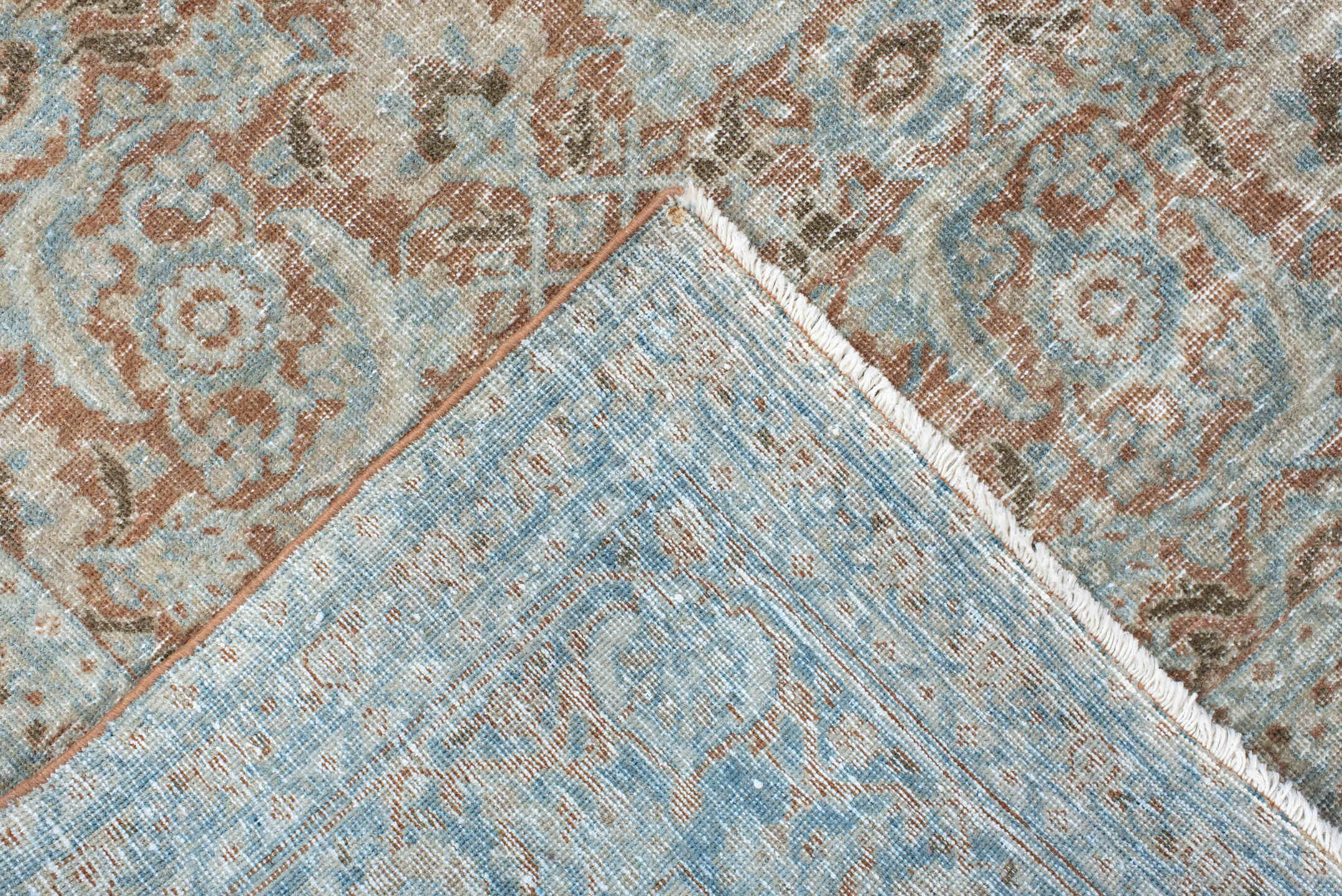
Both come out of the same district in the same formats, so this is a question about surface rather than about quality. An antique Malayer, meaning a rug eighty years and older, has usually worn its pile low, and that is exactly why the drawing looks so crisp on one: with less wool standing, every line of the repeat sits right at the surface. A vintage Malayer keeps more pile and more of its original color, so the palette runs deeper and the rug feels more substantial underfoot. Neither is the better buy, and the choice comes down to whether you want the flatter, quieter surface or the fuller one.
 Antique Malayer Rugs
Pile worn low, every line of the drawing at the surface.
Shop
Antique Malayer Rugs
Pile worn low, every line of the drawing at the surface.
Shop
 Vintage Malayer Rugs
More pile standing, more of the original color.
Shop
Vintage Malayer Rugs
More pile standing, more of the original color.
Shop
Where a Malayer actually goes
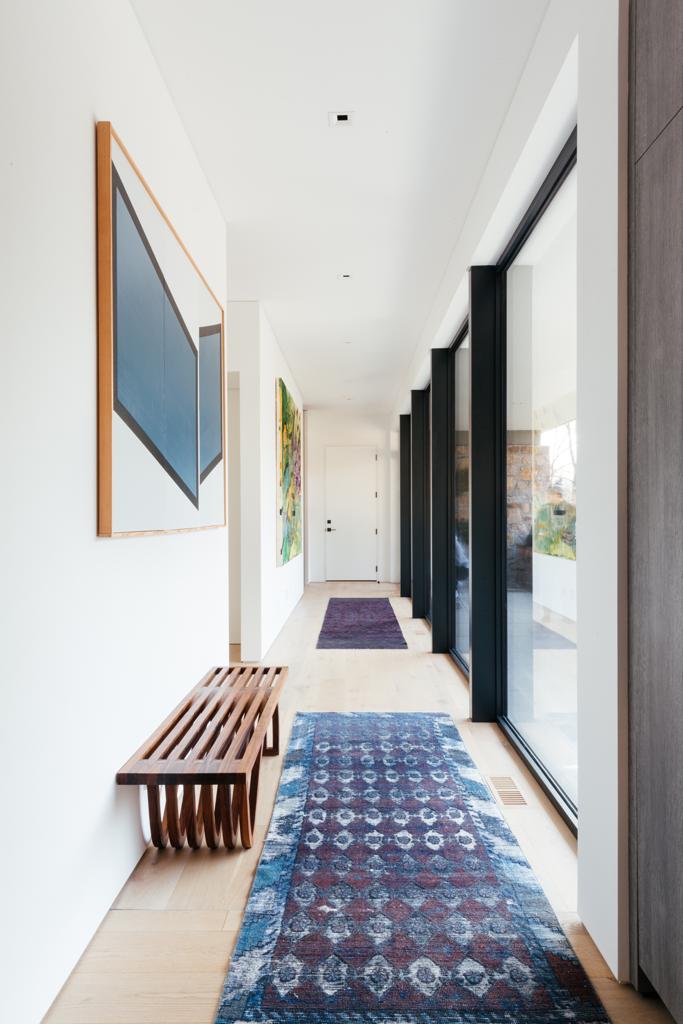
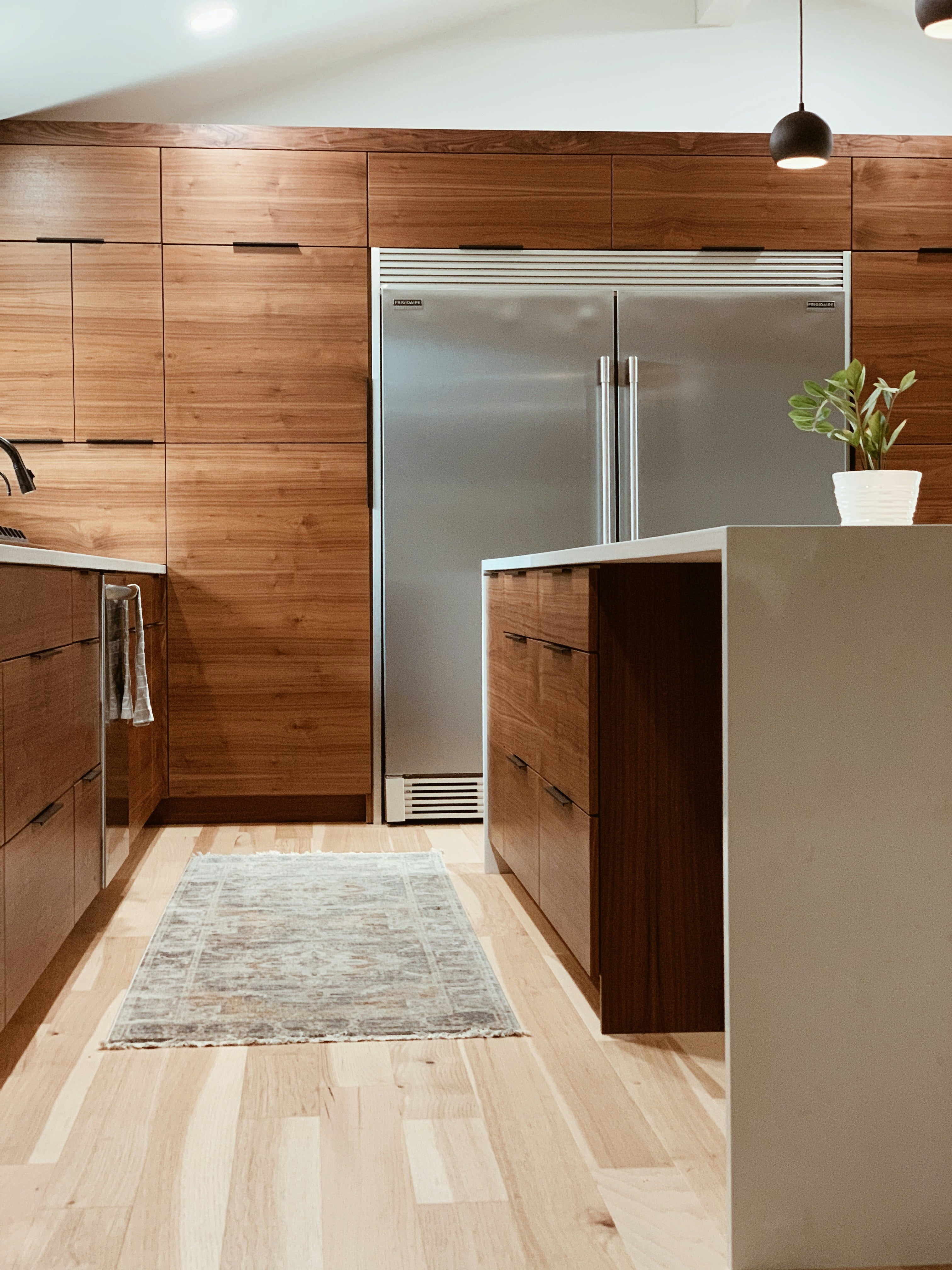
The size range is where this type earns its keep. Malayer looms turned out long, narrow formats in quantity, and close to half of what we have in stock right now is a runner, which makes a hall or a galley kitchen the easiest place to start. The same district made a great many small rugs, the 2' x 4' and 3' x 6' pieces that go beside a bed, in front of a sink, or just inside a door. Color helps too: about three quarters of our Malayers have faded back toward camel, ivory and pale blue, so they settle into a modern room rather than announcing themselves in it. This Antique Malayer Runner Rug (3' x 11') and this Antique Malayer Runner Rug (3' x 12') are both long enough to carry a full corridor.
 Malayer Runner Rugs
Long, narrow, and woven in quantity for halls.
Shop
Malayer Runner Rugs
Long, narrow, and woven in quantity for halls.
Shop
 Small Malayer Rugs
Beside a bed, in front of a sink, inside a door.
Shop
Small Malayer Rugs
Beside a bed, in front of a sink, inside a door.
Shop
 Faded Malayer Rugs
Faded back toward camel and ivory, quiet in a modern room.
Shop
Faded Malayer Rugs
Faded back toward camel and ivory, quiet in a modern room.
Shop
Placement follows from the build. Because a Malayer is thin, it takes a pad well and will not bind a door that opens over it. Under a bed, run it across the foot rather than the full length. In a hall, leave a few inches of floor showing on each side instead of running it wall to wall, so the drawing reads as a rug and not as carpet. Care is undemanding: vacuum without the beater bar, rotate the rug once a year so light and traffic wear it evenly, and send real spills to a professional cleaner rather than reaching for a bottle from under the sink.
If you are shopping the type rather than one particular rug, pick the size first and the palette second. This Antique Malayer Area Rug (6' x 9') is the room-size version, a slate blue Herati field inside a wide camel border, and this Antique Malayer Area Rug (4' x 6') shows how much color the type still carries when the dyes have not washed back. Most of what we have sits somewhere between those two.
One of a kind, photographed flat Every Malayer in the shop, on one page Explore All Malayer Rugs