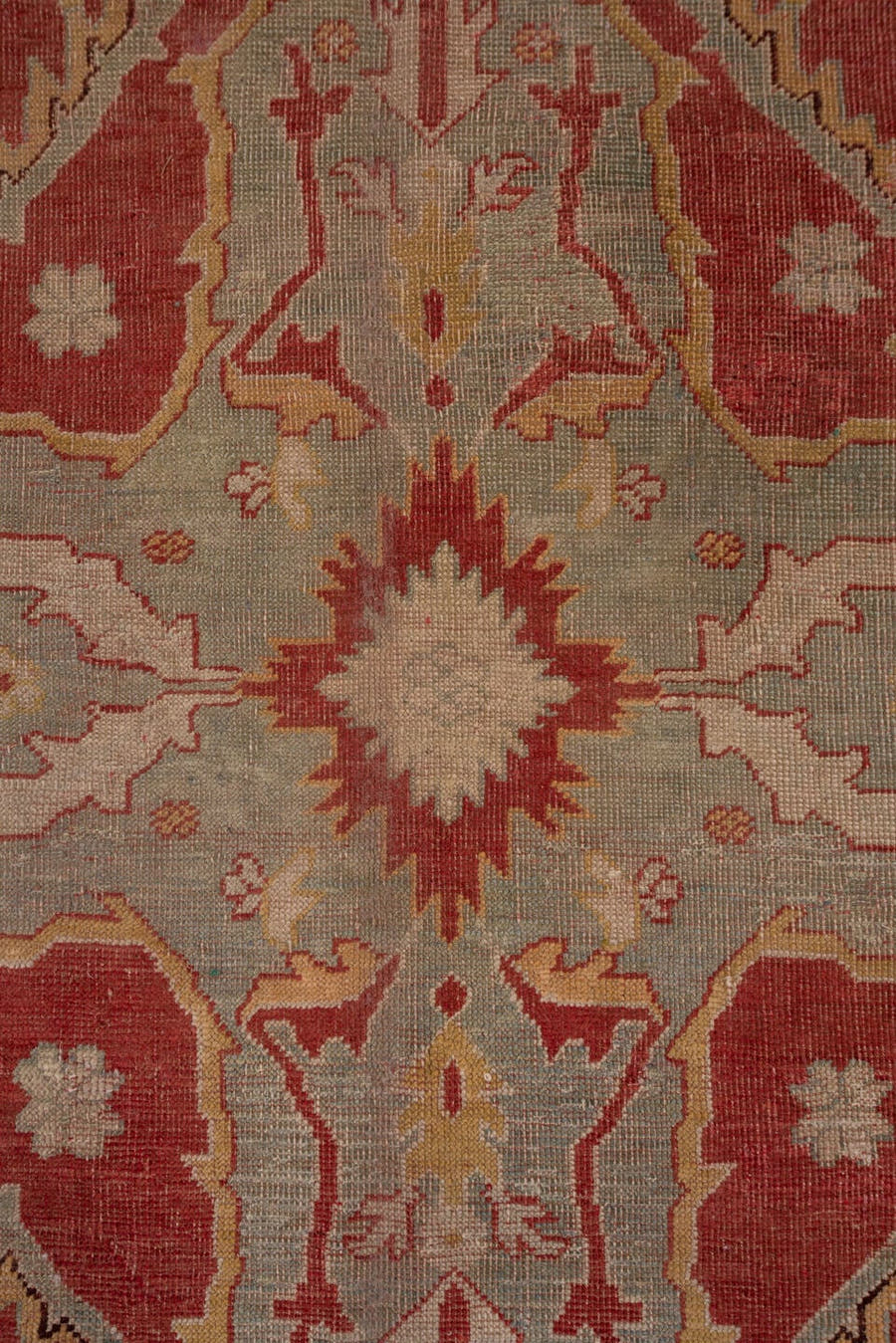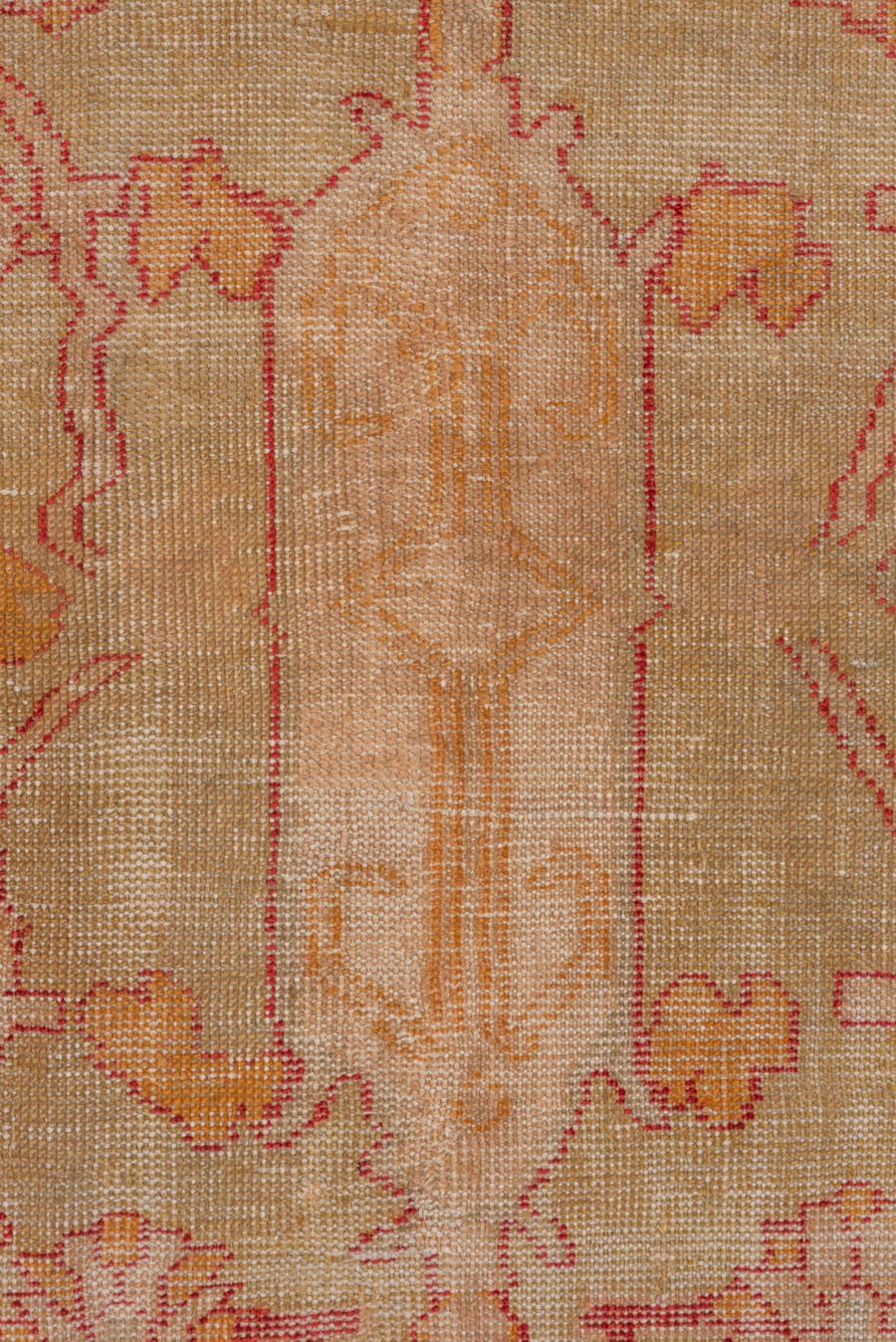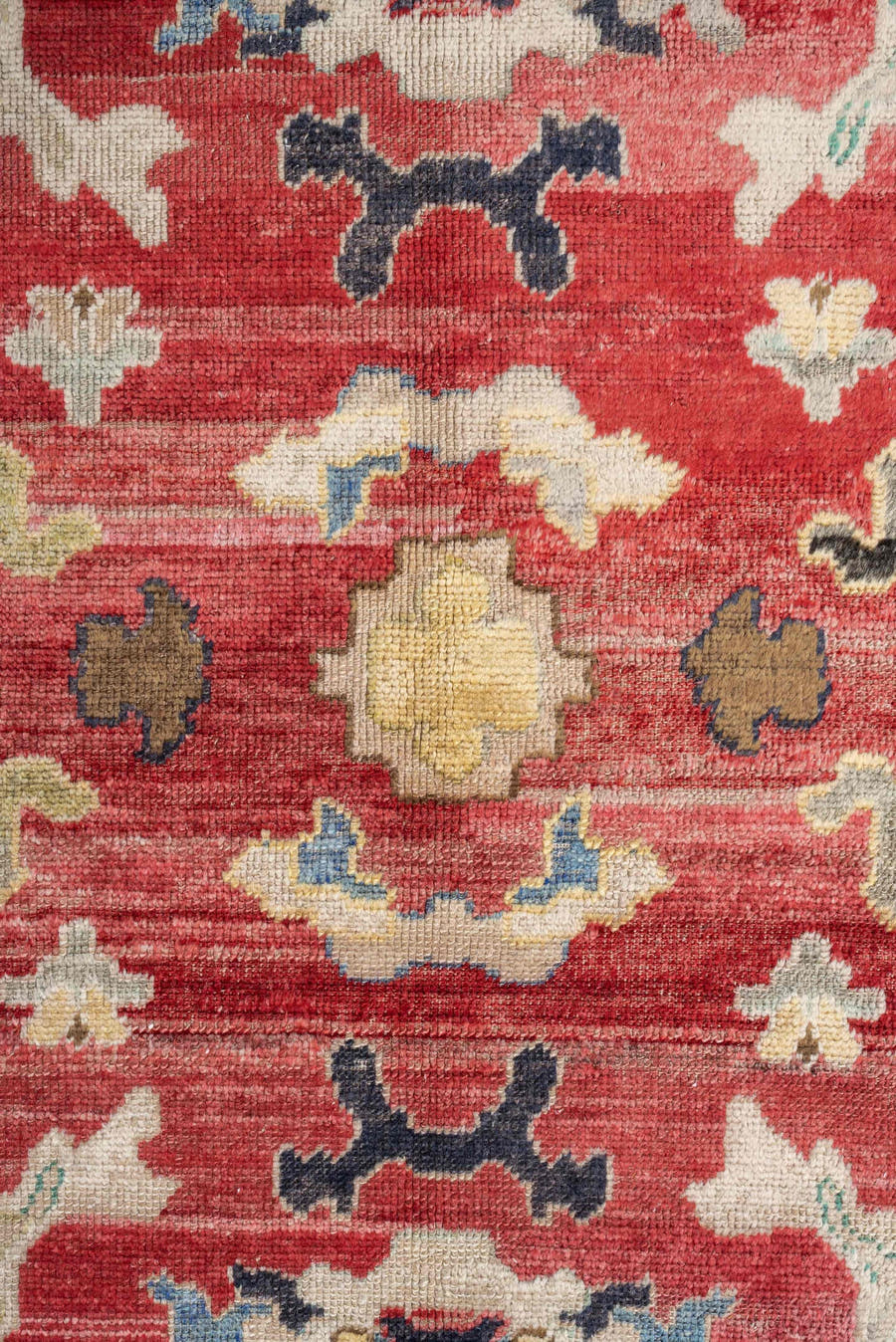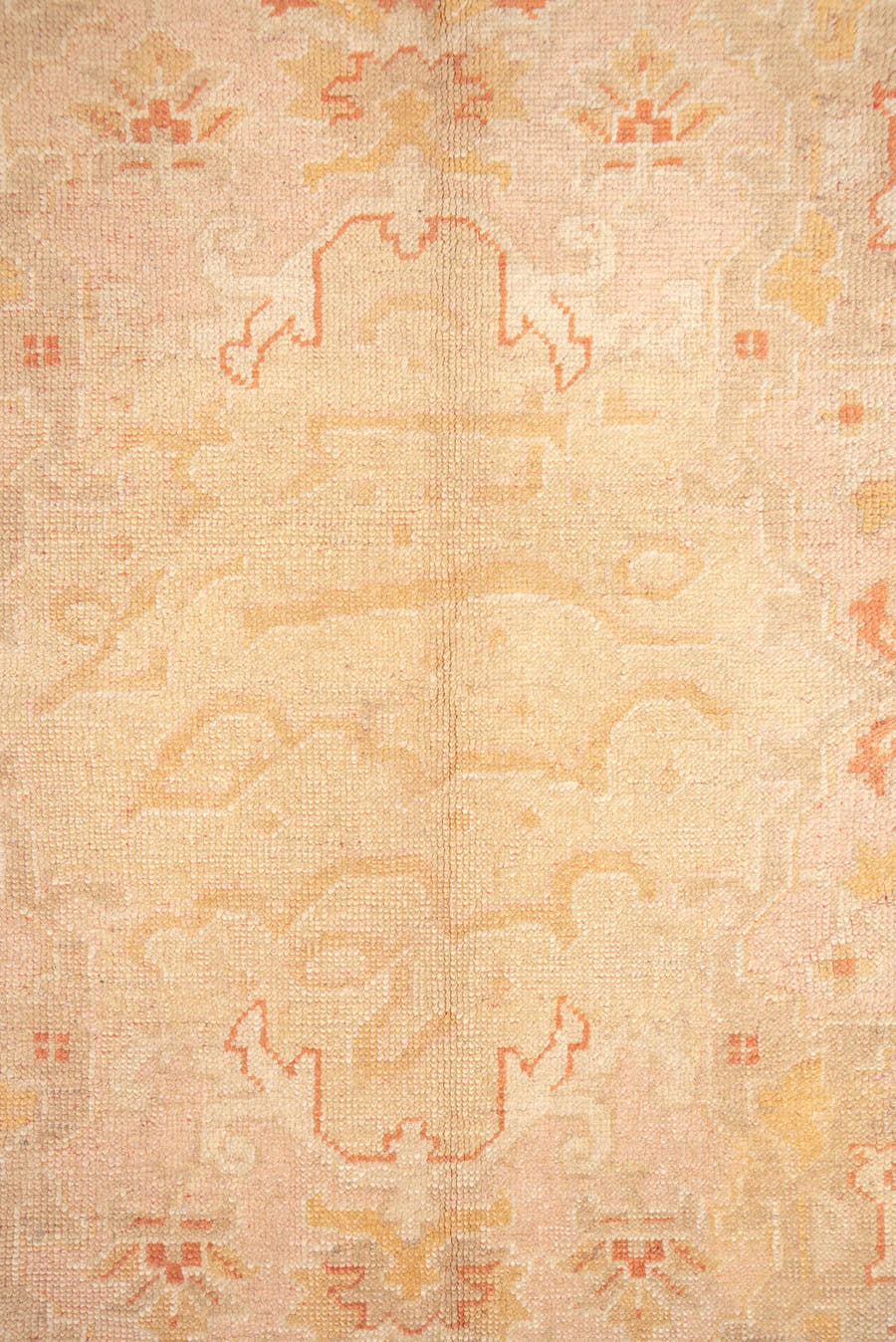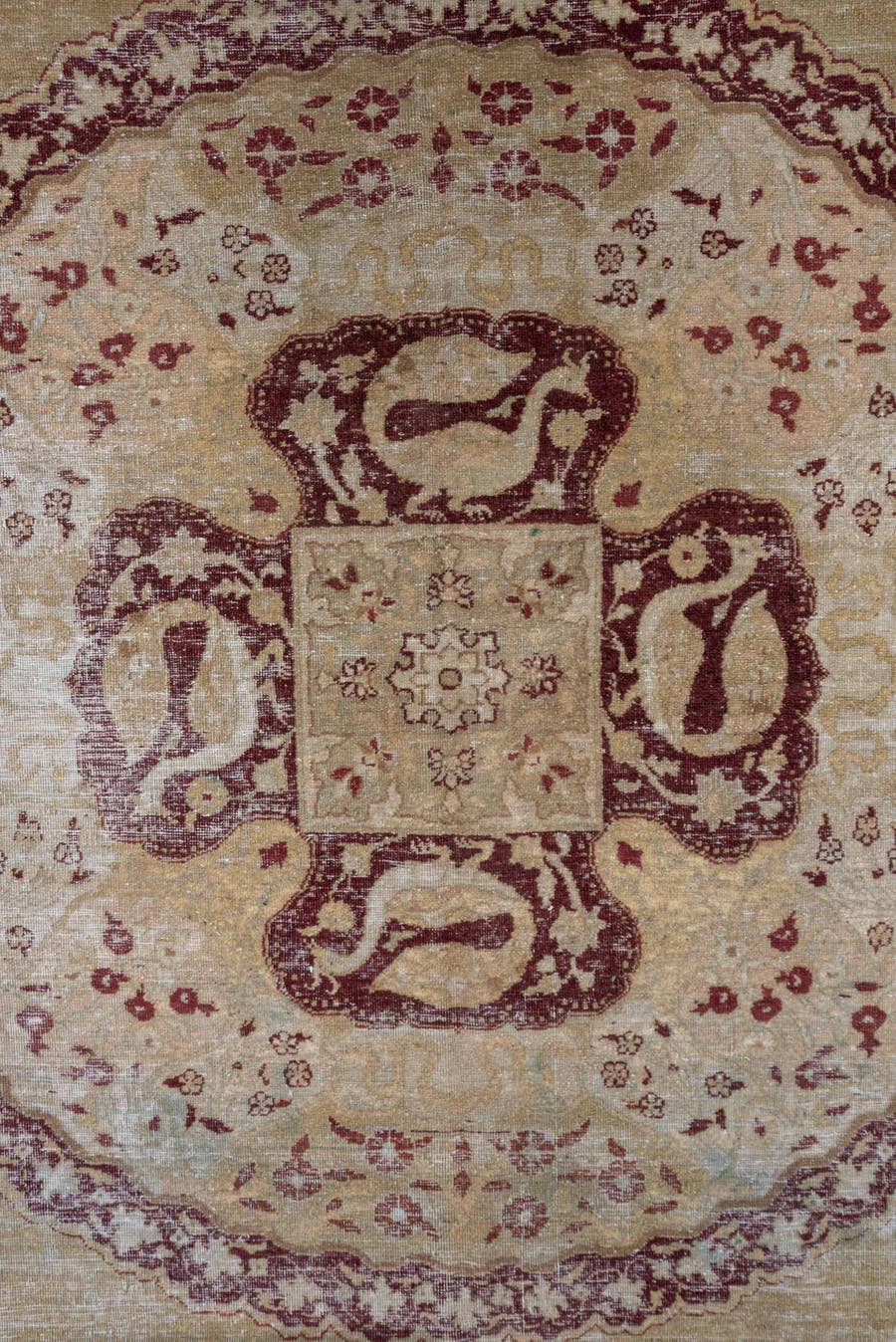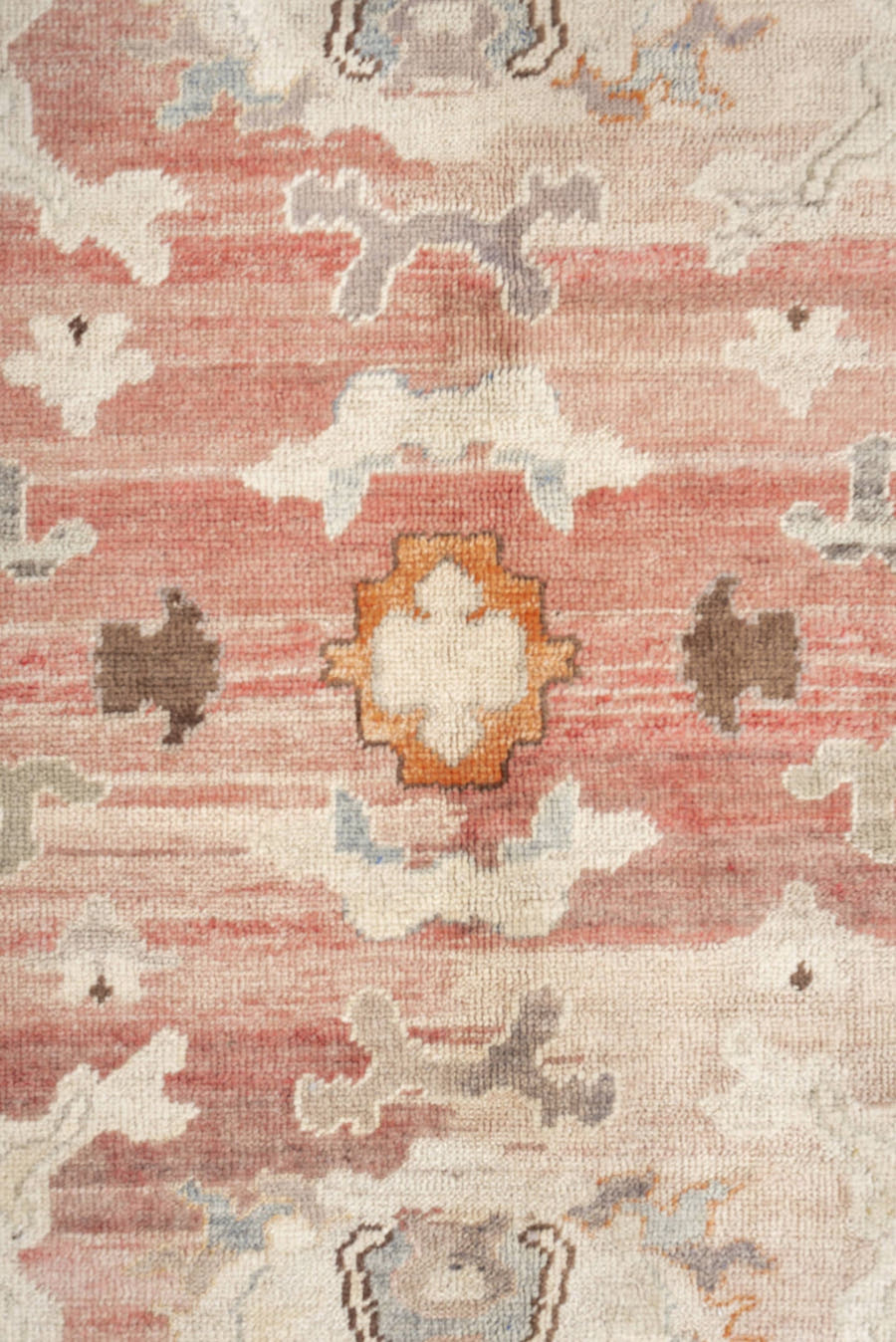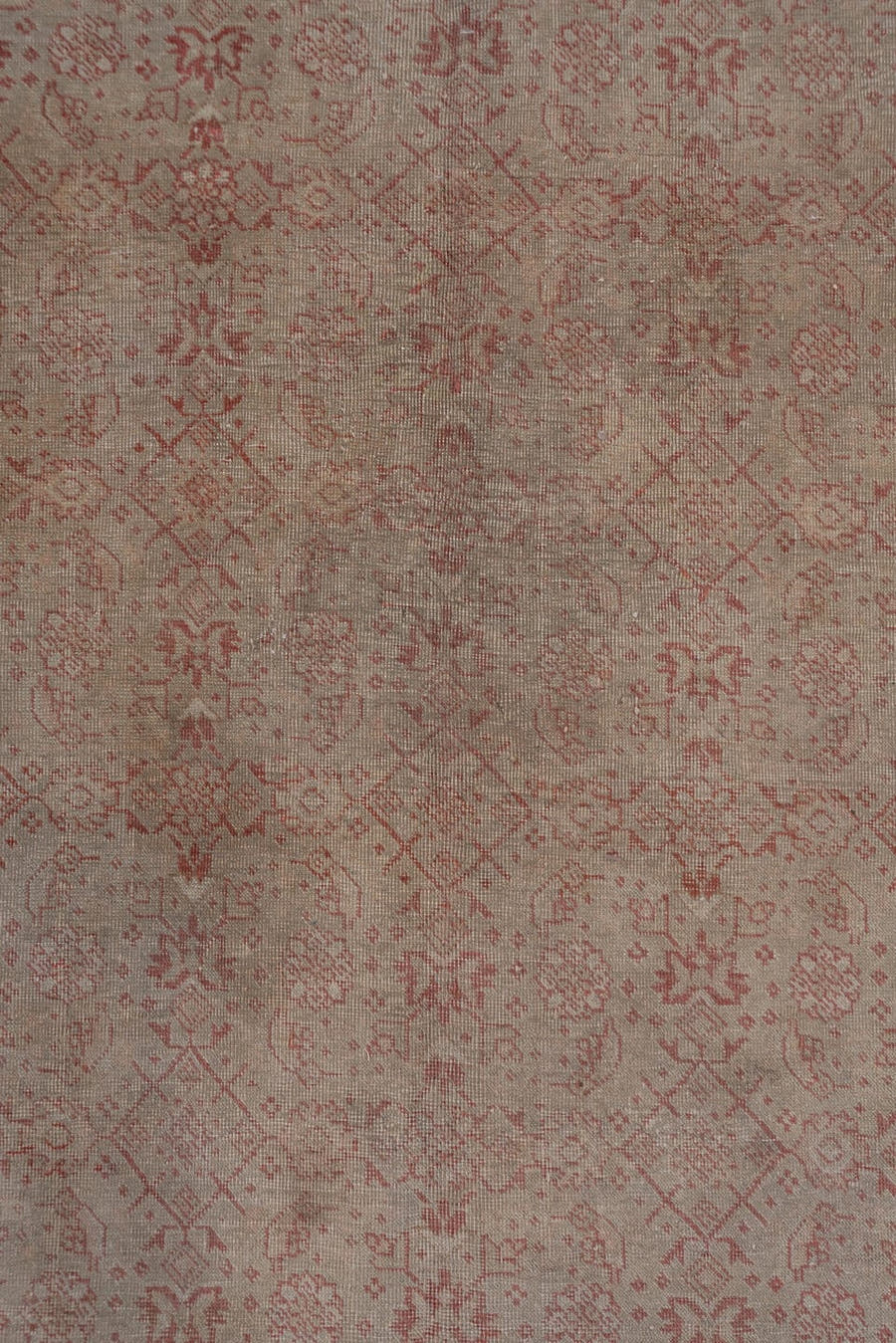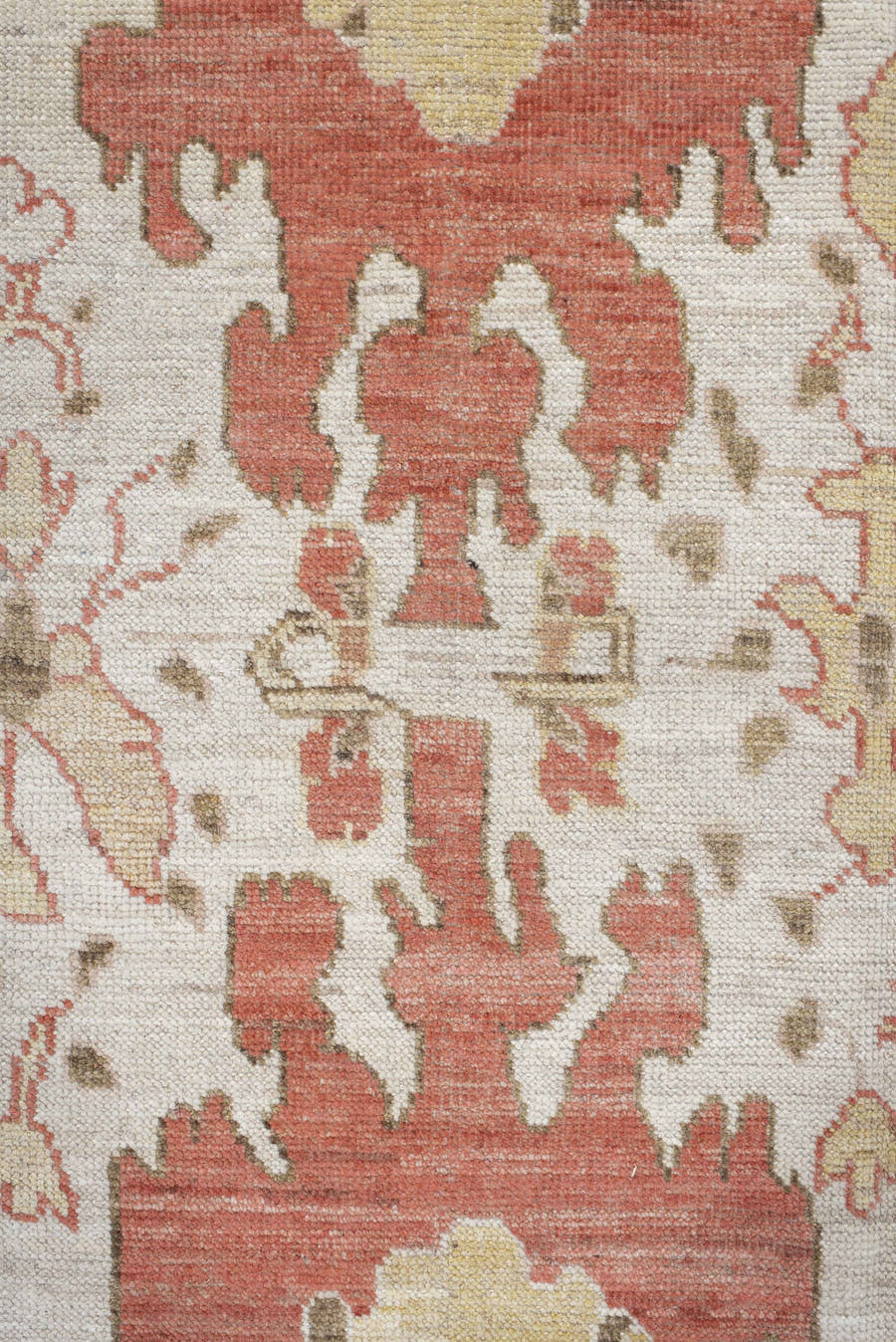


Antique Oushak Area Rug (11' x 14')
One-of-a-kind rugs, 100% satisfaction guaranteed. Free shipping from the USA, delivered in just a few days.
Thanks, we’ll be in touch.
We’ll email you as soon as we know more about this rug.
This one’s on hold right now.
Choose options
One-of-a-kind rugs, 100% satisfaction guaranteed. Free shipping from the USA, delivered in just a few days.
Dimensions: 11'9" x 14'6" (358 cm x 442 cm).
Circa: 1910.
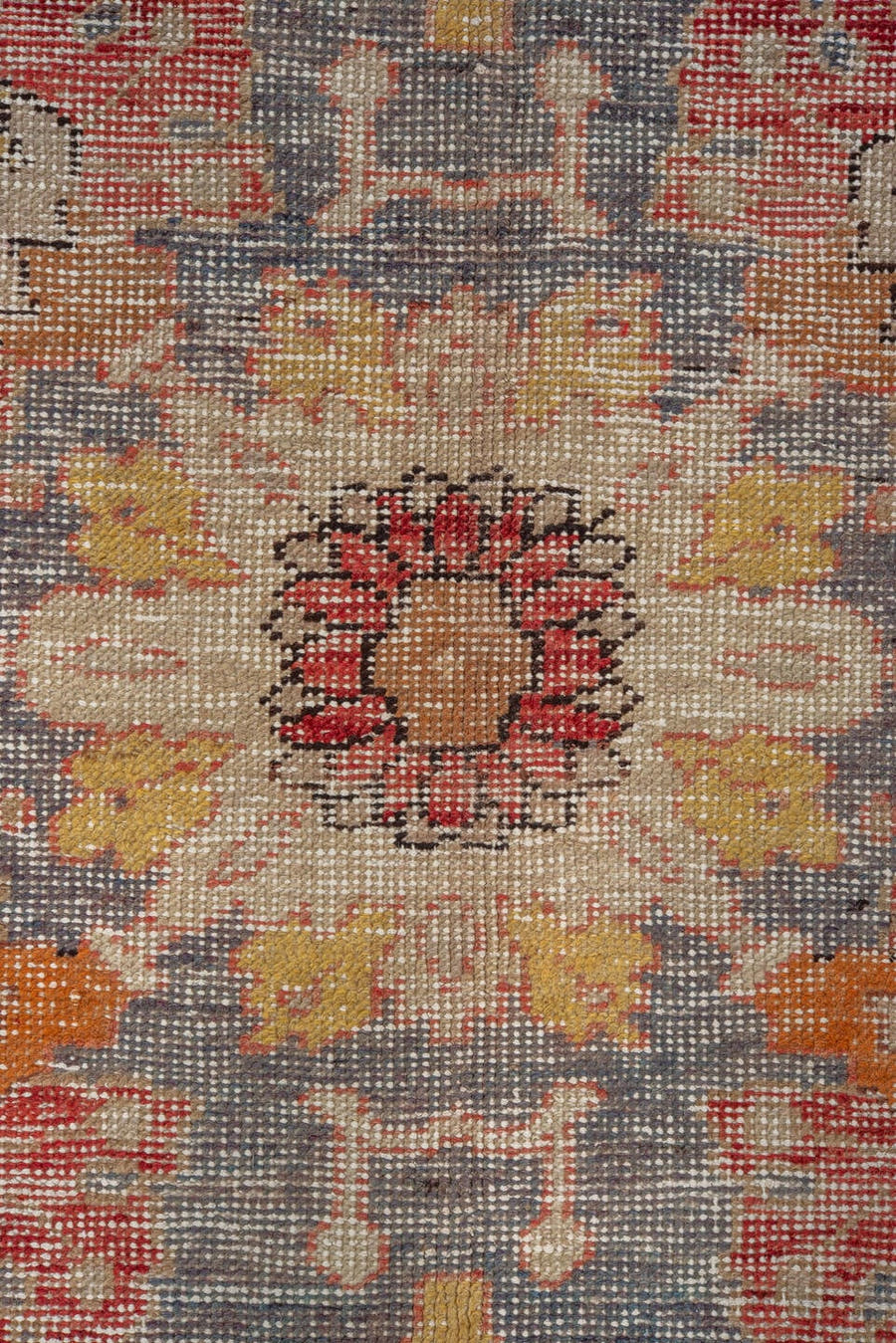
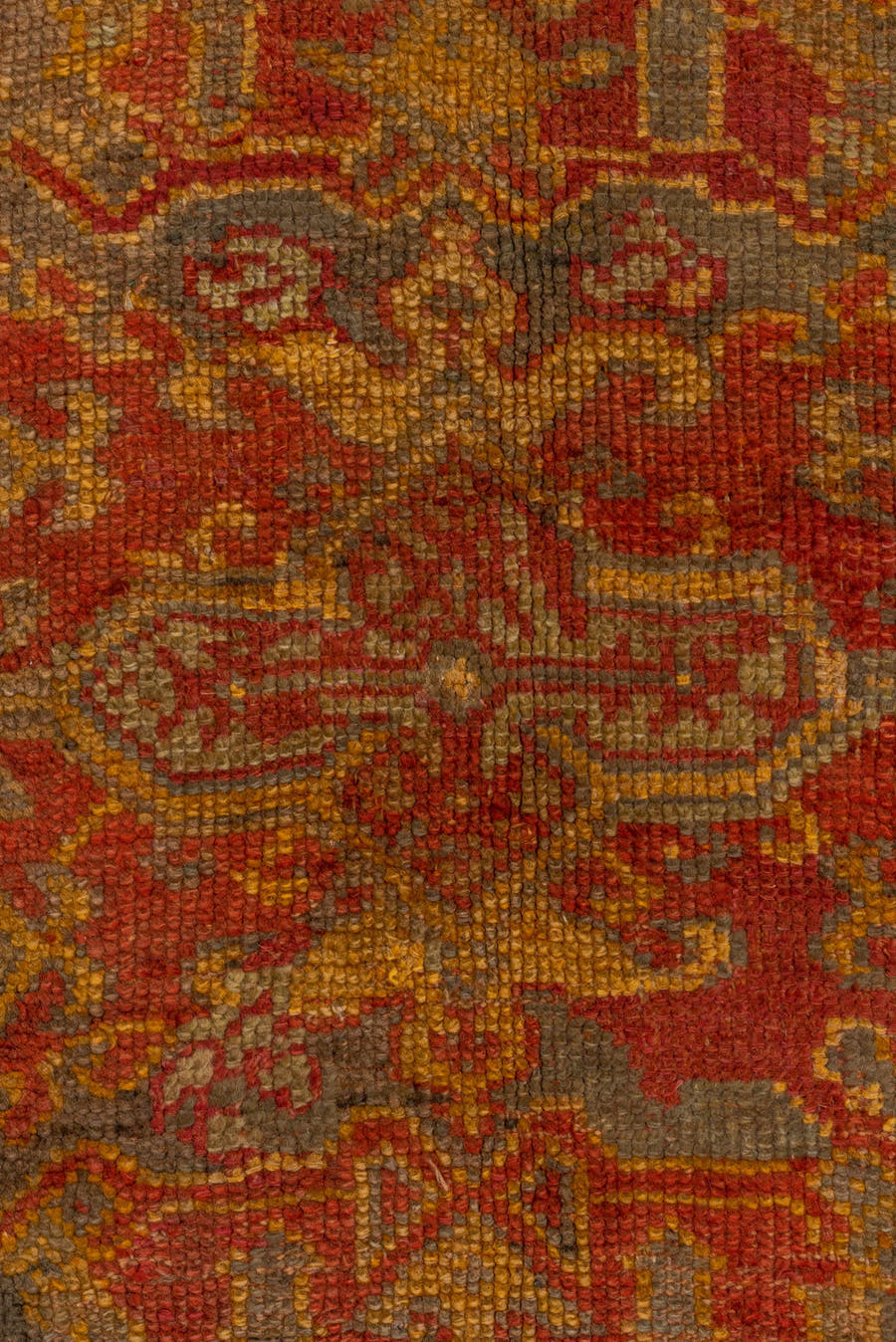
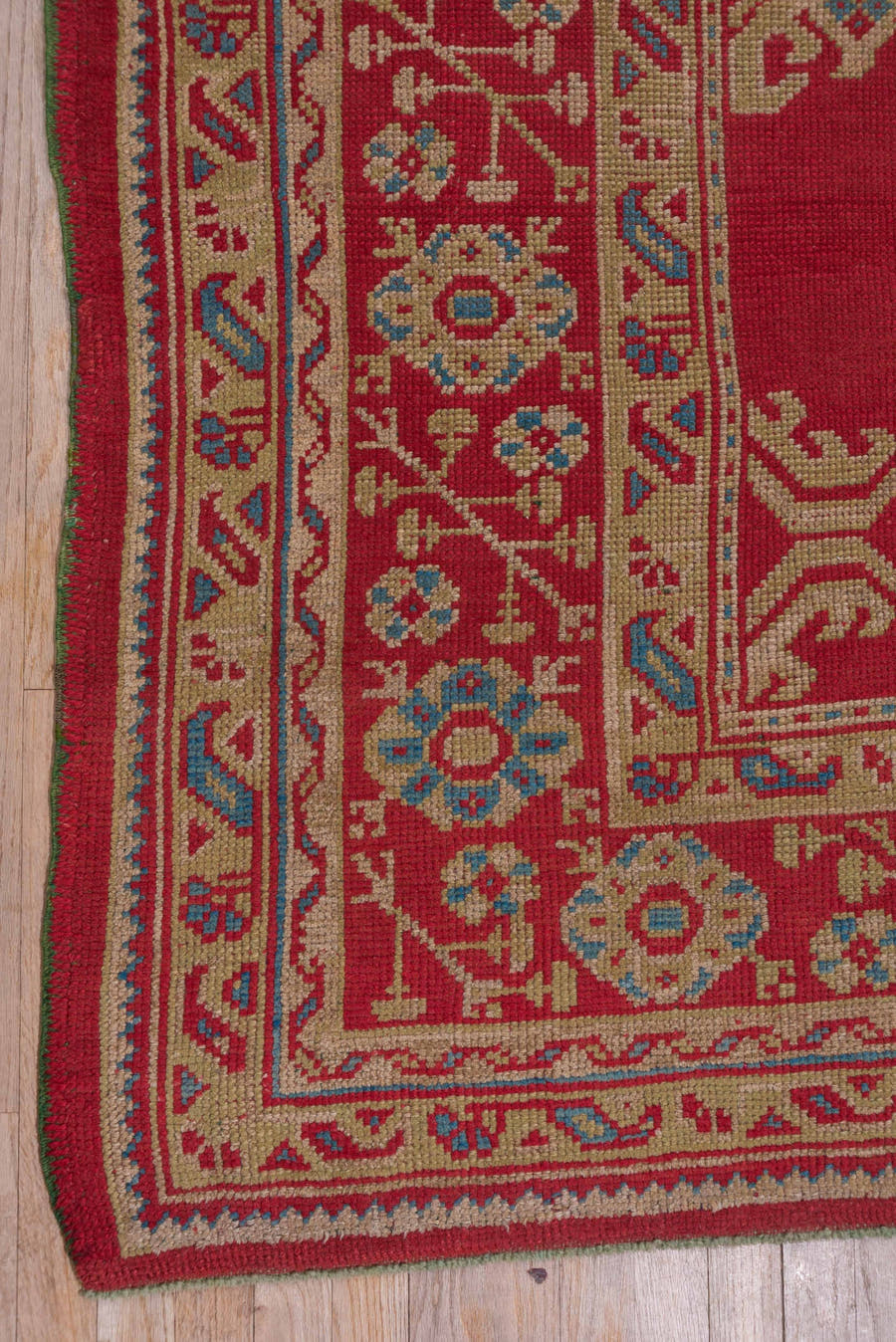
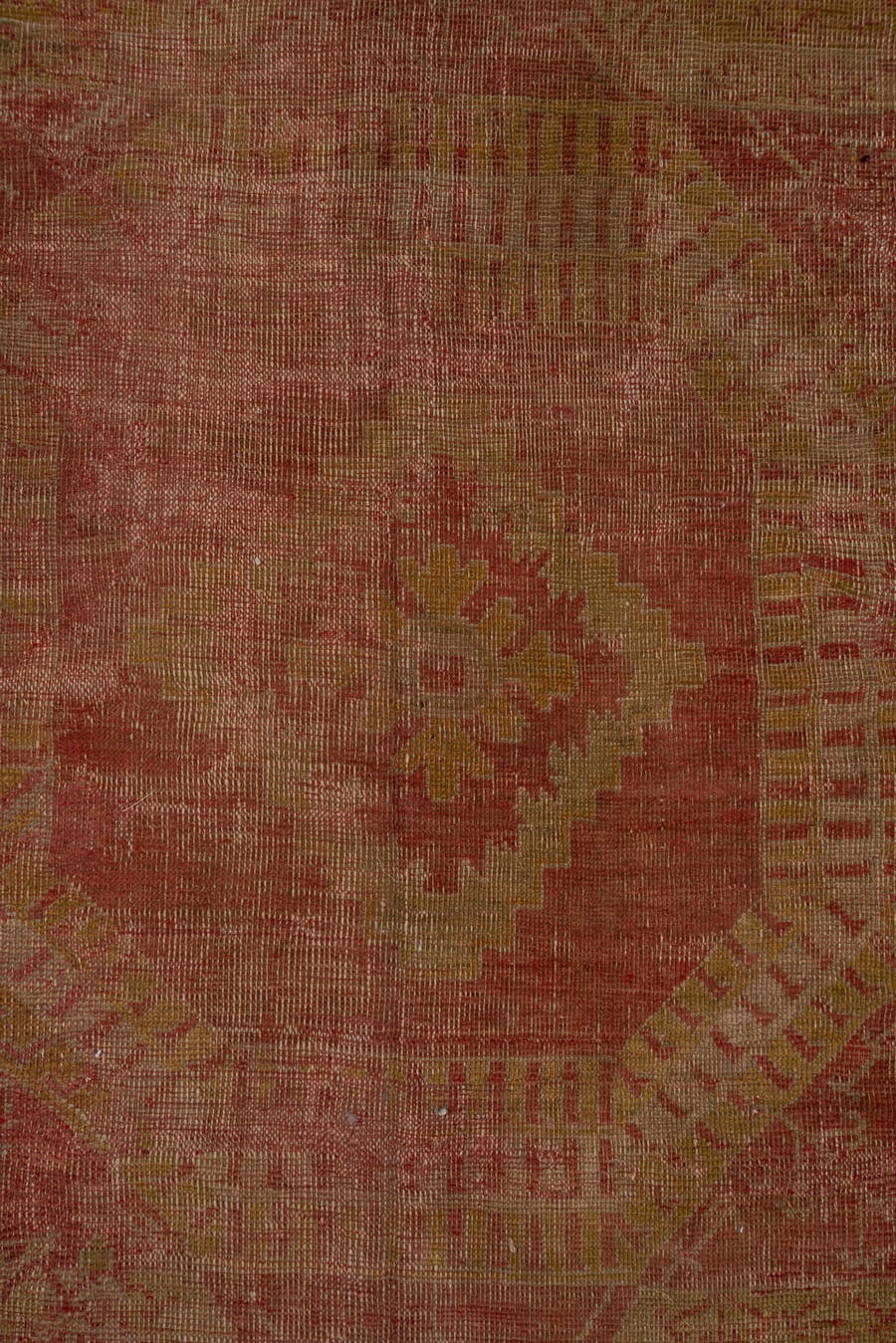
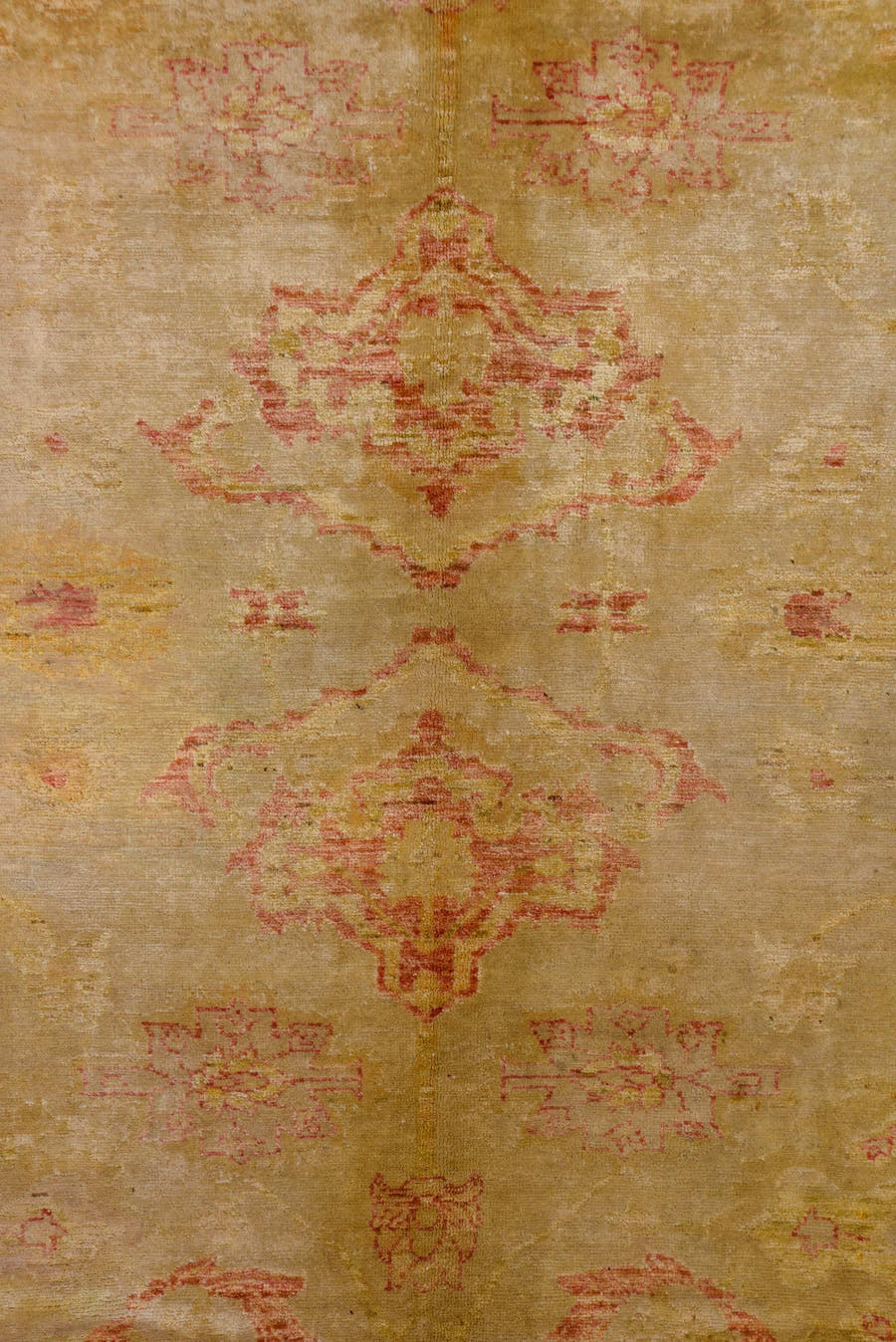
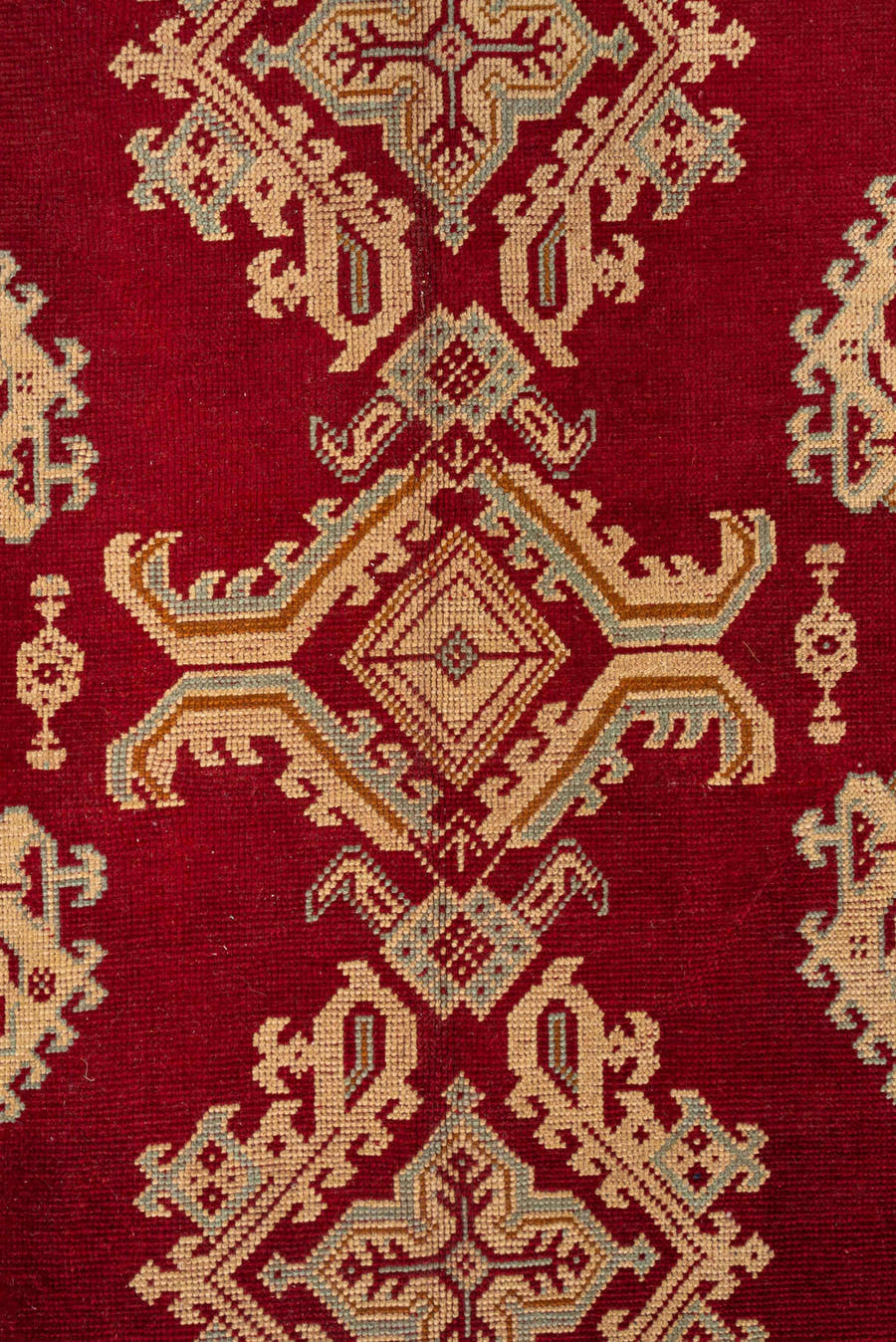
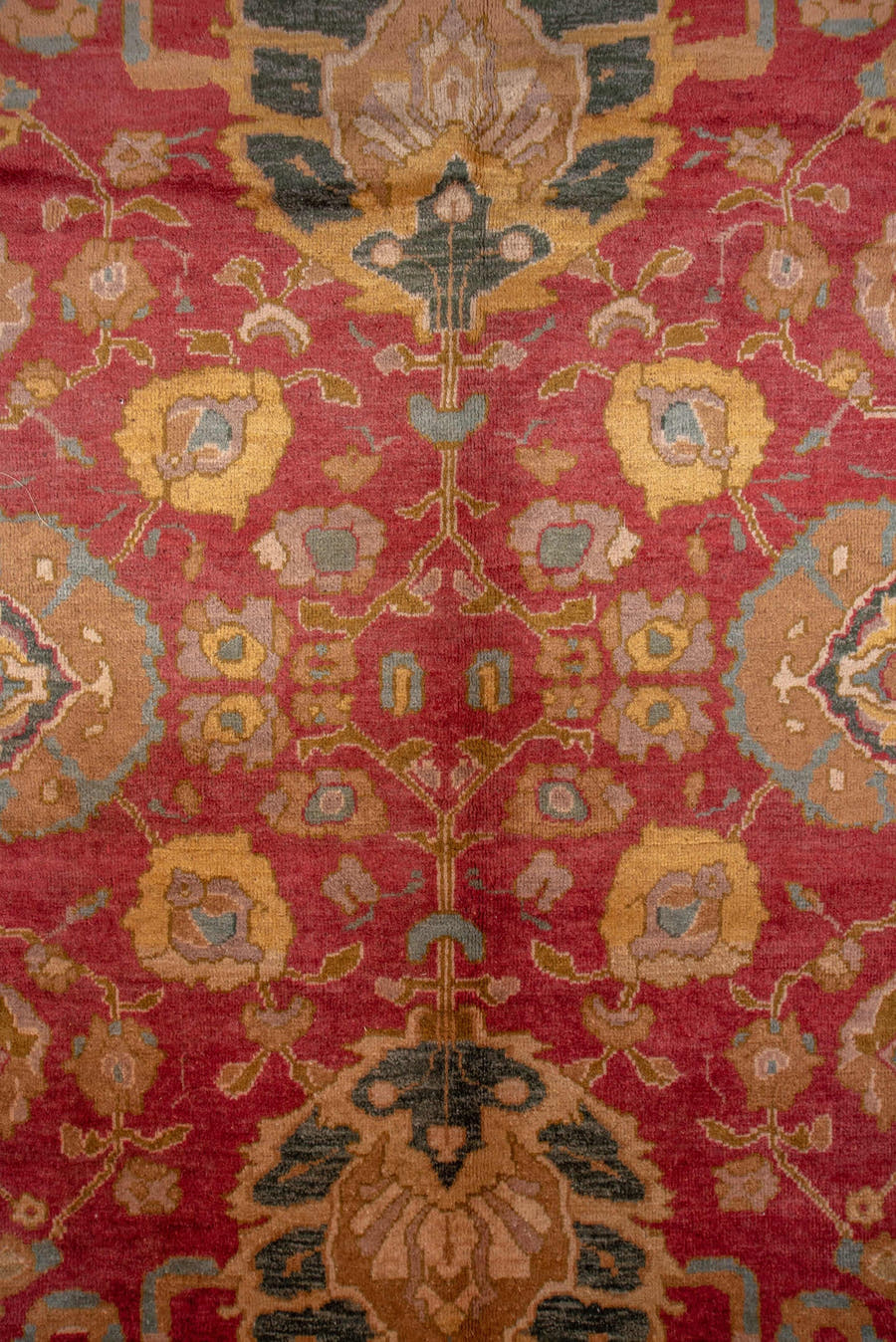
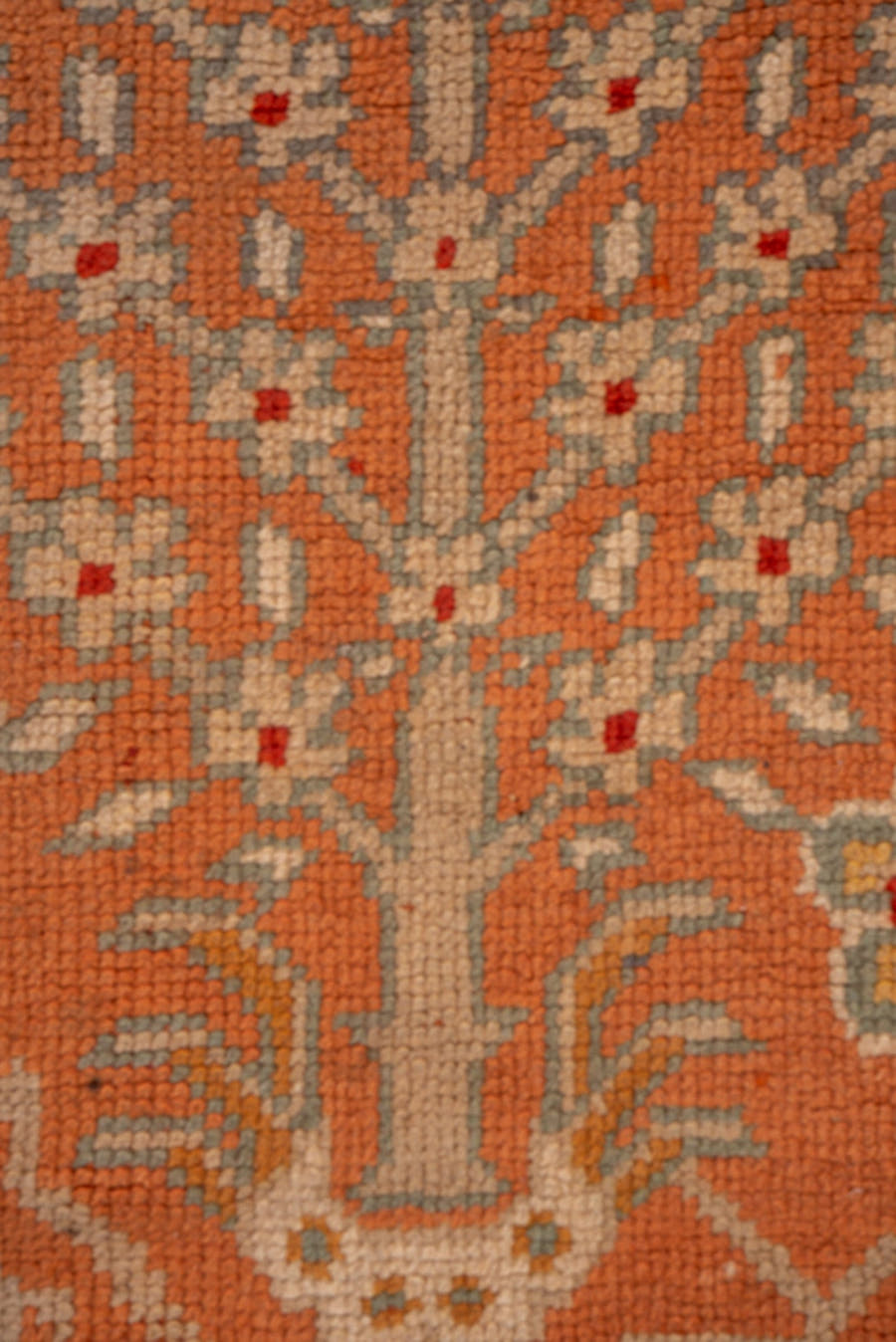
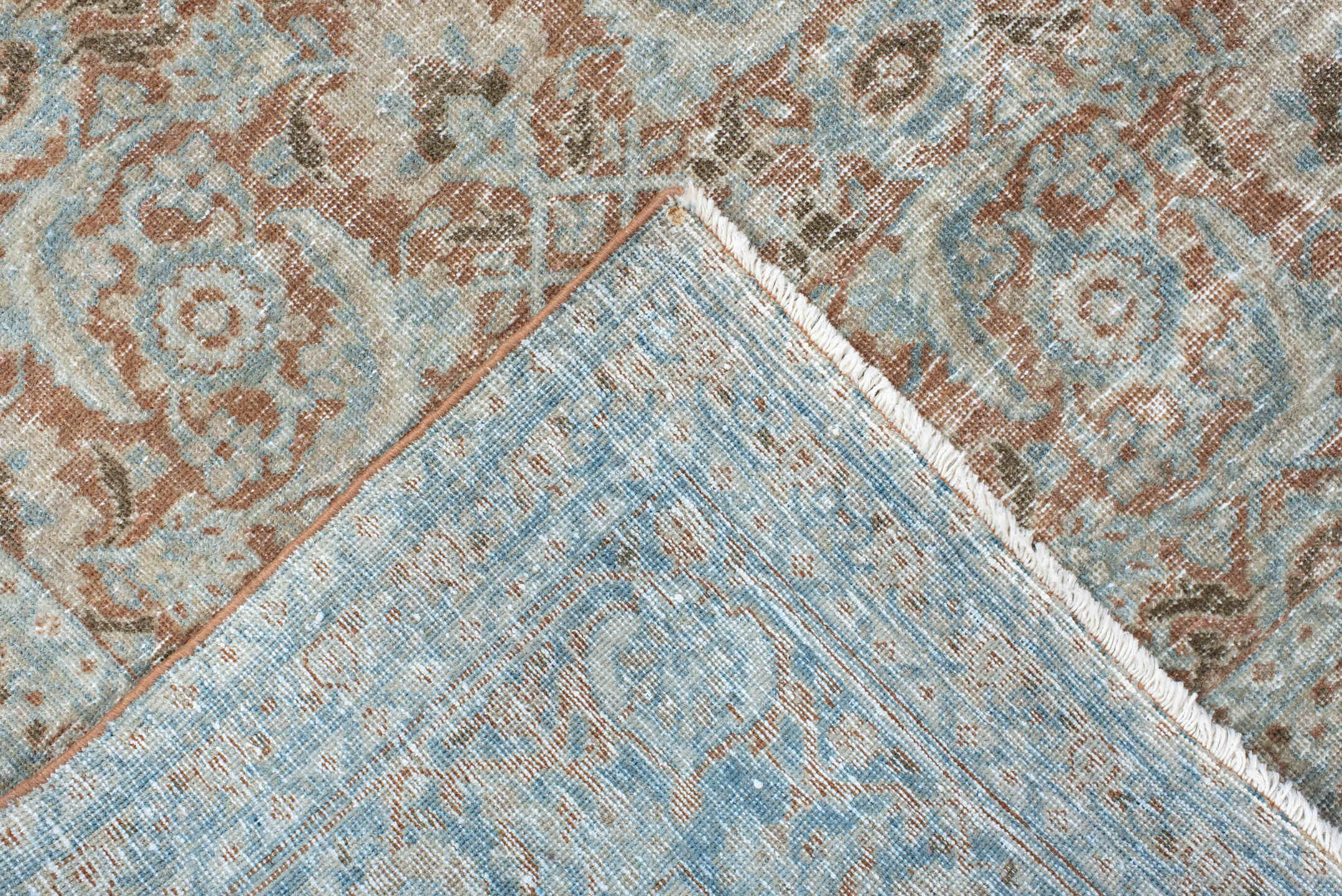
This handmade, one-of-a-kind antique Oushak rug from Turkey, circa 1910, showcases the grand-scale drawing and luminous palette prized in early 20th-century Anatolian weaving. Its spacious ivory field is anchored by a large angular medallion and framed by a bold rust border filled with stylized floral and geometric motifs, creating a refined balance of openness and ornament. A distinctive decorative statement with collector appeal, this hand-knotted wool rug is especially well-suited for a living room, dining room, or bedroom.
Muted warm tones of rust, ivory, gold, peach, sage, rose, and taupe, with a ivory field.
Oushak is a town in West Central Anatolia. Since the fifteenth century, it is the most famous and important rug producing center of Turkey. Particularly well known are the rugs known by their pattern such as “Large Medallion Oushak, “Star Oushak” “and Small medallion Oushak”. They frequently appeared in sixteenth and seventeenth-century Old Master European paintings. There is a group of paintings depicting King Henry VIII of England and family members standing on several different well-known types. From the late eighteenth and through the twentieth century, it became an important center for producing carpets for export to the West. The rugs from the late nineteenth and early twentieth century are highly favored for their decorative appeal with their soft palette, excellent color combinations, and informal drawing. Oushak weaves were also produced in the surrounding villages on simple looms where the weavers had the freedom to create their own designs.